 I am always disconcerted when I hear someone discussing or read a statement suggesting that people in poverty who are receiving government assistance are undeserving of their benefits or are choosing to live the easy life on welfare instead of working for a living. Encountering these various statements one too many times is actually why I decided to start this journey to help the food insecure and advocate for the poor. During the past couple of weeks I have been confronted more frequently than normal with this sentiment, so I feel it is important to respond to the notion that living comfortably on welfare is a lifestyle choice or even possible. What many refer to as welfare, cash assistance from the government, dramatically changed in 1996 with the enactment of the Personal Responsibility and Work Opportunity Reconciliation Act (PRWORA). Not only has welfare been reformed, but in recent years cuts in funding to other programs that make up the social safety net have resulted in reductions in either benefit amounts or the number of eligible people receiving benefits. The changes brought about through reform, coupled with funding cuts in safety net programs, have greatly changed the landscape of what is collectively called welfare.
As mentioned above PRWORA, signed into law on August 22, 1996, is the piece of legislation that ended welfare as we knew it. PRWORA replaced Aid to Families with Dependent Children (AFDC), which had been in place since 1935, with Temporary Aide to Needy Families (TANF). In addition to this change, PRWORA also imposed stricter conditions for 
the Supplemental Nutrition Assistance Program (SNAP), reduced aid to immigrants and introduced work requirements for aid recipients. Temporary Aid to Needy Families is what most people think of when they say welfare, cash assistance given to indigent families. With the passing of PRWORA, a lifetime limit of 60 months was imposed on families receiving federal aid money. States were given wide discretion in how to distribute these funds, and consequently, a few states have even shorter lifetime limits on receiving federal aid. One state has a lifetime cap of only 24 months. Additionally, PRWORA requires recipients to get a job within 24 months of receiving assistance. In order to continue receiving benefits, single parents are required to participate in a work activity at least 20 hours per week and for 2 parent households the requirement is 35-55 hours per week. Failure to comply with any work requirement can result in reduction or termination of benefits. With that said, no federal limit exists on how long TANF recipients can receive state funded assistance. Furthermore, states are allowed to issue a limited number of exemptions, extensions or both.
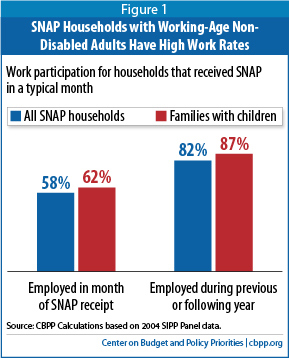
Another program Americans think of when referring to welfare is the Supplemental Nutrition Access Program (SNAP), formerly referred to as Food Stamps. This program is  the largest of the 15 nutrition programs administered by the federal government. It is a mandatory or entitlement program which means the federal government is required to fund benefits for all eligible recipients. Additionally, this program does not have a lifetime limit on receiving benefits for most recipients. The only exception being able bodied adults without children (ABAWDs), who are permitted only 3 months of SNAP benefits in any 36 month period when they are not employed or participating in a work training program for at least 20 hours per week. Just because only a few face lifetime limits for this program does not mean its benefits have not been limited. SNAP has experienced several cuts in funding in recent years resulting in an average household benefit reduction of 5 percent. Under current regulations, for many households living in poverty SNAP is the only governmental assistance program for which they qualify, or as explained below, are able to receive, even though they are eligible for other programs.
The remaining programs people think of when referring to welfare are housing and child care subsidies. Housing subsidies from the federal government include, but are not limited to, public housing and Housing Choice vouchers, called Section 8 housing. All of these housing assistance programs have experienced funding reductions, resulting in long waiting lists with some people reporting being on a waiting list for 10 years before receiving any assistance. Furthermore, it is estimated that only 1/4 of eligible recipients ever receive any subsidy. Like housing subsidies, child care subsidy programs have experienced funding cuts resulting in lengthy waiting lists and a reduction in benefits. Additionally, when a subsidy for child care is awards it is often a pittance, unable to begin to cover the actual cost of childcare.
I have discovered in discussing poverty with others, as well as just listening to and reading what people say about the poor, that many people either do not know about welfare reform and funding cuts in safety net programs, forgot they happened or have little idea the extent of the changes these actions have caused. I don’t know that the ability to live much more than a hand to mouth existence on welfare ever existed, but regardless of whether it did at one time, it does not exist now. America’s social safety net has been shredded or at least has big gaping holes in it. Since the passage of PRWORA, getting welfare has gotten more  difficult. Less assistance is available due to budget cuts and more restrictions on getting assistance have been put into place, including lifetime limits for some types of assistance or recipient groups. The reduction in welfare caseloads has been touted as proof of successful reform. In spite of the dramatic reduction in welfare caseloads, however, welfare reform has done little to reduce poverty and may be responsible for the increase in the number of people in the United States experiencing extreme poverty. Americans receiving welfare, in any of its forms, are not living on easy street, and if you asked them, they would almost certainly rather receive a paycheck from a stable, good paying job over receiving welfare.
This week’s blog pictures brought to you by Spring!
 him what we could, considering he didn’t have a refrigerator or any way to cook or warm his food. What we gave him was a mish mash and not much of it was very healthy. He said he would take anything we had to give, because he was really hungry. We gave him SPAM, Vienna sausages, sardines, saltines, granola bars, tuna fish, peanut butter and a couple tiny jars of jelly. We were also able to give him canned fruit, applesauce and beef stew and Chef Boyardee products (to be eaten cold). All of these items had to have pop tops or foil tops because he doesn’t have a can opener. Luckily we were able to give him some fresh grapefruit and apples. We were also lucky that someone had donated a package of plastic forks, so we were able to give him something with which to eat. He was fortunate to have a ride, which meant we were able to give him several bags of food. If he had been walking we would have only been able to give him what he could carry.
 So, what happens when employers do not pay their employees a living wage? Many of those employees are forced to turn to the government for assistance in the form of SNAP, Medicaid and housing and child care subsidies, forcing the U. S. taxpayer to make up the difference caused by their low wages. According to an article by
  that make many of our lives easier, like picking our produce, caring for our children or elderly and ailing parents or cleaning our office buildings. As
  work or training program for at least 20 hours per week.
 Some are homeless or living temporarily with friends or family and move around frequently. One third of them have mental or physical limitations, like PTSD, learning disabilities or physical injuries, which are not severe enough to qualify them for disability benefits, but may still limit their ability to work more than 20 hours per week. Among those facing this particular barrier are veterans. Although labeled as childless, that distinction just means they are not the legal custodians of any children they may have. Nearly 25% of these childless adults are non-custodial parents and another 13% are caregivers for a parent, relative or friend. Almost half of childless adults do not have access to reliable transportation or public transportation and 60% lack a valid driver’s license. Finally, more than one third have felony convictions, and even though they have served their time, background checks are difficult to pass. The current job market in the United States is on the rebound, but when you have one of the above mentioned barriers in your way finding a job becomes that much harder. Some childless adults, however, probably face more than one barrier.
 to deny them food assistance, averaging $150-$170 per person, per month? These childless adults, by and large, do not qualify for any other assistance programs from the government. As research from the early 2000s, when this restriction was last enforced shows, many ABAWDs eventually found employment, but at very low wages. They continued to have housing problems, trouble paying their utility bills and struggle to acquire adequate food. In other words many remained extremely poor. Our social safety net has gaping holes in it through which these individuals are falling. In the end, while these measures lessen the number of people receiving public assistance, they only exacerbate the problem of poverty, because the true story is that most people in poverty are there because they are facing actual hardships and they need real assistance of some sort to lift themselves out of poverty.
 hearings and visiting numerous programs in both the government and public sector, the Commission compiled 20 sensible recommendations to reduce hunger.
 rural areas, which would benefit my rural community. Most importantly, the Commission suggests lowering the area eligibility for reimbursement for summer meals from 50% of children eligible for free or reduced school meals to 40 percent. This change would mean that more children, in areas where poverty is less concentrated, would qualify for free summer meals. The other recommendation concerning summer feeding programs encouraging to me is the suggestion to issue EBT cards for summer meals in communities where barriers to congregate feeding sites, like neighborhood violence or transportation issues related to remote living conditions, can clearly be demonstrated. In USDA pilot programs issuing EBT cards to children at risk for hunger in these communities has been proven to reduce hunger.








 From a Simmer to a Boil