 Tuesday I found myself with some unexpected free time. Due to a weather forecast of 4-8″ of snow, food pantry clients had been rescheduled to another day, so I did not have to volunteer. I assumed, however, because of the forecast that my kids would be home from school for the day. It did snow all day, but the temperature never dipped below freezing, so nothing stuck to the roads. The kids only had a two hour delay (sorry guys!) and I didn’t have to volunteer. What to do with this unexpected gift?! I decided to spend the day going through a cookbook my brother and sister in law gave me for Christmas, entitled Smokehouse Ham, Spoon Bread, & Scuppernong Wine: The Folklore and
 Art of Southern Appalachian Cooking, by Joseph E. Dabney.
When I initially started thinking about food insecurity and how to assist people who were hungry, one of the first ideas I had was to look to the past to see how folks used to cook, especially during hard times, like the Great Depression. Prior to the Great Depression the United States also lacked the societal safety nets we have today, so people suffering from poverty really were on their own to survive. After a bit more research, I learned that not everyone cooked and ate the way I assumed. My notion of how women 100-125 years ago cooked and provided food for their families was based on a rural society, where there were little work opportunities for women outside the home and most families had enough land on which grow produce and/or keep some livestock. After reading How the Other Half Ate, by Katherine Leonard Turner, I learned that urban dwelling women approached cooking and feeding their families very differently than rural women, and as the title suggests, different social classes cooked and ate differently as well.
Additionally, I came to realized that cooking like rural women from the past requires a great deal of time. Initially I didn’t think this would be a problem for most of the people today who suffer from food insecurity, as I believed them to be unemployed. After all, that is what many politicians and people in the media would have you believe. I have since learned from my reading and volunteering, that many people who are food insecure are also employed, sometimes working two and three jobs, and therefore do not have an abundance of time to cook from scratch. Cooking from scratch also requires certain implements and appliances that the food insecure may not own, like large pots and pans, a multiple burner stove or an oven.
With all that said, I do still think there are lessons to be learned from old cookbooks and food traditions of the past, which is why I read old cookbooks and historical accounts of how and what people ate. This particular cookbook, although not old as it was originally published in 1998, contains the result of research and numerous interviews with old timers conducted by the author. It is perhaps more an historical account with recipes than it is a cookbook. The geographical location this book discusses, southern Appalachia, has historically been and still is, one of the poorest areas of the United States. I was very curious to see what these hardscrabble people ate and how they prepared it and to determine if I could learn something from their practices that I could pass on to people in my community who are struggling today
One of the first themes that struck me was that they ate what was available wild in their environment, when it was available. Some of this practice will not be very practical today. We live in more populated areas with less open spaces, so foraging off the land will not work as well today. Additionally, we have mostly lost the knowledge of what is edible, growing wild in our  backyard or local woods, but it is there. There is a group in Philadelphia, The Wild Foodies of Philly, whose members forage in the city and there is a global organization called Falling Fruit, whose website contains an interactive map of where people are urban foraging. Similarly, I can remember as a young girl picking wild strawberries and blackberries, winter cress, persimmons, beach plums and black walnuts, all of which were eaten by my family. Recently someone gave me some paw paws from a nearby tree growing in a nature preserve and my husband has picked and we have eaten morels and other mushrooms growing in our woods. (A note about gathering wild mushrooms–I am not advocating for anyone to pick and consume a wild mushroom without first taking a class in mycology or going foraging with someone very knowledgeable in wild mushrooms. Some varieties can make you sick, but others can kill you quite quickly. Unless you can tell the difference with certainty do not consume foraged mushrooms!) And almost everyone has dandelions growing in their yard! I often wonder if the people who spend money on herbicides to get rid of dandelions are sometimes the same people who spend money to buy dandelion greens in Whole Foods.
In addition to wild plants, the mountain people of Appalachia supplemented their diet by hunting wild animals, like rabbit, deer, raccoon, squirrel, opossum and turkeys. Not everyone today is interested in hunting or has the land available to them on which to hunt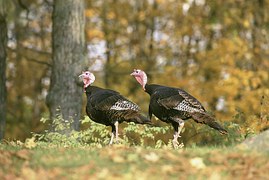 . Likewise, our tastes have changed so that few could imagine eating opossum, but I know many families locally, who still supplement their diet with venison, rabbit, wild fowl and small birds, like dove. The Chester County Food Bank participates in the Pennsylvania program, Hunters Share the Harvest, where hunters can share extra venison with food banks. I just had a client ask me last week if we had any venison.
With regard to produce, they ate or preserved to eat later what was in season, growing in their garden. Not many people can or preserve food today, but it was a necessary way to stretch the summer bounty into the winter, when produce was scarce. Today, eating seasonally is still just as wise as it was in the past, even if you do not have a garden. Produce in season is going to be cheaper, but also will taste better and be healthier, since it was allowed to ripen fully before being picked. Even if you do not know how to can produce, many fruits and vegetables can easily be frozen, so if one has access to freezer space, freezing summer produce can be an economical way to enjoy summer’s bounty in the middle of winter.
In conjunction with eating what was available, the people of Appalachia wasted very little. When they slaughtered an animal or killed wild game, they used almost all parts of the animal in one way or another. Additionally, many plant products we commonly dispose of today were in the past used in recipes, like corncob jelly and pickled watermelon rind. While I understand that many of these historical cooking practices are not practical for today, we can take away the lesson of reducing waste in our cooking. For instance, I just recently purchased a rotisserie chicken for a dip recipe. Once I had picked the meat off the bones, I put the bones into a pot with a quartered onion, covered it with water and simmered it for about an hour. When it was done I removed the chicken bones and onion and strained the remaining liquid. This produced 4 cups of chicken stock, which only cost me my time (mostly unattended cooking) and a few cents for the onion. A nother easy practice, which reduces waste and creates cooking stock, is to save parts of produce you are not going to eat, like the end of a carrot or broccoli stalks, in the refrigerator. Once you have a decent amount of this vegetable matter, follow the same steps as with making chicken stock. This process will result in vegetable stock at no extra cost. Finally, I save most of the fat rendered from frying bacon. I put it in a container in my refrigerator and use small amounts not only for frying foods, like potatoes, but also to flavor braising water for vegetables when I don’t have any stock on hand.
I thoroughly enjoyed my snow day on Tuesday, sitting with a cup of tea and a cookbook. While I did not grow up in Appalachia, I did grow up in the country and the people and food ways described in this book spoke to me and reminded me of my childhood. Unfortunately so much of what I was remembering from my childhood is gone. The wild strawberries and hedgerows of blackberry canes are not there anymore. Very little, if any, winter cress grows in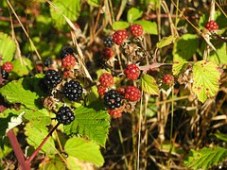 the fields due to herbicides or planting practices. My grandfather, sharer of persimmons, has long since passed away. Like the memories of my youth, passing down the practice of cooking from scratch and cooking methods used to stretch the meager food resources of a family have largely disappeared too, especially as busy parents rely more and more on processed, already prepared, packaged food. Unfortunately, we are losing more than we realize when we give up these practices.



 exist. The U.S. Census bureau’s poverty threshold in 2015 for a family of 3 (single mother and 2 children) is a salary of approximately $19,000 per year. Households of that size earning less than $19,000 per year are considered to be living in poverty. The next level of poverty is deep poverty which is defined as having a household cash income under half the poverty threshold. Using the 2015 poverty threshold, that same family of three living in deep poverty would have an annual salary of only about 9,500 dollars. The most dire level of poverty is aptly named extreme poverty and to fall into this category households exist on $2.00 or less in cash income per person per day. For that same household of three living in extreme poverty, their annual salary would be a paltry 2,190 dollars.
 cities. As it happens, Philadelphia, located about an hour from my home, has the highest rate of deep poverty of any of the 10 most populous cities in the United States. Philadelphia’s deep poverty rate is 12.2%, or approximately 185,000 people, including 60,000 children, which is almost twice the U.S deep poverty rate. While the deep poverty rate seem to be declining slightly in metropolitan areas, the non-metro, rural areas have not seen much if any decline.
 Unfortunately, many can not find a job because the jobs are not there or they lack the necessary skills. Others are unable to keep jobs they do find, because employers are unsympathetic to transportation problems, child care issues, illness and an inability to respond to erratic schedules that change at the last minute. Additionally, many researchers and scholars believe the rise in extreme and deep poverty rates is a consequence of the 1996 welfare reforms, which instituted work requirements and lifetime benefit limits. As Kathryn Edin suggest, when you pair the 1996 welfare reforms with the decline in job opportunities at the very bottom of the job market, the inevitable result will be a rise in deep and extreme poverty.
 I am always disconcerted when I hear someone discussing or read a statement suggesting that people in poverty who are receiving government assistance are undeserving of their benefits or are choosing to live the easy life on welfare instead of working for a living. Encountering these various statements one too many times is actually why I decided to start this journey to help the food insecure and advocate for the poor. During the past couple of weeks I have been confronted more frequently than normal with this sentiment, so I feel it is important to respond to the notion that living comfortably on welfare is a lifestyle choice or even possible. What many refer to as welfare, cash assistance from the government, dramatically changed in 1996 with the enactment of the Personal Responsibility and Work Opportunity Reconciliation Act (PRWORA). Not only has welfare been reformed, but in recent years cuts in funding to other programs that make up the social safety net have resulted in reductions in either benefit amounts or the number of eligible people receiving benefits. The changes brought about through reform, coupled with funding cuts in safety net programs, have greatly changed the landscape of what is collectively called welfare.
 the largest of the 15 nutrition programs administered by the federal government. It is a mandatory or entitlement program which means the federal government is required to fund benefits for all eligible recipients. Additionally, this program does not have a lifetime limit on receiving benefits for most recipients. The only exception being able bodied adults without children (
 housing assistance programs have experienced funding reductions, resulting in long waiting lists with some people reporting being on a waiting list for 10 years before receiving any assistance. Furthermore, it is estimated that only 1/4 of eligible recipients ever receive any subsidy. Like housing subsidies, child care subsidy programs have experienced funding cuts resulting in lengthy waiting lists and a reduction in benefits. Additionally, when a subsidy for child care is awards it is often a pittance, unable to begin to cover the actual cost of childcare.
 difficult. Less assistance is available due to budget cuts and more restrictions on getting assistance have been put into place, including lifetime limits for some types of assistance or recipient groups. The reduction in welfare caseloads has been touted as proof of successful reform. In spite of the dramatic reduction in welfare caseloads, however, welfare reform has done little to reduce poverty and may be responsible for the increase in the number of people in the United States experiencing extreme poverty. Americans receiving welfare, in any of its forms, are not living on easy street, and if you asked them, they would almost certainly rather receive a paycheck from a stable, good paying job over receiving welfare.
 him what we could, considering he didn’t have a refrigerator or any way to cook or warm his food. What we gave him was a mish mash and not much of it was very healthy. He said he would take anything we had to give, because he was really hungry. We gave him SPAM, Vienna sausages, sardines, saltines, granola bars, tuna fish, peanut butter and a couple tiny jars of jelly. We were also able to give him canned fruit, applesauce and beef stew and Chef Boyardee products (to be eaten cold). All of these items had to have pop tops or foil tops because he doesn’t have a can opener. Luckily we were able to give him some fresh grapefruit and apples. We were also lucky that someone had donated a package of plastic forks, so we were able to give him something with which to eat. He was fortunate to have a ride, which meant we were able to give him several bags of food. If he had been walking we would have only been able to give him what he could carry.
 So, what happens when employers do not pay their employees a living wage? Many of those employees are forced to turn to the government for assistance in the form of SNAP, Medicaid and housing and child care subsidies, forcing the U. S. taxpayer to make up the difference caused by their low wages. According to an article by
  that make many of our lives easier, like picking our produce, caring for our children or elderly and ailing parents or cleaning our office buildings. As
  This is not going to be a post about the magical beans for which Jack traded his family cow, although trading a cow (beef or any other meat for that matter) for beans in your diet once in a while is as good a trade as the one Jack made. The beans to which I am referring are the beans you eat, and more specifically dried beans. Dried beans are a valuable weapon in both the fight against hunger and the struggle to stretch food dollars. Dried beans are cheaper than canned beans and can be stored for extended periods of time if kept in a cool, dark place. Beans are such a good source of protein that the USDA classifies them in the Protein Food Group in the recommended dietary guidelines, making them an economical and healthy meat substitute. The USDA also classifies them as part of the Vegetable Group because they are high in fiber, which is good for lowing your risk for diabetes and heart disease. Fiber also takes longer to digest, so foods high in fiber will help you feel fuller longer. Finally beans are high in antioxidants, helping to protect your cells from free radicals, and are low in sugar, which means they help prevent insulin in the blood from spiking. In spite of their health benefits and economical cost, most Americans do not incorporate beans into their diet, and when they do they often opt for canned beans over dried beans.
 off. One just has to plan ahead to incorporate dried beans into your diet. If you do it regularly, cooking beans will become almost effortless, whether you do it weekly or every couple of days.
 Mark Bittman’s method requires little foreplanning, but does require you have a bit of extra time, as beans that have not been presoaked will take a longer to cook. To shorten the cooking time by 1/2 or more presoak the beans in salted water (2 teaspoons salt per 1 quart of water) overnight or at least several hours. When cooking beans always keep an inch or so of water over the beans and only salt the beans toward the end of cooking, within the last half hour. If you are not going to mash your and you want to preserve their appearance, let the beans cool in their cooking liquid before draining so that the skins do not dry and crack.
 work or training program for at least 20 hours per week.
 Some are homeless or living temporarily with friends or family and move around frequently. One third of them have mental or physical limitations, like PTSD, learning disabilities or physical injuries, which are not severe enough to qualify them for disability benefits, but may still limit their ability to work more than 20 hours per week. Among those facing this particular barrier are veterans. Although labeled as childless, that distinction just means they are not the legal custodians of any children they may have. Nearly 25% of these childless adults are non-custodial parents and another 13% are caregivers for a parent, relative or friend. Almost half of childless adults do not have access to reliable transportation or public transportation and 60% lack a valid driver’s license. Finally, more than one third have felony convictions, and even though they have served their time, background checks are difficult to pass. The current job market in the United States is on the rebound, but when you have one of the above mentioned barriers in your way finding a job becomes that much harder. Some childless adults, however, probably face more than one barrier.
 to deny them food assistance, averaging $150-$170 per person, per month? These childless adults, by and large, do not qualify for any other assistance programs from the government. As research from the early 2000s, when this restriction was last enforced shows, many ABAWDs eventually found employment, but at very low wages. They continued to have housing problems, trouble paying their utility bills and struggle to acquire adequate food. In other words many remained extremely poor. Our social safety net has gaping holes in it through which these individuals are falling. In the end, while these measures lessen the number of people receiving public assistance, they only exacerbate the problem of poverty, because the true story is that most people in poverty are there because they are facing actual hardships and they need real assistance of some sort to lift themselves out of poverty.
 also available. Students from a local private school had decorated colorful placemats for the tables and music students from the arts’ alliance music programs provided musical entertainment for diners.
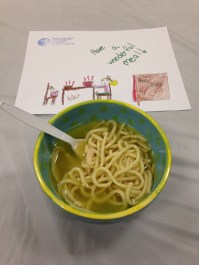 housed. I went over to say hello and while we were talking I asked her about the success of the fundraiser. She said that the arts’ alliance ran out of the 140 bowls purchased for people to decorate. People who did not wish to decorate a bowl or were not able to because the bowls sold out, were still able to purchase tickets and come to the luncheon. While at the luncheon, I saw several people using disposable bowls, indicating more than 140 people participated in this fundraiser. I do not have a definite count of tickets sold or money raised, but the community services director seemed very please with the outcome, indicating it had grown substantially over last year.
 political traditions. This motto aided in the creation of Poland’s 1505 constitutional legislation, which transferred political power from the monarchy to parliament. It also sounds very similar to, and perhaps inspired the creation of, the American Revolutionary War demand “No taxation without representation!” More recently the phrase was used the 1990s in the disabilities rights movement. The ancient phrase expresses the equally age old notion of self-determination, that people want to control their own lives.
 who run food banks invited some of their clients in to talk with them and other community leaders about the problems they are facing? And not just food related problems, but all of the problems they face. What if emergency food providers and other community leaders listened to them as they discussed their problems and believed they were the experts on their problems, including the solutions? What if after that meeting, clients, emergency food providers and community leaders collaborated, using the ideas of the clients coupled with the resources of the community, to address some of these problems? I think all parties involved would be surprised at what might be accomplished. I also think we would see stronger communities, as divisions decrease and understanding and respect grows.
 Well I’ve been at this for a year. A few weeks ago marked my one year anniversary as a food pantry volunteer and one year ago tomorrow I published my first blog post. Knowing that I had put forth my intentions and objectives in that first post, I recently went back and reread it. I wanted to see how close to my mission I had remained, or how far afield I had strayed, as I was worried I had. I discovered that, while I am not today where I thought I might be, I have accomplished what I set out to do.
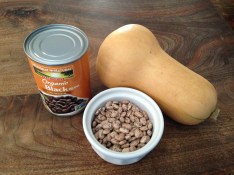 out simple recipes for some of the less familiar produce we had on hand, like winter squash, in an effort to encourage clients to take the produce. Offering these recipes did succeed in getting a few more clients to give the produce a try.
 have had with someone on the topic of food insecurity. One of the comments that has meant the most to me was a thank you for shining a light on food insecurity issues from someone whom I suspect is or has struggled with food insecurity. Ideas and information have also been exchanged as readers have sent me links to articles or have told me about local happenings related to hunger that might be of interest to me.
 ideally like to be able to give out samples of the produce prepared using the recipe. I would also like to establish a pilot program of providing spices, herbs or other seasonings like lemons, not currently offered in food pantries, coupled with a food pantry staple and a recipe to clients. For instance, if a client took oatmeal or apples s/he would also get a jar of cinnamon and a recipe for oatmeal or applesauce. A whole chicken with lemons and/or garlic would be another paring, along with a recipe for roasted lemon chicken. If the pilot program is successful, my long term goal would be to form a non-profit organization to supply commonly used spices, herbs and other staples, like brown sugar or cooking oil, to the food pantry.
 because I was fed up with hearing those suffering from poverty being disparaged and blamed for many of society’s problems. This past year has helped to restore my faith in humanity. Along my path I have met numerous people who care greatly for those less fortunate in our society and are doing whatever they can to help. I have also met many who are in need and most of them possess perseverance and appreciation and retain a sense of optimism that humbles me. This journey has brought me laughter and tears, hope and despair. It has enriched my life and challenged me to be a better person. I knew I would be giving of myself, but I never realized how much I would be getting back.
 From a Simmer to a Boil