Lights Out!

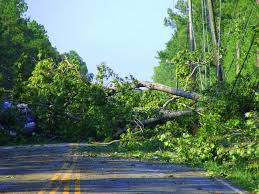
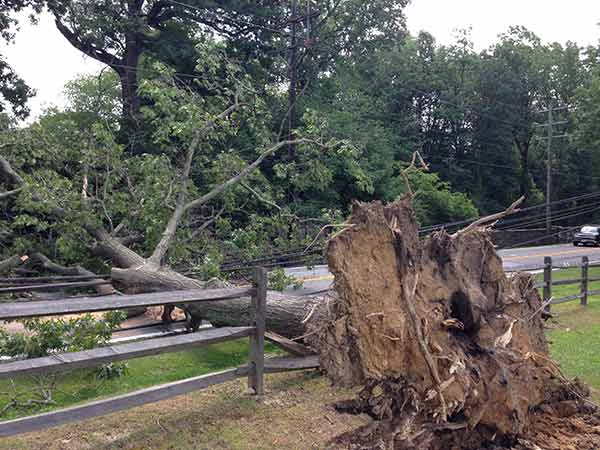
power lines bIn June, Chester and surrounding counties experienced a line of thunderstorms that produced strong winds, resulting in the disruption of electric service to more than 130,000 people.  Some people were without electricity for several days.  I know in my community power was not restored for 50 hours and we were not the last ones to have power restored.  To save the contents of our refrigerator and freezer, both of which were full of food, my husband bought a generator.  We lost very little food.  Some of my neighbors, who did not have a generator lost several items in their refrigerator.  While buying a generator or replacing food is an expense for which we had not planned, my family and my neighbors were be able to absorb the cost of the new purchase or the replacement milk, eggs, mayonnaise and other lost items.

For my family and my neighbors, this power outage was mostly just a nuisance.  For others it was a major setback.  While volunteering yesterday, I met a lady who had lost most of the contents of her refrigerator during the storm.  This was her first time to the food pantry since the storm, as clients can only come once in a 30 day period, and she was desperate to get some food.  Mypower lines a heart went out to her as I counted up the days and realized the storm had happened 3 weeks earlier.  She said she cooked up as much of her food as she could, but for how many days had she been scrapping by with almost nothing?  We were as generous with her as we could be, giving her a few extra items from our donated food and making sure she got plenty of fresh vegetables.

I had not stopped to consider how potentially devastating a prolonged power outage could be for some folks.  How costly it would be to have to replace partially used condiments or precious eggs, milk or meat.  Also concerned with the inability of some to replace food items lost in the power outage was 4 year old Dylan.  I found out about Dylan from a post on The Chester County Food power lines cBank’s Facebook page.  They were giving him a huge shout out of thanks for his effort.  He collected 474 pounds of food for the Food Bank after he learned that not everyone could afford to replace all the food they lost during the power outage.  I imagine Dylan, like myself, will never just groan at the inconvenience the next time the power goes out.  We will be counting the hours and thinking about the folks out there who are hoping the power comes back on before food they can’t replace is lost.
Follow up to a previous post

In an earlier post I wondered if the food pantries would see increased use during the summer, especially among families, because kids who received free or reduced lunch at school, did not have many options to get meals due to a lack of summer feeding programs in our community.  Yesterday I got confirmation that the lack of summer feeding programs in our area does take a toll on struggling families.  One of our clients said she was having a hard time feeding her kids over the summer.  Although she did not ask for help or extra food, we were generous with her as well, focusing on items for the kids like a large jar of peanut butter, donated bread and snack items, and fresh vegetables.

I am always a little conflicted after volunteer days like yesterday.  On one hand I feel bouyant because I know I definitely helped people in need.  That is a satisfying feeling.  On the other hand, I get frustrated and saddened that people, in this country of abundance, have to face these hardships.  In the end, I have to remind myself that these are the days that keep me committed and drive me to keep working to find solutions, both large and small.



Sunny Side Up

egg faceI took a couple of weeks off.  The news of the robbery at one of the food pantries in which I volunteer, coupled with the realization that most of the kids in my school district, who receive free or reduced lunch, will potentially go without some meals over the summer due to a lack of summer feeding locations in our area, caused me to become very discouraged.  I felt overwhelmed by the size of the problem and my inability to make a noticeable difference.  Rather than spread my pessimism, I decided to take a break from writing over the past couple of weeks.  I am happy to say that the tide has turned on my negative attitude.

Even though I was not writing, I continued to volunteer.  Last week I volunteered at the food pantry that had been robbed for the first time since the robbery.  I was inspired by a couple of things.  First, in spite of everything, the pantry was still operating as normal and had been since the robbery.  Somehow they had managed to find a way to compensate for the equipment they lost and were still able to give out the items that needed refrigeration–milk, eggs, cheese and frozen meats.  Additionally, the staff and volunteers had not let this crime dampen their spirits or commitment to those in need in their community.  Our area has had a very hot, humid start to summer, and one of the items taken in the robbery was the air conditioner.  Without air conditioning, in a building without windows, sitting in an unshaded parking lot, on a day the temperature was expected to climb into the 90s, the doors were thrown open to those in need and clients were welcomed with smiles and hugs.  I was buoyed by their unshakable commitment to provide assistance to those in need in spite of the hardships their organization faced.

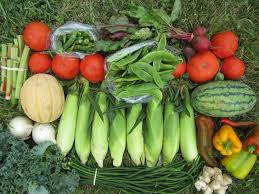
This past Tuesday I volunteered in the other food pantry and had different, but equally uplifting experience.  Perhaps you have read or heard on the news recently about various states wanting to ban junk food from the allowable items that SNAP beneficiaries can purchase.  The reasoning behind this proposed regulation is the belief that people receiving assistance choose to purchase less nutritious food over more nutritious options.  I read a great article  in Mother Jones magazine by Tom Philpott that sheds light on why SNAP beneficiaries often purchase less healthy items, and also makes a claim that their purchases are not very different from those receiving no assistance.  I now have first hand experience showing, that given a choice, people receiving assistance will happily take the more nutritious option.  The food pantry on Tuesday had received a huge shipment of  produce cauliflower broccolifrom the county food bank in it’s weekly delivery.  They had fresh cauliflower, broccoli, collard greens, lettuce, red and green cabbage and corn on the cob.  Additionally there were frozen blueberries, diced carrots and pureed tomatoes.  We had no trouble getting clients to take this produce.  Many eagerly took some of everything.  It felt like Christmas and I was Santa Claus!  Incidentally, the previous week the other food pantry put out some beets and lettuce from their garden, and they too were being readily taken by clients.

The problem of hunger in America is much greater than one person or organization can hope to solve, and it is very easy to allow that reality to weigh one down and bring despair.  I am grateful for the my experiences volunteering.  They lift my spirits and inspire me to continue doing what I can to help.  I have seen the difference that these food pantries and the people who run them make in the lives of the clients who use them.

happy sun


A Heavy Heart

It is with a heavy heart that I sit down to write today.  Some of the weight I feel is still lingering from last week’s post about the lack of  availability of summer meal programs in my community for school children who qualify for free or reduced school lunch.  Over the past week this topic has come up more than once.  I discussed the issue with a couple of people who had read my blog, but it also came up as the topic of a post on a Facebook local mom’s group to which I belong.  While those discussions did not change the circumstances here in my community, I am taking some encouragement from the fact that people are starting to realize the existence of the problem and discuss ways in which they can help.

The other reason my heart is heavy is because I found out that one of the food pantries in which I volunteer has recently been robbed.  I was supposed to volunteer there this morning, but had a scheduling conflict.  Consequently, I do not know what impact this theft has had on their operation.   While it probably won’t shut down the pantry all together, it will limit what they are able to distribute.  In addition to hampering the pantry’s ability to distribute certain items, the equipment taken will be costly to replace, further restricting the resources this organization has to provide assistance to this community.

I expected, when I began to volunteer in food pantries and research the topic of hunger in America, that I would experience moments of sadness or even a feeling of being overwhelmed by the magnitude of the problem.  For the most part, I have found those instances to have been few in number.  I am able to remain optimistic because of the gratitude I have felt from the people I am assisting and the generosity and commitment of the numerous people I have encountered fighting this fight against hunger in America.  The reality of last week’s post and this robbery, however, have left me with a feeling of despair.  I know it will pass, but at the moment I can’t help but wonder what difference I think I can make when these are the odds faced.

For now I think I will keep this post short to avoid spreading my pessimistic view.  For those of you who are local, I will be happy to provide you with contact information if you wish to offer this pantry financial assistance.  I will also be happy to collect any donations, monetary or otherwise, and them deliver to the pantry.

Summer

summerSummer break is almost here!  I always view the approach of summer break with a mixture of excitement and relief, but also with a sense of apprehension.  It is great not to have all the deadlines of school hanging over the household.  To have the freedom to take in a movie, spur of the moment, on a Wednesday night or go on an adventure or just not have to worry about whose assignment is due when.  The apprehension comes from past summer experiences.  Knowing someone will say, usually within the first week, “I’m bored”, which is usually followed by sibling bickering.  Or the dread of the daily battle over the amount of electronic use.  One thing I have never had to worry about, though, is whether my kids were going to be hungry over summer break.

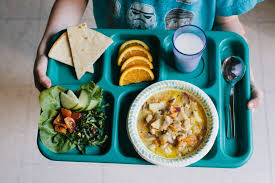
According to the Feeding America website, 22 million children receive free or reduced priced meals in schools.  What do those kids do in the summer when the school doors close?  The Feeding America website also reports that only 2.7 million children receive free or reduced priced meals through the USDA’s Summer Food Service Program (SFSP).  That is a huge difference in the number of children receiving assistance during the school year and the number receiving assistance in the summer.  Some children probably receive meal assistance through other summer feedingsummer feeding programs that are not operated through SFSP, but the number of American children that are likely to go hungry this summer is still staggering.  Here in Pennsylvania 80% of  the children who qualify for summer feeding programs are not receiving assistance, according to a report by the Food Research and Action Center (FRAC).  In my own community, where approximately one third of children in our schools qualified for free or reduced meals, I can only find one program that offers meals for children.  It is a Christian-based youth group facility, that offers an afterschool meal during the school year, which they continue during the summer months as well.  I have to admit I was a little surprised by the lack of options available, locally, for children on summer break and I find it troublesome.

To be honest, until recently I had not given much thought to what the families of kids in the free and reduced breakfast and lunch program did during the summer to replace the meals provided by the schools during the school year.  Now that I know how large the percentage of kids participating in this program is in my local school district and the lack of summer feeding programs in my area, this problem weighs heavily on my mind.  Since my eyes are now open to this problem, I’m sure I will see these kids everywhere–in the library, on the playground, passing pbjby on the sidewalk.  I wonder if our food pantries see an uptick in the number of families coming in over the summer months, either new clients or previous clients who have not needed to come for a few months.  The Chester County Food Bank is currently partnering with the United Way of Chester County in a Peanut Butter and Jelly Drive, so I can only assume they are preparing for this increased need.

While we are talking about kids and lunches, I want to mention the equally troublesome story of Della Curry, an elementary school cafeteria manager in the Denver Metro area, who was just fired.  She was fired for giving a first grade student, who didn’t qualify for the free or reduced lunch program, lunch when she didn’t have the money to buy lunch.  In an interview she admits this isn’t the first time she has done this and does not regret her actions.  In the past few days some questions have arisen about the actual reason Ms. Curry was terminated, but regardless of the reason, this story brings to light the real plight of numerous school children across this country who do not qualify for the free or reduced lunch program, but do not have money for lunch.  To be clear, I am not referring to the child who occasionally forgets lunch money.  These are children who regularly do not have enough money to purchase lunch or bring one from home.  Ms. Curry feels the law governing the free and reduced lunch program needs to be changed.  She believes lunch should just be a part of public schooling and available free to all students and has vowed to work to bring about this change.

One school district that recently made this change a reality is Baltimore City Public Schools.school lunch  All schools in this school district will now offer free breakfast and lunch to every student.  Their ability to provide these meals to all students is the result of a federally funded program for school districts where at least 40% of the population is considered low income.  This program removes the stigma associated with getting free lunch or breakfast, but more importantly, it will also ensure more children get fed, eliminating the problem Della Curry faced.  Finally some good news out of Baltimore!  Baltimore City Public School district isn’t the first district to make this change.  The program is part of the Healthy, Hungry-Free Kids Act of 2010 and has been made available in certain states since the 2011-2012 school year.  This school year just ending (2014-2015) is the first year the program has been made available to all qualifying schools nationwide.

I don’t have any answers or solutions to offer for any of these problems.  I just encourage you to be aware.  These are kids and they are hungry through no fault of their own.  If you are in a position to help, do so.  Even if it is only to donate a jar of peanut butter and jelly to your local food bank or pantry.


A Plan of Action

I have not been able to volunteer the past two weeks due to family appointments.  Even though I know clients will continue to get their food, I feel bad not being there and realize that I am contributing to the instability of emergency food as discussed in Janet Poppendieck’s “Seven Deadly Ins” of emergency food.  My inability to volunteer does not mean that I have been idle.  This past week I have been thinking about last week’s post and the goals I put forth in it.  While looking for inspirational quotes to include in that post I encountered this one goal dreamand it has been haunting me since.  I don’t have any deadlines; I admitted as much in my post.  While I am not sure my current family responsibilities will allow me to create firm deadlines, I have decided to shift my attention, slightly, away from strictly blogging and more toward working on my goals and creating squishy deadlines.  I plan to take the summer months, when my boys are home from school and my work day will be a little bit more disrupted and noisy, to do some researching and planning.

Toward that end, I started scouring my cookbooks for recipes using oats.  Oats, to me, seem likeoats a no-brainer for a food bank or pantry to distribute.  They are an incredible source of soluble fiber, more than any other grain, which slows digestion and keeps one full longer.  The soluble fiber in oats also helps control blood sugar levels, so oats may help to reduce a person’s risk of Type 2 diabetes.  Oats have been proven to lower cholesterol and contain a protein, nearly equivalent in quality to soy protein, which has been shown to be equal to other forms of protein, like eggs and meat.  All of these benefits have lead some to label oats as a super food.

Despite all of the benefits of oats, they are not a staple at either of the food pantries where I volunteer.  Sometimes donated containers of oats will be available, but more often than instant oatsnot what is available are the packets of instant oatmeal.  This type of oatmeal often contains lots of sugar and salt.  It has also been processed more, allowing it to digest quicker, reducing the benefits associated with the slower digestion of rolled or steel cut oats.  Furthermore, instant oatmeal can only be used for one thing, a warm breakfast cereal.  Oats, on the other hand, can be used in many recipes.  Without spending too much time I was able to find about a dozen suitable recipes using oats, and I haven’t even begun to probe recipes using oats for side dishes.

Other areas in which I want to invest some time researching are starting a non profit and finding potential seed funding for that venture.  I have a neighbor who just used crowdfunding for a video series on horse slaughter in America with the help of Indiegogo.  This was a new concept to me, but seemed to be successful for him, so it warrants further investigation.  In addition to registering and funding my non-profit, I need to determine what food items I will supply to food pantries and how the distribution will work.  I currently see a featured partnering of items with accompanying recipes.  For instance, drawing oats cinnamonupon oats, I would donate oats and cinnamon to the food pantry.  Clients would then be able to take the paring of a container of oats and a bottle of cinnamon along with a handful of recipes.  The items partnered together would change with the seasons, featuring items that made sense for the time of year.  Lastly, once items to be donated have been chosen, I need to determine how I get the items to donate.  Do I partner with retailers and/or wholesalers, accept donations, make purchases or a combination of these options?

Sounds like I am going to be busy this summer!  I don’t imagine I will get all those objectives solved in the space of a few months, but I now have a plan of action.  Presently I need to return my attention to gathering a few more recipes for oats and getting them typed up.  At the same time I need to start collecting some recipes for kale and collards.  The Chester Country Food Bank posted on Facebook this week that volunteers harvested 350 pounds of kale and collard greens.  I imagine that will start to trickle down to the food pantries soon, as will other vegetables.  Can’t wait!

local produce

Elevator Pitch

help quoteAs I started out on this journey, and occasionally over the past few months, there have been two recurring questions I get asked:  Why am I doing what I’m doing and what do I hope to accomplish.  When asked a version of one of these questions I often get a lump in my throat and my pulse quickens.  I think to myself maybe my effort is just folly.  What can I hope to accomplish?  Then I remind myself that not everyone is aware of the plight of those experiencing hardships and having a difficult time obtaining adequate food.  Or some people may just be curious why I picked this cause.  Additionally, answering these questions periodically reminds me why I became active in assisting those who are food insecure and keeps me focused on the goals I would like to achieve.

So why am I doing what I’m doing and what do I hope to accomplish?  Over the past several years I have been increasingly frustrated with the trendency to blame those in poverty, the insistence that they are in their predicament through some fault of their own or a flaw in their character or the belief that they lack a strong work ethic or feel entitled to a handout from the government.  For a humorous, yet spot on, criticism of one media outlet’s negative characterization of those struggling to make it, check out this clip from John Stewart.  Those negative stereotypes are not the reality I have experienced when interacting with people less fortunate than I am.  I feel compelled to state that just because I have witnessed very little abuse of the assistance provided to those in need, does not mean that I am suggesting it does not exist.  Rather I believe it is the exception, not the norm.  I have encountered more people working one or more jobs and still not being able to make ends meet, or people who were doing okay until some catastrophy hits, like the loss of a job or unexpected medical bills.  The norm is more like Simcha Fisher’s experience, which she chronicled in her blog.  Please follow the link and read it.  I guarantee it will make you think about how our society views people in poverty.

I grew so tired of hearing the disparaging comments about people who needed assistance, that I decided to channel my frustration into action and do something to help the situation.  But what?  I wanted to make sure my assistance would be appropriate to the need.  Too many times people, with good intentions, try to provide help in unintentionally unhelpful ways.  I had some ideas of my own, but decided to volunteer locally to see the reality of the situation in my community.  I also created this blog in hopes of sharing my ideas and getting feedback on them, as well as additional ideas.

Businesspeople in elevator

Before attending the recent conference on hunger, my husband suggested I work on my elevator pitch.  For those of you unfamiliar with the term, an elevator pitch is a short synopsis of your idea or vision that you could share with someone during the time span of the average elevator ride.  It was a good exercise and served to answer the question of what I hope to accomplish.  Here it is:

Short term goal  I would like to create recipes, using ingredients found in the food bank or pantry, to make available to clients of that food bank or pantry.  These recipes would focus on healthy items like fresh fruits and vegetables or unprocessed proteins like chicken, hamburger and beans.

Longer term goal  I would like to start a non-profit business to provide food banks and pantries with items used in healthy cooking that are not regularly found there, like spices, flour and condiments like vinegar.  Additionally, I would like this non-profit to provide cooking utensils, implements and small appliances, like crock pots or hot plates, at a reduced cost to those unable to purchase them in regular outlets.

Ultimate goal  I would like to sponsor classes, or a series of classes, that would focus on cooking, healthy eating, budgeting and shopping.

Putting your ideas out for the world to see is intimidating, at least it is for me.  It is a little bitghandi quote easier answering those questions now, having started down the path, than it was before I started.  I do not know how long it will take me to accomplish my goals or whether they will remain unmodified.  I do know that I have received interest and encouragement from most people with whom I have shared my ideas and that encouragement motivates me to keep going.  For now I am following the advice of Ghandi and trying to be the change.

Come Together, Right Now, Over Hunger


conference-save-the-date-2015This past Monday I had the opportunity to attend an anti-hunger conference, entitled Coming Together: A Community Response to Hunger, sponsored by the Food Bank of Delaware in partnership with Brae’s Brown Bags and the Food Research and Action Center (FRAC).  The organizers of this conference took an interesting approach and invited both adults and children to attend, so in addition to all the adult attendees, about 200 students representing several Delaware school districts were in attendance as well.   The speakers included a nice mix of local and national figures.  Panel discussions included speakers from the state government, state and federal governmental agencies, the American Academy of Pediatricians, and local and national organizations working to raise awareness of and put an end to hunger.  The attendees, including the students, were given numerous opportunities to ask questions of the panelists.  I left this conference with a renewed sense of hope and optimism for the future as a result of the genuine concern and eagerness to help displayed by the attending students.  I also was reenergized to continue my journey to assist the food insecure.  Additionally, I received validation for my assertion that teaching cooking skills to those experiencing food insecurity will provide them with a necessary tool to use in their struggles against hunger.

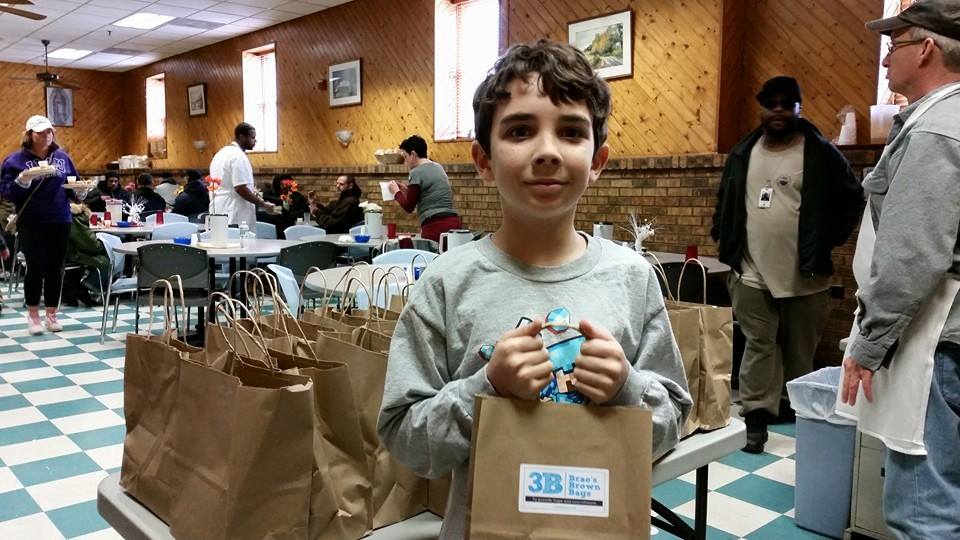
The person who inspired me the most was 11 year old Braeden Mannering, who is responsible for Brae’s Brown Bags.  In 2013 Braeden attended the Kids’ State Dinner in Washington, D.C.  This luncheon was also attended by First Lady, Michelle Obama, who asked Braeden how he was going to “pay it forward.”  He didn’t have an answer for her that day, but out of his search for an answer to that question Brae’s Brown Bags was born.  Through his3B foundation Braeden distributes brown bags, containing a water bottle, 3 healthy snacks, and a brochure listing contact information for shelters and other aid organizations, to homeless people in the area.  To date Brae’s Brown Bags has delivered over 3,000 bags to those in need.  He hopes to include specialty items, like toiletries, gloves in the winter and books for children, in the future.  It was inspiring to see what could be accomplished by a single person with an idea and the will to see that idea realized.

http://www.braesbrownbags.org

Not only was I impressed with Braeden, but with all the young people who attended.  One panel discussion was geared specifically for them.  Two State Senators and the Committee Chairman of the DE GOP sat on a panel and answered questions posed only by students.  The students asked well thought out questions on topics including what they could do to best help those who are hungry or whether the legislators would support certain items, like locating a food pantry in every Delaware high school.  Perhaps the bravest question came from a young lady who asked what help and advice they would offer to her and her family.  She stated that even though her mother works 7 days a week, it still isn’t enough to keep them from being hungry.  She completed her question with composure, but broke down after returning to her seat.  The legislators were visibly moved, as was everyone in the room.  It is easy to talk about hunger abstractly, but much harder when you can put a face on it and that face is standing in front of you.

Numerous topics concerning hunger and food insecurity were discussed during the course of the conference, but a considerable amount of time was given to the discussion of childhood nutrition, probably due to the upcoming opportunity to enact a child nutrition reauthorization bill.  On the topic of childhood nutrition, panelists discussed school lunch and breakfast programs, afterschool and summer nutrition programs and the Special Supplemental Nutrition Program for Women, Infants and Children (WIC).  Additionally, Dr. Sandra Hassink, President of the American Academy of Pediatrics, spoke about the medical implications of poor childhood nutrition.  She remarked that this is the first time in our history that we have both an obesity epidemic and significant incidence of food insecurity occurring at the same time, with the distinct possibility that people could be experiencing both problems.  Dr. Hassink also stated that it is impossible to eat healthy if you do not know how to cook and rely on prepackaged, processed foods for your meals.

Dr. Hassink’s comment about cooking wasn’t the only time that topic was brought up during the conference.  Other speakers and attendees mentioned either the importance of cooking from scratch or the unfortunate loss of knowledge in how to cook from scratch while discussing the importance of good nutrition or the task of helping people with limited resources stretch those resources.  Additionally, the importance of cooking from scratch was discussed at the table at which I was sitting.  Joining me at the table was a registered dietician from Nemours and  a group of women from the University of Delaware Cooperative Extension who staff the Expanded Food and Nutrition Education Program (EFNEP).  This program provides nutrition, cooking and budgeting information to residents of DE who qualify for SNAP, WIC, Head Start or free or reduced school meals.  After listening to all the discussion about the importance of cooking from scratch, I believe now more than ever that my concern over the loss of cooking skills is well founded and warrants further exploration into ideas to help people learn cooking and other related skills to stretch their food dollars and eat healthier.

ghandi change quote


Plenty of Food for Thought

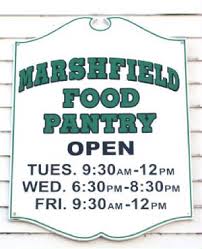
I just finished Janet Poppendieck’s book Sweet Charity?: Emergency Food and the End of Entitlement, and as I expected, in the end, we were not too far apart on our assessment of emergency food and the role it plays in assisting the food insecure.  That said, she did introduce issues I had not previously considered and challenged the way in which I had thought about certain aspects of providing emergency food.  Poppendieck contends that emergency food organizations, like soup kitchens and food banks, are run by caring and compassionate staff and volunteers who are committed to providing food to those who are hungry.  In today’s world such people and organizations are a necessity, but she also argues that these same organizations enable the cycle of hunger to continue.  By participating in providing emergency food, either through volunteering or donating, Americans may feel like they are solving a problem.  In reality, providing emergency food diverts our attention from larger societal problems like poverty and inequality and keeps us from working toward solutions to these problems for which hunger is just a symptom.food pantry open sign

In one of the most interesting chapters of the book Poppendieck discusses what is wrong with emergency food.   As someone who recently became a volunteer in two food pantries and who has felt positive about my experiences and effort, I was curious about what she would identify as shortcomings.  Listed below are the “7 Deadly ‘Ins’” of emergency food Poppendieck has identified.

  • Insufficiency—Emergency food organizations often have to limit the frequency with which clients can come to the food pantry, whether there is a waiting list for service, and the amount of food distributed to each client.
  • Inappropriateness–Emergency food organizations can not possibly have enough items to satisfy the preferences or special dietary needs of every client.  Both pantries in which I volunteer stock vegetarian beans, a commodity from the Federal government.  Very few clients take these beans and most universally say they taste terrible.  Additionally, emergency food rarely is appropriate for diabetics or sufferers of high blood pressure, obesity or heart disease.
  • Nutritional Inadequacy–As touched upon above, many food offerings through emergency food agencies are high in sodium, fats, and sugar.  There is very little fresh produce available and often several of the meats offered are processed items like hot dogs, chicken tenders and lunch meat.
  • Instability–The provision of emergency food relies on surplus food from the government and sometimes businesses, donations from the public and a volunteer workforce.  All of these components are subject to fluctuations, causing instability in providing emergency food.
  • Inaccessibility–Emergency food offerings differ with location.  For instance, urban areas tend to have more emergency food options, like food banks and soup kitchens, where more rural areas may have only one or no options.  Additionally affecting emergency food’s accessibility is the emergency food organization’s hours of operation and proximity to public transportation.
  • Inefficiency–Distribution of emergency food duplicates the food delivery system already in place.  Often as emergency food distribution agencies increase, inner cities experience a decline in the availability of markets and grocery stores.  Additionally, emergency food may seem efficient, but these agencies do not count as an expense anything that is donated, including food, equipment, storage buildings, and labor from volunteers.
  • Indignity–Distributing emergency food through food banks, pantries and soup kitchens forces those receiving assistance to be segregated from the rest of society.  They must go to a place different from where the rest of society gets their food. soup kitchen line

As I thought about these “7 deadly ‘ins'” as they related to my volunteering experience I realized I had witnessed every single one.  I believe both food pantries in which I volunteer do the very best they can with what they have to offer.  Without them, the clients would be in a much worse situation; however, I believe the increased reliance on emergency food to assist these clients is an inadequate solution to the problem they face.

In spite of the shortfalls of emergency food, Poppendieck also addresses its success, and more importantly, the price of its success.  The 1980s, when cuts were made in funding public assistance programs, saw a dramatic rise in emergency food providers, an increase that has continued until today.  As these agencies proliferated, they became extremely successful at operating, stretching whatever they got, making it work.  They highlight these successes when they fundraise or ask for donations to assure donors their donations won’t be squandered.  Infood drive turn government can rationalize further cuts in public assistance because emergency food providers are so competent in handling the situation.  Emergency food provision as enabler for further governmental reduction in public assistance is a new and troubling concept for me.

At the very end of her book, Janet Poppendieck asks what emergency food providers are to do.  She outlines a couple of options, but the one that resonated the most with me was to organize and educate, especially the educate part.  I believe we need to talk about hunger within the broader context of poverty and inequality.  While continuing to provide the best assistance that can be provided, emergency food providers need to be honest with the public, that at best, they are a Band-Aid to the problem of hunger and only through addressing the larger societal issues of poverty and inequality can the numbers of people experiencing food insecurity be diminished.

One last point I would like to make is that at no time does Janet Poppendieck disparage emergency food providers or the assistance they provide.  She acknowledges their monumental effort and that without their services the hungry of the United State would be in much worse circumstances.

Oddities, End Dates and Some Dirt

The past couple of weeks both food pantries in which I volunteer have gotten large shipments of donated items from the county food bank.  These items are not TEFAP (Federal) or State supplied food.  They are strictly items donated by the general public to the county food bank through canned food drives or individual drop offs.  These sizeable shipments have been filled with many useful and needed items, like cereals, canned fruits and vegetables, and peanut butter.  They have also contained items for clients with health problems or special diets, like low sodium soups, vegetarian items or sugar and fat free items which are good for diabetics.  I have, however, made a couple disappointing observations that I wanted to share.

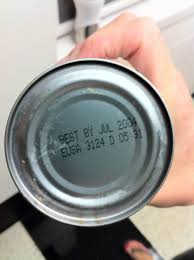
expiration dateFirst, most food items are now stamped with a sell by or use by date.  The majority of items are donated well before their expiration date, but at both pantries we have encountered items that were expired.  In several instances the items were several years out of date.  Additionally, we encountered severely dented or rusted cans.  Canned goods that were only a few months out of date or are only slightly dented are put on a table or shelf with an explanation as to why they are there, allowing clients to decide whether to take them or not.  Items that are well beyond their expiration date, heavily dented or rusted have to be thrown away.  My suggestion to people who contribute to a food bank or pantry is to look at the sell by date and the condition of the can.  This is especially important if the item is coming out of your pantry.  I know I have been surprised at how old some items are in my own pantry.  If the food item is either out of date or in questionable condition, please do not donate it.

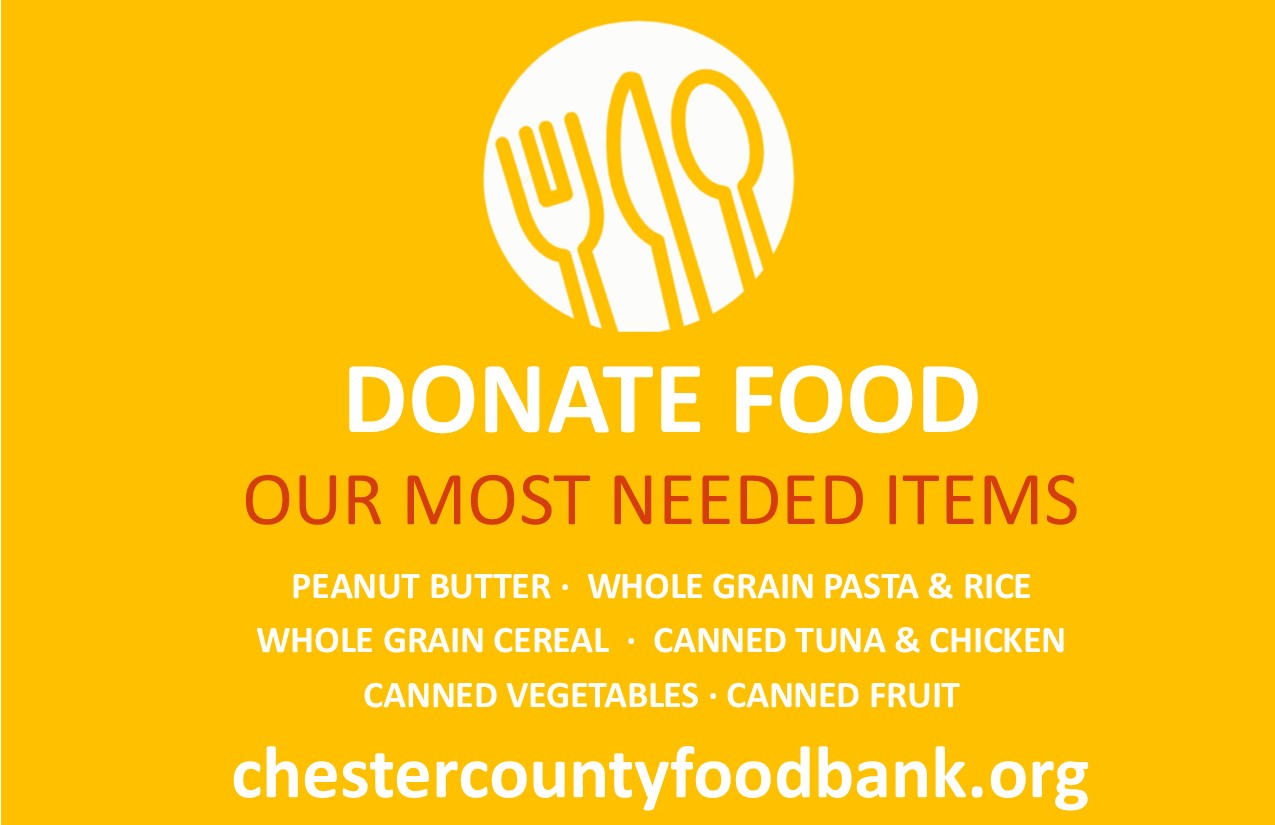
As I mentioned, most of the items donated are useful and needed, but I have seen some very odd items as well.  Some of my favorites include a can of hearts of palm, Chinese Mabo Tofu Sauce and tamarind sauce.  All of these items may be quite tasty, but they are not something the average cook, particularly in rural Pennsylvania, is going to know what to do with.  Most foodMOST-NEEDED-FOOD-DONATIONS banks and pantries have a list of items they regularly distribute or for which they have a particular need.  I encourage anyone uncertain about what to donate to contact the local food bank or check their website to get that list of most needed items.  Some items that can always be used are canned fruits and vegetables, peanut butter, and unsweetened cereals.  Please do not think of the local food bank as a place to take unwanted items from your pantry.

 And now about the dirt.  No, the dirt has nothing to do with the donated food from the county food bank.  Today I got to play in the dirt a bit.  One of the food pantries where I volunteer has raised beds in which they grow vegetables to be distributed in the food pantry.  The broccoli broccoli seedlingsseedlings we planed today were supplied by the county food bank.  In addition to the broccoli we planted today, volunteers had already planted onions, radishes, cabbage, lettuce and carrots.  To augment the vegetables grown in the raised beds, some staff members of the food pantry will plant other vegetables at their homes to be harvested for the pantry.  I love this idea of the pantry growing their own produce and this pantry is fortunate to have the space to do so.  I am excited to think of all the fresh produce that will be available to food pantry clients later this summer.


A Pause for Reflection

The past few months have been a whirlwind.  When I started out on this venture I wasn’t sure what to expect.  I told myself just put one foot in front of the other and take baby steps.  As the weeks have passed, I feel like the baby steps have become an all out gallop just to keep up with the volunteering, reading of articles and informational texts and writing this blog.  Sometimes I find myself overwhelmed by the enormity of the problem of food insecurity and the little dent I am going to be able to make in alleviating hunger.  Most days, however, I am motivated by the people I have encountered along the way and the response I have received to what little I have done so far.

I have been volunteering in two local food pantries for four months now.  Volunteering in these pantries has educated me as to who is receiving emergency food services.  The clients at the food pantries are young and old, male and female, of all races, and live in large households or alone.   In other words they could be anyone, and I suspected as much before I started volunteering.  Iliving wage have also learned, however, that a majority of people who use emergency food services, like a food pantry, live in a household with at least one person in the workforce.   In households where no one is working, it is often because members of the household are senior citizens or disabled.  A disturbing number of Americans are not able to make ends meet even though they are working.  Knowing that fact abstractly is one thing.  Looking a person who is experiencing it in the eyes while helping her fill her food basket makes that fact very concrete.

I have also learned that no matter how hard these emergency food agencies try, gaps and shortfalls exist and will continue to exist when providing emergency food.  When I started volunteering I thought that clients could come in whenever they needed food.  Sometimes that would be every couple of months, but sometimes that might be twice in one month.  This is not how emergency food works.  Clients can only come in once every 30 days, which isn’t too bad.  But here are some other things I have learned.  Sometimes there is a waiting list for closed signappointments two weeks long.  Food pantries are only open a few days a week and sometimes only during the daytime when many people are at work.  Sometimes clients can’t come when the pantry is open.  Or sometimes clients can’t get a ride to the pantry.  If they walk to the pantry they can only take what they can carry home.  Sometimes the food items run low causing rationing, or run out all together.

Not everything I have witnessed from my volunteering experience has been so discouraging though.  I have worked several jobs which involved serving the public and very seldom have I experienced such levels of appreciation from those I have served.  Additionally, I have enjoyed the warm sense of community and commitment I have found among fellow emergency food volunteers.  Providing assistance through emergency food agencies like food banks and pantries is not the answer to the food insecurity problem that I would like to see, but I do feel like through these pantries I am making an important difference in the lives people who need a helping hand and caring face.  For now, that feeling sustains me, but also pushes me to keep striving for a better solution.

stronger together

Similarly, I have been encouraged by the response to this blog.  In the two and a half months that I have been writing posts, the number of people following the blog has risen to over 190 people.  I have received very positive verbal feedback from several people as well as have had many posts be “liked” by fellow bloggers.  Additionally, I have started to receive some comments on my posts and am beginning to see the formation of the online community I hope to foster.  In that spirit, I would love to see the number of followers of this blog top 200 by the end of April.  If you know someone who is interested in this topic, or even remotely related topics, like cooking or farming, please share this blog with them.  Finally, I encourage you to participate in the conversation.  Leave me a comment, share an insight, point me in a new direction!