Plenty of Food for Thought

I just finished Janet Poppendieck’s book Sweet Charity?: Emergency Food and the End of Entitlement, and as I expected, in the end, we were not too far apart on our assessment of emergency food and the role it plays in assisting the food insecure.  That said, she did introduce issues I had not previously considered and challenged the way in which I had thought about certain aspects of providing emergency food.  Poppendieck contends that emergency food organizations, like soup kitchens and food banks, are run by caring and compassionate staff and volunteers who are committed to providing food to those who are hungry.  In today’s world such people and organizations are a necessity, but she also argues that these same organizations enable the cycle of hunger to continue.  By participating in providing emergency food, either through volunteering or donating, Americans may feel like they are solving a problem.  In reality, providing emergency food diverts our attention from larger societal problems like poverty and inequality and keeps us from working toward solutions to these problems for which hunger is just a symptom.food pantry open sign
In one of the most interesting chapters of the book Poppendieck discusses what is wrong with emergency food.   As someone who recently became a volunteer in two food pantries and who has felt positive about my experiences and effort, I was curious about what she would identify as shortcomings.  Listed below are the “7 Deadly ‘Ins’” of emergency food Poppendieck has identified.

  • Insufficiency—Emergency food organizations often have to limit the frequency with which clients can come to the food pantry, whether there is a waiting list for service, and the amount of food distributed to each client.
  • Inappropriateness–Emergency food organizations can not possibly have enough items to satisfy the preferences or special dietary needs of every client.  Both pantries in which I volunteer stock vegetarian beans, a commodity from the Federal government.  Very few clients take these beans and most universally say they taste terrible.  Additionally, emergency food rarely is appropriate for diabetics or sufferers of high blood pressure, obesity or heart disease.
  • Nutritional Inadequacy–As touched upon above, many food offerings through emergency food agencies are high in sodium, fats, and sugar.  There is very little fresh produce available and often several of the meats offered are processed items like hot dogs, chicken tenders and lunch meat.
  • Instability–The provision of emergency food relies on surplus food from the government and sometimes businesses, donations from the public and a volunteer workforce.  All of these components are subject to fluctuations, causing instability in providing emergency food.
  • Inaccessibility–Emergency food offerings differ with location.  For instance, urban areas tend to have more emergency food options, like food banks and soup kitchens, where more rural areas may have only one or no options.  Additionally affecting emergency food’s accessibility is the emergency food organization’s hours of operation and proximity to public transportation.
  • Inefficiency–Distribution of emergency food duplicates the food delivery system already in place.  Often as emergency food distribution agencies increase, inner cities experience a decline in the availability of markets and grocery stores.  Additionally, emergency food may seem efficient, but these agencies do not count as an expense anything that is donated, including food, equipment, storage buildings, and labor from volunteers.
  • Indignity–Distributing emergency food through food banks, pantries and soup kitchens forces those receiving assistance to be segregated from the rest of society.  They must go to a place different from where the rest of society gets their food. soup kitchen line

As I thought about these “7 deadly ‘ins'” as they related to my volunteering experience I realized I had witnessed every single one.  I believe both food pantries in which I volunteer do the very best they can with what they have to offer.  Without them, the clients would be in a much worse situation; however, I believe the increased reliance on emergency food to assist these clients is an inadequate solution to the problem they face.

In spite of the shortfalls of emergency food, Poppendieck also addresses its success, and more importantly, the price of its success.  The 1980s, when cuts were made in funding public assistance programs, saw a dramatic rise in emergency food providers, an increase that has continued until today.  As these agencies proliferated, they became extremely successful at operating, stretching whatever they got, making it work.  They highlight these successes when they fundraise or ask for donations to assure donors their donations won’t be squandered.  Infood drive turn government can rationalize further cuts in public assistance because emergency food providers are so competent in handling the situation.  Emergency food provision as enabler for further governmental reduction in public assistance is a new and troubling concept for me.

At the very end of her book, Janet Poppendieck asks what emergency food providers are to do.  She outlines a couple of options, but the one that resonated the most with me was to organize and educate, especially the educate part.  I believe we need to talk about hunger within the broader context of poverty and inequality.  While continuing to provide the best assistance that can be provided, emergency food providers need to be honest with the public, that at best, they are a Band-Aid to the problem of hunger and only through addressing the larger societal issues of poverty and inequality can the numbers of people experiencing food insecurity be diminished.

One last point I would like to make is that at no time does Janet Poppendieck disparage emergency food providers or the assistance they provide.  She acknowledges their monumental effort and that without their services the hungry of the United State would be in much worse circumstances.
Oddities, End Dates and Some Dirt

The past couple of weeks both food pantries in which I volunteer have gotten large shipments of donated items from the county food bank.  These items are not TEFAP (Federal) or State supplied food.  They are strictly items donated by the general public to the county food bank through canned food drives or individual drop offs.  These sizeable shipments have been filled with many useful and needed items, like cereals, canned fruits and vegetables, and peanut butter.  They have also contained items for clients with health problems or special diets, like low sodium soups, vegetarian items or sugar and fat free items which are good for diabetics.  I have, however, made a couple disappointing observations that I wanted to share.

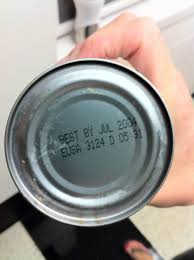
expiration dateFirst, most food items are now stamped with a sell by or use by date.  The majority of items are donated well before their expiration date, but at both pantries we have encountered items that were expired.  In several instances the items were several years out of date.  Additionally, we encountered severely dented or rusted cans.  Canned goods that were only a few months out of date or are only slightly dented are put on a table or shelf with an explanation as to why they are there, allowing clients to decide whether to take them or not.  Items that are well beyond their expiration date, heavily dented or rusted have to be thrown away.  My suggestion to people who contribute to a food bank or pantry is to look at the sell by date and the condition of the can.  This is especially important if the item is coming out of your pantry.  I know I have been surprised at how old some items are in my own pantry.  If the food item is either out of date or in questionable condition, please do not donate it.

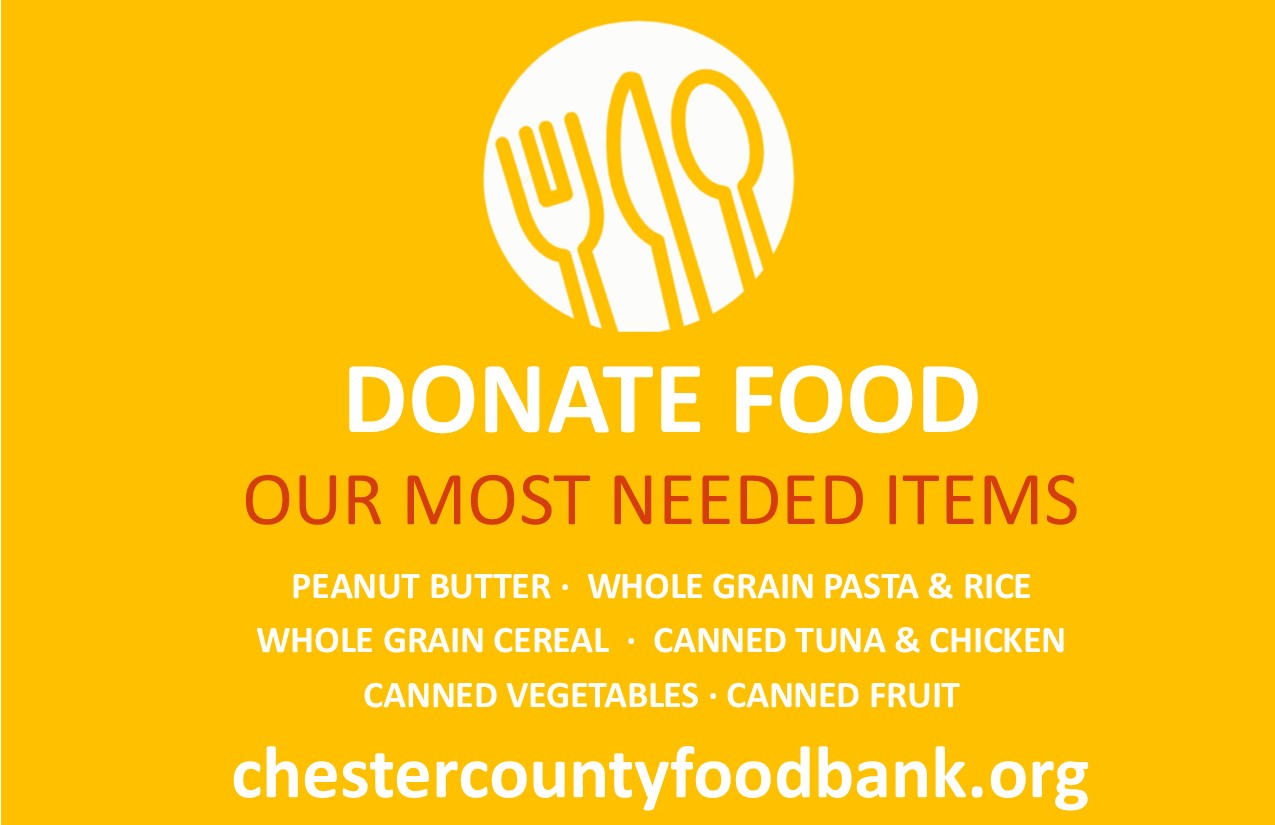
As I mentioned, most of the items donated are useful and needed, but I have seen some very odd items as well.  Some of my favorites include a can of hearts of palm, Chinese Mabo Tofu Sauce and tamarind sauce.  All of these items may be quite tasty, but they are not something the average cook, particularly in rural Pennsylvania, is going to know what to do with.  Most foodMOST-NEEDED-FOOD-DONATIONS banks and pantries have a list of items they regularly distribute or for which they have a particular need.  I encourage anyone uncertain about what to donate to contact the local food bank or check their website to get that list of most needed items.  Some items that can always be used are canned fruits and vegetables, peanut butter, and unsweetened cereals.  Please do not think of the local food bank as a place to take unwanted items from your pantry.

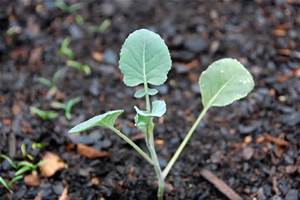
 And now about the dirt.  No, the dirt has nothing to do with the donated food from the county food bank.  Today I got to play in the dirt a bit.  One of the food pantries where I volunteer has raised beds in which they grow vegetables to be distributed in the food pantry.  The broccoli broccoli seedlingsseedlings we planed today were supplied by the county food bank.  In addition to the broccoli we planted today, volunteers had already planted onions, radishes, cabbage, lettuce and carrots.  To augment the vegetables grown in the raised beds, some staff members of the food pantry will plant other vegetables at their homes to be harvested for the pantry.  I love this idea of the pantry growing their own produce and this pantry is fortunate to have the space to do so.  I am excited to think of all the fresh produce that will be available to food pantry clients later this summer.


A Pause for Reflection

The past few months have been a whirlwind.  When I started out on this venture I wasn’t sure what to expect.  I told myself just put one foot in front of the other and take baby steps.  As the weeks have passed, I feel like the baby steps have become an all out gallop just to keep up with the volunteering, reading of articles and informational texts and writing this blog.  Sometimes I find myself overwhelmed by the enormity of the problem of food insecurity and the little dent I am going to be able to make in alleviating hunger.  Most days, however, I am motivated by the people I have encountered along the way and the response I have received to what little I have done so far.

I have been volunteering in two local food pantries for four months now.  Volunteering in these pantries has educated me as to who is receiving emergency food services.  The clients at the food pantries are young and old, male and female, of all races, and live in large households or alone.   In other words they could be anyone, and I suspected as much before I started volunteering.  Iliving wage have also learned, however, that a majority of people who use emergency food services, like a food pantry, live in a household with at least one person in the workforce.   In households where no one is working, it is often because members of the household are senior citizens or disabled.  A disturbing number of Americans are not able to make ends meet even though they are working.  Knowing that fact abstractly is one thing.  Looking a person who is experiencing it in the eyes while helping her fill her food basket makes that fact very concrete.

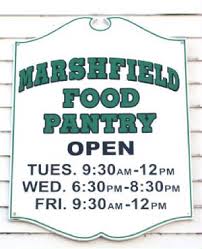
I have also learned that no matter how hard these emergency food agencies try, gaps and shortfalls exist and will continue to exist when providing emergency food.  When I started volunteering I thought that clients could come in whenever they needed food.  Sometimes that would be every couple of months, but sometimes that might be twice in one month.  This is not how emergency food works.  Clients can only come in once every 30 days, which isn’t too bad.  But here are some other things I have learned.  Sometimes there is a waiting list for closed signappointments two weeks long.  Food pantries are only open a few days a week and sometimes only during the daytime when many people are at work.  Sometimes clients can’t come when the pantry is open.  Or sometimes clients can’t get a ride to the pantry.  If they walk to the pantry they can only take what they can carry home.  Sometimes the food items run low causing rationing, or run out all together.

Not everything I have witnessed from my volunteering experience has been so discouraging though.  I have worked several jobs which involved serving the public and very seldom have I experienced such levels of appreciation from those I have served.  Additionally, I have enjoyed the warm sense of community and commitment I have found among fellow emergency food volunteers.  Providing assistance through emergency food agencies like food banks and pantries is not the answer to the food insecurity problem that I would like to see, but I do feel like through these pantries I am making an important difference in the lives people who need a helping hand and caring face.  For now, that feeling sustains me, but also pushes me to keep striving for a better solution.

stronger together

Similarly, I have been encouraged by the response to this blog.  In the two and a half months that I have been writing posts, the number of people following the blog has risen to over 190 people.  I have received very positive verbal feedback from several people as well as have had many posts be “liked” by fellow bloggers.  Additionally, I have started to receive some comments on my posts and am beginning to see the formation of the online community I hope to foster.  In that spirit, I would love to see the number of followers of this blog top 200 by the end of April.  If you know someone who is interested in this topic, or even remotely related topics, like cooking or farming, please share this blog with them.  Finally, I encourage you to participate in the conversation.  Leave me a comment, share an insight, point me in a new direction!

Curly or Plain or Bumpy Like a Dinosaur

After writing about collecting and distributing recipes yesterday I got inspired to start looking for recipes to include in the compilation.  Because I wrote about kale being a hard sell to food pantry clients and I love kale, I decided it should be a main ingredient in my first recipe.  This is a recipe I have used for several years.  I have altered the ingredients slightly to make it more economical.  I mention all the alterations in the notes so that when people make the recipe they can choose to add what their budget will allow.

3 kales

Penne with Kale and White Beans

  • 1 1/2 pounds kale
  • 3 Tbs. oil (use olive oil, if you have it, for more flavor)
  • 4-6 garlic cloves, minced (use more for stronger flavor)
  • 1/3 C vegetable or chicken stock (can use water)
  • 2 C cooked or 1 16 oz. can white beans
  • 1/2 tsp. salt
  • 1/2-1lb. penne pasta (or any short pasta)

Bring 3 quarts of water to a boil in a saucepan.

Prepare kale by removing the stems from the leaves.  Save the stems for later use (see note).  Tear the leaves into bite sized pieces.  Place the kale in a colander and rinse.  Leave in colander to drain.

Heat the oil in a large skillet over medium high heat.  Add the garlic and sauté for 2 minutes.  Stir in the kale and stock or water and cover the pan.  Cook until the kale is wilted and tender but still bright green, about 7 minutes.  Gently stir in the beans and salt and keep warm over low heat.

Place the pasta into the boiling water and cook until tender, about 10 minutes.  Drain the pasta, then carefully stir into the kale mixture.  Serve immediately.

Notes:

Instead of kale, you can use chard, collard greens or spinach.  The chard and collard greens will take a little longer to cook and the spinach will take less.

You can make vegetable stock with the stems from the kale.  Put them in a saucepan with about 2 cups of water, a pinch of salt and some pepper.  Bring the water to a boil, then turn down the heat and simmer for at least 30 minutes.  Remove the kale stems and adjust the seasoning to taste.

You can use any white bean, like cannellini beans, navy beans, or chick peas (garbanzo beans).  If using canned beans, drain and rinse thoroughly.

Any hard Italian cheese, like Parmesan, will give this dish more flavor.  Add 1/4 cup of grated cheese at the end before you serve it.

This dish can be a meal and will serve 4 or can be used as a side dish for meat and will serve more.  If you are making this as a meal, use one pound of pasta or add more beans.  If you are making it as a side dish, you can choose to omit the pasta.

You can use hot pepper flakes or a hot sauce, like Tabasco, to give this dish a little kick.  If using hot pepper flakes, add 1/4 tsp. pepper flakes to the skillet when you put in the garlic.  The hot pepper sauce can be added before serving or placed on the table to allow individuals to season to taste.

kale pasta


If You Teach Someone to Cook. . .

I have written previously about cooking from scratch, highlighting its decline and noting its importance in stretching food dollars.  Now I would like to share a my vision for the promotion of cooking from scratch, particularly among those who are food insecure.  I have tried to tailor my solutions to what will most likely work within my community.  I currently have two ideas for promoting cooking from scratch.  One is relatively simple.  The other one will be a bit more difficult to implement, but definitely possible.

Often people are hesitant to cook something new because they do not know how to prepare it.  I have heard anecdotal stories about the difficulty of trying to get food pantry clientskale heart to take kale when it was offered last year.  Many people were hesitant to take it because they had never eaten it or prepared it.  They didn’t know what to do with it.  The easiest step to take to encourage people to cook something with which they are unfamiliar or in a method with which they are unaccustomed, is to provide them with a detailed recipe.  These recipes would work for fresh produce and larger meat options like a whole chicken.  I envision them being written in more detail than the typical recipe to accommodate the person who has little experience cooking from scratch.  The recipes would also have a minimal ingredient list or at least include inexpensive and/or easily obtained ingredients.  In addition to offering the recipe, actually having a sample of the finished product on hand for people to try might further encourage them to take the new food item and try it themselves.

Expanding on the idea of providing a recipe, I would like to facilitate a partnership between the food pantry and another entity, like a grocery store or farmer, that would donate one more item needed for the recipe.  For instance, if a recipe for baked chicken was provided to anyone who took a whole roasted chicken herbschicken, partnering with someone who would provide the needed fresh herbs, lemons or heads of garlic, depending on what was needed for the recipe, would be ideal.  The lemon, herbs or garlic would only be available to those clients who took the chicken.  I see a similar paring with those items and various types of produce or cinnamon and a container of oats, but I am sure there are many more parings to be made.

The next obvious step to promote cooking from scratch is to demonstrate to people how to cook by offering cooking classes.  This undertaking will be more difficult in my community as the two pantries I am familiar with do not have kitchens.  To offer these classes these pantries would have to partner with local organizations that do have kitchens, like a church, fire hall or municipal building. These classes would focus on cooking from scratch with whole ingredients and teach a variety of skills, like how to get the most from the ingredients on hand, budgeting and shopping and healthy cooking.

The ingredients used in the recipes for these classes would either be things people might already have on hand, distributed by the food pantry or inexpensively obtained at a local grocery store.  The classes would include a cooking demonstration as well as nutritional information and cooking tips and shortcuts when applicable.  I would also like to see informational classes that did not necessarily involve a cooking demonstration provided as well.  These classes would cover topics like the importance healthy eating and how to achieve it, meal planning and creating a shopping list, and strategies for stretching your food dollars.

CM cooking classI am not reinventing the wheel here.  Emergency food providers across the country are already doing most of this and more.  Share Our Strength, a national nonprofit working to end child hunger in America, has a program called Cooking Matters.  Through this program parents, caregivers and children learn about cooking, budgeting and decision making food skills to get the most out of their food dollars.  Many larger food banks across the United States offer Cooking Matters programs through their facilities.  Additionally, other large food banks have developed their own programs, as is the case with the Food Bank of Delaware.  Their program does not have a cooking class component, but it does offer informational classes to low income participants on some of the topics outlined above.

http://www.cookingmatters.org

http://www.fbd.org

As I go forward on my journey I will endeavor to advance these ideas in my community.  The first area on which I will focus my efforts will be compiling recipes to be distributed.  In addition to recipes provided by food panty staff and volunteers, I hope to encourage those clients who do cook to share their recipes to be included in this undertaking as well.  As I gather recipes, I will share some here and I encourage those of you who like to cook to share your favorite recipes.  Provided they meet the criteria stated above, I will gladly share them with food pantry clients. recipe card

Produce in the Parking Lot

On March 26th I had the opportunity to attend a program sponsored by the Delaware Historical Society entitled Forks in the Road.  This panel discussion, addressing contemporary food issues in Delaware, was the first in a series the Historical Society plans to present over the next year and a half.  The talk was moderated by Ed Kee, Delaware’s Secretary of Agriculture and the panel included two farmers, Larry Jester and Georgie Cartanza; former Chief Planner for the DE Department of Agriculture, Michael McGrath; Director of Marketing for the Kenny Family Shoprite, Dan Tanzer and Produce Director for Urban Acres Produce, LLC, Michael Minor.

While all the panelists were engaging and I had interest in all the topics that were discussed, I was particularly interested in Mr. Minor’s discussion of Urban Acres Produce.  Urban Acres operates 4 produce stands, Urban Acresselling locally grown produce when possible, in Wilmington’s East Side, a community lacking easy access to healthy food.  The term used to describe communities that lack convenient access to healthy food is a food desert.  A governmental working group comprised of members from various agencies including the USDA defines a food desert as a “low income census tract where either a substantial number or share of residents have low access to a supermarket or large grocery store.”  Food deserts exist in every state, in urban locations and rural settings surrounded by growing produce.

Several aspects of this venture appeal to me.  First, Urban Acres’ produce stands are an innovative way to introduce healthy food to residents in an area that has limited access to fresh produce.  These stands operate from May through November in 4 different locations.  (For days, hours and locations click on link below)  The stands are situated in convenient places that significant numbers of residents frequent, like apartment building parking lots or churches, in hopes of reaching more residents. In addition to just selling produce, Mr. Minor discussed the necessity of educating people about the importance of eating healthy food whenever possible.

https://centralbaptistcdc.com/

Urban Acres welcomes volunteers but also utilizes paid staff members from the community to run its produce stands.  Urban Acres was started not only as a means of getting produce into a food desert, but as a way to provide a community resident with a job.  By engaging the community, either through employment or as volunteers,  Urban Acres is empowering the citizens of the East Side to create a better situation for themselves.  With Urban Acres as an employer, the community will also have a vested interest in the success of these produce stands in order to keep those jobs in the community.

Finally, these produce stands provide access to local produce during the growing season.  The nutrient content of produce begins to decrease once it is harvested.  Local produce is likely to be higher in nutrients because there is a shorted time between harvest and consumption.  It is better for the environment since it has less of a distance to travel to get to market, using less fuel and creating less pollution.  Finally, by purchasing local produce Urban Acres is also assisting smaller, often family farming operations and supporting the local economy.   But perhaps the best reason to provide local produce is that it just tastes better because it is picked at the peak of ripeness!

local produce

Some may wonder why I am spending a blog post discussing urban produce stands.  Hunger, food insecurity and food deserts are all pieces to the same puzzle.  These problems speak to larger issues in our society like wage inequality, unemployment and poverty.  They are also intertwined with what the government subsidizes, large agribusiness growing corn and soybeans, and what it does not, smaller farming operations growing a diversity of produce.  These subsidies help make heavily processed food cheaper and produce more expensive.  Finally, making produce available in communities which have had limited access to it connects with my discussion of cooking from scratch and stretching food dollars.  You can’t cook what you can’t purchase due to lack of access.

I am encouraged when I see a community coming together to create a solution for its specific problem.  As I told friends and family that I was planning to assist the hungry and food insecure, several people told me this was an issue of concern for them, but they were overwhelmed by the size of the problem and felt immobilized with helplessness.  I was too initially, but decided my mission was to work within my community to bring awareness to the existence of food insecurity and other food scarcity issues and to help find solutions to lessen the numbers of people experiencing these problems.  I am using this blog to chronicle that effort, but also to educate others on the larger, national issues and hopefully build a community to grow ideas and create solutions to these problems.  Some of the best catalysts for change have come out of local, grassroot operations.

Fruits and vegetables!

butternut squashThe food pantry I was spinachvolunteering in yesterday had some of the butternut squash I wrote about a couple of weeks back.  They were also offering frozen blueberries, fresh apples and fresh spinach, which had been harvested from greenhouses just last week.  I am pleased to see minimally processed produce, even if it is frozen like the blueberries and squash, offered.  I didn’t pack too many orders yesterday, so I don’t know how readily the squash and spinach were being taken, but the apples and blueberries are always popular, particularly in households with children.


Chicken in a Pot

As I mentioned in a previous post, my mother cooked dinner from scratch most nights.  I came from a family of modest means and I understood that my mother cooking was one of the ways we saved money.  I was taught that food was never to be wasted, so we ate leftovers.  I learned that if you knew how to cook it properly, a cheaper, lesser cut of meat tasted wonderful and wasn’t tough.  But cooking from scratch means more that just knowing how to prepare food.  It means knowing how to plan meals, budget your time, make a grocery list and go shopping.

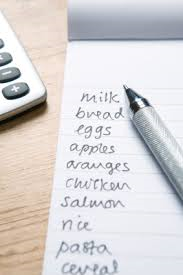
grocery listOne of the best ways to get the most for your food dollar is to create a shopping list and stick to it.  To make a shopping list, you would first need to create a meal plan so that you will know the ingredients you will need.  When planning meals, it is important to consider what is on sale, what you already have on hand and what time you have available to cook during the week.  Once you have a detailed grocery list you are ready to head to the grocery store.

It is easy to look at a grocery store’s sale circular or clip coupons and purchase the cheapest processed foods.  You may feel you are getting the most food for your dollar and possibly you are getting more items, but at what cost?  Mark Bittman wrote a good op-ed article in The New York Times, entitled Is Junk Food Really Cheaper?

http://www.nytimes.com/2011/09/25/opinion/sunday/is-junk-food-really-cheaper.html?_r=0

In this essay he compares the cost of feeding a family of 4 at McDonald’s to the cost of feeding that same family a home cooked roasted chicken dinner.  The home cooked meal is cheaper, and could cost even less if the meal was not as heavily meat based.  Additionally, one must consider the hidden cost of eating heavily processed foods–obesity, diabetes and other diseases that accompany being overweight.  What you save today, may cost you down the road in doctor’s bills and poor health.

To demonstrate how cooking from scratch stretches food dollars I will use a whole chicken versus a bag of chicken nuggets.  The price of a whole chickencartoon chicken at my local grocery store was $1.29 per pound and the average chicken weighed 7 pounds, making the cost of the chicken roughly $9.00.  The most economical bag of chicken nuggets I could find was $4.49 for a 1 pound, 11 ounce bag.  You could by two bags for roughly the same $9.00.

One can assume the chicken will contain roughly 35% waste in the form of bones and excess fat deposits.  Using that assumption, a 7 pound chicken will yield 4.55 pounds of meat, compared to 3.38 pounds of chicken nuggets from the two bags combined.  Not only does the chicken produce over a pound more meat, but once the meat has been eaten off the bones they can be used to make a soup or chicken stock.  Finally, the chicken meat is only chicken meat.  The nuggets contain other ingredients than chicken, including added salt, sugar and fat.  To illustrate the unhealthy result of the extra ingredients in the nuggets just look at the percentage of fat in the calories for each service size.  For the brand of nuggets I used as my example, roughly 60% of the calories in the nuggets were fat calories, compared to roughly 40% for the roasted chicken with the skin.  The percentage would be even lower without the skin.

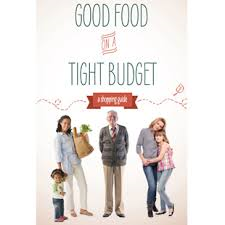
Meal planning, creating a shopping list and cooking from scratch may seem time consuming and more difficult that microwaving some chicken nuggets, but they get easier with practice.  The Environmental Working Group has aEWG pamphlet helpful pamphlet, entitled Good Food on a Tight Budget, free on their website

www.ewg.org/goodfood

or with a contribution you can receive a copy.  The pamphlet provides numerous tips and tools for budgeting your food dollars, meal planning and shopping.  It also contains recipes.  Having a good all purpose cookbook is a must too.  These cookbooks provide instructions for the basics like hard boiling an egg to more complicated recipes.  They also contain information on meal planning, nutrition, shopping tips, cooking techniques and other helpful hints.  The Joy of Cooking and the Fannie Farmer Cookbook are two examples of classic, all purpose cookbooks.  How to Cook Everything is a more contemporary all purpose cookbook that includes numerous variations on recipes.

joy of cooking             fannie farmer              How to cook everything

To make your food dollars stretch takes time and commitment.  The key is to know your schedule.  Try to find a block of time each week to look at your schedule and plan meals, basing that meal plan on the time you actually have to cook the meals.  When you have a day or two where you are limited in meal preparation time,  try to prepare items for those days’ meals ahead on a day off or when you just have more time.

For those who are food insecure and may never have cooked this way, attempting to cook from scratch is probably a scary prospect.  What if something goes wrong in the cooking process and the food is ruined?  They do not have the funds to just try again.  In my final installment of this series I will present some ideas I would like to see offered through my local food pantries to help those needing assistance learn how to make the most of the food they receive from the food pantry.  I know many of these ideas are currently offered at larger food banks, so if anyone has any experience with these ideas, positive or negative, I welcome the input.

Under Cooked, Over Processed

dad cookingI grew up in a household where my mother cooked, almost every night, almost always from scratch.  Watching her come home after working a full day and then prepare a meal from scratch instilled in me a belief that cooking was an important task in running a household.  I started cooking in the second grade when I was in 4-H.  I entered my first cooking contest when I was 7 or 8.  When I was living by myself I cooked a big meal every weekend and ate off the leftovers all week.  Now I cook dinner for my family on average 5 nights a week.  And by cooking, I mean from scratch, using whole ingredients.

I am not writing this to toot my own horn.  I like to cook, always have, and usually find it a relaxing, creative outlet.  Given the pleasure I get out of cooking and the importance I place on the task, I was surprised to learn in a report from the Organization of Economic Co-operation and Development (OECD) that Americans spend an average of just 30 minutes per day cooking.  This earns us a rank of 34th out of 34 countries in the amount of time we spend cooking.  I’m sure the reasons Americans cook so little are as varied as our foods.  I understand not everyone is going to have the zeal for cooking that I do.  Some people even hate cooking, ranking it right before their worse household chore.  Others may enjoy cooking, but don’t cook very often for a variety of reasons.

busy mom

Many Americans will tell you the lack of time is a major factor in why they do not cook from scratch.  Most American households now have both parents in the workforce.  Additionally, today’s families are involved in so many activities that often evenings become a series of comings and goings as children need to be shuttled to and from practices or lessons not to mention any evening activities Mom or Dad need to attend.  Finally, in today’s work environment, Americans are having to work longer hours to meet the increased demands of their job or work more than one job to make ends meet.  All of these demands add up leaving limited time for meal preparation.

Coinciding with the time constraints most Americans experience in their lives is the rise in availability of convenience foods.  I am not sure if the proliferation of prepackaged, processed convenience foods is a response torice a roni our fast paced lives or has allowed our fast paced lives to continue, but these foods have shortened the amount of time required to put a meal on the table.  Michael Moss chronicles the creation and marketing of convenience foods, mostly as these foods relate to the obesity epidemic in the United States, in his book Salt Sugar Fat: How the Food Giants Hooked Us.  He discusses how the marketing of these foods is aimed at working mothers and the ease these foods will bring to their lives by freeing them from the task of cooking from scratch.  I have to admit that I have reached for these convenience foods when I need to get a quick meal on the table between picking one son up from an after school activity and taking the other one to an evening practice.

Another reason for the decline in cooking might be found in this disturbing statistic reported in a Huffington Post article from September 2011.  The article states that 28% of Americans do not know how to cook.  That is almost one third of us!  Why is this?  Perhaps this statistic is a by-product of several decades of increasing reliance on prepackaged, convenience foods.  Parents are not passing on the skills of cooking from scratch if they are increasingly adding water or milk and a prepackaged spice mix to a box of noodles.  Furthermore, according to the author Michael Moss, Family and Consumer Science classes, formerly called Home Economics, often rely on the use of these convenience foods when instructing students in cooking.   That would be in the schools were Family and Consumer Science is still taught.  In many schools it has disappeared completely from the curriculum.  I guess it is not surprising that so many people do not know how to cook, if there exists little opportunity to learn to cook.

That so many people do not know how to cook troubles me profoundly for a couple of reasons.  After reading Michael Moss’ book Salt Sugar Fat: How the Food Giants Hooked Us, I am convinced our reliance on processed convenience foods is a leading cause of our obesity epidemic and the dangerous rise in diabetes rates.  Being able to cook whole foods that have not been heavily processed and do not contain added salt, sugar and fat is a necessity to bring those rates down.  But cooking from scratch has another important benefit.  Knowing how to cook from scratch makes money spent on food go further.  In my next post I will address how cooking from scratch stretches food dollars, a benefit to all, but a necessity to the food insecure.