 Monday I sat down to write, but was unable to get started. I had a topic–charitable organizations alone can not adequately address poverty and food insecurity. I had done reading on the topic and had even written out some notes and a basic outline. Still nothing came. I am very familiar with the topic, having touched upon it several times already in my writing, and have definite ideas about the role charity should play in addressing poverty. I thought maybe the strong opinions I had regarding the topic might be creating a barrier to writing. Sometimes the posts I am the most emotionally attached to are the more difficult ones to write. Consequently, I decided to put my chosen topic away and look for another one to write about, maybe something positive and uplifting as I was feeling a bit overwhelmed at the enormity of the problem of food insecurity. I began searching on the Internet, reading articles and postings on various websites, but nothing jumped out at me, certainly not anything positive. And then, just before I my blogging day ended and I had to shift back into Mom mode, something caught my eye. The President had released his proposed budget.
As I transitioned from my home office to the kitchen, I switched on the radio to listen to the evening news cycle. The release of the proposed budget dominated the evening news, with NPR even incorporating the budget release into their banter during their winter fund drive break as a result of the budget’s proposal to zero out funding for the Corporation for Public Broadcasting. Dinnertime neared and the radio got turned off. It wasn’t until later that night that I was able to check back in to various news sources to get an update on what the budget contained. I expected there to be information and even some criticism from various news outlets. While I was not expecting good news to come out of this budget, I was not quite prepared for what greeted me.
There were articles and analyses about the content of the proposed budget, but there were also statements and press releases, from various organizations advocating for and assist with those experiencing poverty and food insecurity, who I follow on Facebook. And these organizations, who make it their purpose to assist those in poverty, who understand intimately what the result of these proposed budget cuts will be, were outraged. Among those responses, the harsh statement from Abby J. Leibman, President and CEO of MAZON: A Jewish Response to Hunger, calling the budget proposal a “moral disgrace,” really grabbed my attention. At that moment I realized that the statements from the these organizations, condemning this budget, were making the same point I had been planning to make in my aborted post on Monday. Philanthropic organizations alone can not make a dent in the problem of poverty or food insecurity. Nor should they be expected to take point on a problem as complex as poverty. These organizations, who are in the trenches trying to help people who are hungry, know that if you further slash these social safety net programs or re-work successful programs, like SNAP, real people will suffer and the problem will only get worse.
The anti-hunger field has been prepared for disappointment, but this proposal is beyond the pale.
Abby J. Leibman President & CEO of MAZON: A Jewish Response to Hunger
Over the past couple of days I have learned more about the President’s proposed budget, especially with regard to social safety net programs like SNAP. I have saved numerous articles and website postings critiquing this budget and the changes it proposes to these programs. The despair I felt paralyzed by on Monday has been replaced by anger and indignation. I am going to spend some time reading all the material I have saved. Once I have done that I will share with you why this budget is the train wreck so many people who study poverty and/or work with the poor know it to be. For now I will leave you with the main question on my mind. Have we Americans lost our moral compass when it comes to understanding the reasons for poverty and the steps needed to be taken to successfully address poverty? Looking at this budget, it sure feels like it.
 immigrant population, and although these policies are targeted at undocumented immigrants, the ripples of fear they have caused are moving through the qualified immigrant population as well.
 years, maybe even decades.
 Unfortunately, the heartbreaking story of this family is not an isolated event. Last fall fires burned out of control in large areas of Sonoma and Napa counties in California, including business and residential areas in the city of Santa Rosa. The countryside surrounding Santa Rosa is lovely wine country, but Santa Rosa itself is a large city, with tens of thousands of residents. A wildfire in the vineyards on hills would harm the economy, but a wildfire within the city of Santa Rosa would cause devastation for thousands. At the time of the fires, I didn’t stop to think who would suffer the most as a result of these fires, or that vastly different levels of suffering would even be experienced. On reflection, I realize the immigrant population will experience a greater loss as a result of these fires. Santa Rosa, like most California cities and towns, has a large immigrant population, both documented and undocumented. These immigrants, who lost everything in these fires, can only receive governmental assistance if they meet the previously explained requirements. Additionally, FEMA assistance, which is vital to help those experiencing a disaster put their lives back together, is only available for U. S. citizens, non-citizen nationals (Somoans), and qualified aliens (those living legally in the U.S. for at least 5 years) . For the others, there will be no money for them to rebuild their lives after this disaster.
 I wanted to let my Facebook followers know that I have launched a
  The other day, as I was scrolling through my Facebook feed, I came across a reposted blog entitled
  advantage of you and/or the system.
 In addition to being non-judgmental and compassionate, however, we try to offer kindness and restore a little bit of dignity to those who are struggling daily with the weight of poverty. When we learn about a client facing a particularly difficult situation, we try to brighten that person’s day. For the grandmother who is raising some of her grandchildren or the caretaker of an ailing family member, we try to slip in a brownie mix or some other special treat if we have them. We keep on hand some birthday gift bags filled with all the fixings for a birthday party for households where a child is celebrating a birthday, but there is no money for a celebration. For clients who are cancer patients we give scented lotions and soaps donated from a local store when they rotate their stock. I can tell the aim of offering these niceties is successful in lessening the burden of shame these people carry by the look on the recipient’s face and the thank yous, often said repeatedly, we receive when we let them know about the item. And this is why I have chosen the items I have for my food drives. I wanted to pick things which would be a treat and would, if only for the amount of time it takes to drink a cup of coffee, allow someone in poverty to put down the weight of shame society has asked them to carry and and live like a person worthy of dignity.
 As one year comes to a close and another opens, full of possibilities and potential, it is only natural to reflect on what has transpired over the past year, and to look forward and plan for the upcoming year. Many set resolutions for themselves based on goals they wish to attain, and others start new ventures. I am no different than most. This morning I made friends with my treadmill again and started logging my daily water intake, in hopes maintaining a better level of hydration. I have not limited my reflections and resolutions to just my personal life, however. As a result of stepping away, over the past year, from my bi-monthly schedule of locating, researching, and writing posts about interesting and informative topics concerning poverty and food insecurity, I have been able to think about what I hope to accomplish by writing the blog, to what degree I have been successful, and what, if any, changes need to be made. Consequently, I have decided to introduce monthly narratives about people I encounter as I assist those who are experiencing food insecurity.
 frequently experienced when talking with others about poverty, especially with regard to public assistance. The comments causing my frustration concern the questioning of the deservedness of those who receive any form of public assistance, whether that assistance is welfare (TANF), food stamps (SNAP) or food from a food pantry. I’ve heard individuals classify those receiving assistance as lazy and living off the hard work of taxpayers or as illegal immigrants who have only come to the United States to get a handout. Running through all of these comments is the theme that those in poverty are at fault for their situation, should feel shame, and any help they receive should carry a punitive component. Over the past few years of writing this blog, I have presented statistics and facts about the average individual receiving assistance in an attempt to educate those who make such statements as to who the typical individual receiving public assistance is and the typical circumstances causing his or her need. Unfortunately, I do not think I have made much headway in convincing those critical of public assistance that the majority of those receiving it are truly deserving.
 Refusing to give up, I have used my time away from writing to think about another strategy I can use to encourage these folks to stop and consider the possibility that the majority of individuals receiving public assistance are in dire straits, are working as hard as they can to get out of their situation, and do deserve the assistance they are receiving during their time of need. As I have engaged others in a dialogue about poverty and the deservedness of those receiving public assistance, I have noticed that quite often the individual questioning the legitimacy of those in poverty to receive assistance is familiar with a person or family’s story which demonstrates for them genuine, legitimate need. Those critical of public assistance give a pass to the individuals in these cases. As a result of this observation, I have decided to write each month about a real person who is struggling with poverty and food insecurity, and whose story will hopefully give pause to someone who doubts the necessity of a strong social safety net in the United States. For these monthly narratives, I intend to draw on firsthand encounters
 Today is #Giving Tuesday, a global day of giving, intended to kickoff the end of year charitable giving season. This movement was started in 2012 by a group at the
 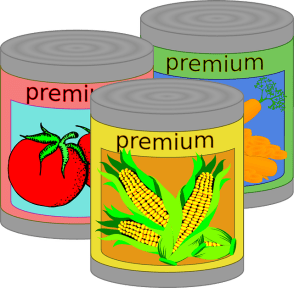 families in need at Christmas. But food pantries need donations throughout the year and are always happy to receive staples, like canned fruit and vegetables, pasta, soups, peanut butter and jelly, and tuna to name a few items. One consideration to keep in mind when collecting these staple items is to try to find the healthiest versions possible, as people receiving food from a food pantry want, and often need, to eat healthy too. For instance, when purchasing canned vegetables, soups, and peanut butter look for low and no sodium options. Try to buy canned fruit packed in light syrup or its own juices and for canned meat, like tuna or chicken, choose those packed in water rather than oil. Finally, look for hot and cold cereals which are 100% whole grain or at least list a whole grain as the first ingredient.
 Pennsylvania and through the statewide program
 Being involved in a food pantry during the holiday season results in a seesawing of emotions for me. I have more than once found myself leaving a volunteer shift in low spirits over the holiday season. Hearing the stories of individuals and families who find themselves in such heartbreaking and often desperate situations is extra difficult when the balance of your life is filled with thoughts of and plans for the gastronomic bounty that is Thanksgiving and the excitement of giving and receiving that comes with Christmas. The juxtaposition of these two very different life situations can leave me filled with a combination of anger, sadness and helplessness.
 she will provide Christmas presents for her children, but how she will feed them dinner on Christmas Day. And I can not begin to explain to you the look of excitement and joy I saw on the faces of several young children as they picked out the sweet treat we gave out last December.
 This past Saturday the Chester Country chapter of the A.B.A.T.E. motorcycle group delivered the results of their annual food drive to the food pantry. The group estimates this year’s drive netted approximately 10 tons of food and personal care products. I was unable to be there when the food arrived, but I hope to be able to attend this event next year. The caravan of motorcycles and pickup trucks pulling trailers loaded with food was met at the edge of town and given a police escort through the town center to the building that houses the food pantry. To me one of the joys of living in a small town is the hoopla that occurs for an event like this. I’m certain when I witness it firsthand I will tear up.
 life.
life. To truly change the plight of the food insecure requires a much larger nationwide effort, starting with a strong social safety net and jobs which pay a livable wage, and yet, as a nation Americans currently seem very reluctant to embrace these policies. This divide between the individual acts of generosity I have witnessed repeatedly and the willingness of the greater American society to support policies that will cut aid to the very same people that local generosity has helped is befuddling to me. I have read articles and books to try to understand it. I have engaged in conversation with and listened to those who support cuts to the social safety net to try to understand it. And still I do not. So as I celebrate this Fourth of July with family and full table of food, I will be thankful for the individual generosity of others and hopeful that their generosity continues to be enough to bridge the gap for those in need until our society can come together nationally to work toward nationwide solutions to food insecurity which will lift people up rather than just bridge a gap.
 the 2017-18 school year, every student enrolled in K-4th grade will be able to receive breakfast and lunch at no charge. In addition to providing free breakfast and lunch to elementary school students, the Board proposed a district-wide policy to guarantee all students with lunch debt will continue to receive a regular lunch regardless of that debt and all attempts to collect payment on lunch debt will be made through contact with parents or guardians, not children at lunch.
 schools in the District to provide breakfast and lunch under the same circumstances as previous years. These remaining three schools will continue to experience cases of school lunch debt as they have in the past. To address future cases of school lunch debt, the School District has proposed a district-wide policy to only discuss this debt with parents or guardians of the children who carry the debt. In other words, no action to regarding a child’s school lunch debt will be taken with the child during the during his or her lunch. Furthermore, any child with school lunch debt will continue to receive the same lunch listed on the daily menu, just like every other student getting lunch. No more dreaded cheese sandwiches!
 I hadn’t heard of lunch shaming, most people probably hadn’t, until a few months ago. Now the topic seems to be in the news everywhere, thanks in part to the
  school districts, as well as the general public, are making attempts to alleviate existing debt. In districts where the debt is small enough, it may just be absorbed or funds may be shifted from the General Fund to offset the debt. For many larger districts, however, this is not an option. Most school district Food Service Managers actively work with families owing school lunch debt to find solutions for paying off the debt. Additionally, these managers strive to enroll every student who is eligible in the free and reduced school lunch program. In addition to school districts trying to lessen their meal debt, the general public has gotten involved, especially once reports of lunch shaming started being reported in the news. According to GoFundMe, at least 30 active campaigns exist to help pay down lunch debt in a particular school district. Additionally, two high school juniors in West Palm Beach, FL have started
 that maybe schools should just be providing all students with lunch, much in the same way students are provided with textbooks and transportation to and from school.
 especially one located in a community with significant poverty, and she will tell you that children come to school hungry every day of the school year. Research exists showing the negative impact hunger and lack of good nutrition can have on children and learning. Many of the proposed solutions to the problem of school lunch debt, and the larger underlying problem of childhood hunger will cost money. As a society we have to decide whether we want to pay the cost to solve a problem in its infancy or wait to pay for the all the repercussions that the problem will cause if allowed to exists unchecked. Feeding hungry children now is a less costly solution than having to address the
  From a Simmer to a Boil