The food pantry where I volunteer operates on an appointment basis. One client is scheduled every half hour. This method of operation ensures a manageable flow of clients receiving food and keeps the waiting area from becoming too congested. Unfortunately it also creates a backlog of clients waiting to receive an appointment for food, sometimes as long a two weeks. When a client is unable to keep an appointment, they go back into the line of clients waiting for an appointment.

The past two weeks, during my time volunteering at the food pantry, something unusual has happened. Clients scheduled to come and get food have not come in for their appointment. I volunteer from 9am-12pm, so usually only 6 clients can come in during that time to receive their monthly allotment of food. Often we have one client out of the six not show up, but this past week only one client came in for food. During that time we were also able to assist someone who came in without an appointment, but was eligible to receive food. The previous week only half of the scheduled clients kept their appointments.
At first glance clients not coming in for food may seem like a good thing. Maybe their situation has changed for the better. Maybe they are no longer food insecure. But after almost a year volunteering in food pantries I have learned this is probably not the case. In the past clients  usually fail to keep appointments to get food because their ride fell through or their car broke down. They have missed appointments due to illness, either their own or another family member. During the winter months weather is a factor, particularly for the clients who walk. Sometimes clients schedule their appointments to coincide with a break from work, but for whatever reason that break doesn’t happen as scheduled.
My point in sharing my concern with clients not showing up for their appointments is not to complain about wasted time or denigrate our clients. My intent is to show how this situation perfectly illustrates one of the “Seven Deadly ‘ins'” of the emergency food system, as posited by  Janet Poppendieck in her book Sweet Charity. The “deadly in” to which I am referring is inaccessibility. This particular food bank is open from 9am-4pm, 3-4 days per week, but only on week days. Furthermore clients must have an appointment to receive food. They must remember to call two weeks before their eligibility date because of the roughly a two week waiting period for an appointment. If they find at the time of the appointment they can not make it, as stated above, them must start the process all over again. Calling to cancel is helpful for food pantry staff, but usually the cancelation, if it comes at all, is last minute as the reason is usually unforeseen. Consequently, staff is rarely able to reschedule another client on such short notice; therefore, not only has the originally scheduled client not received food, but s/he has also kept someone else from getting an appointment. All of these clients are in need of food, but due to the limitations of the emergency food delivery system it is inaccessible to them.
This example of food pantry clients missing their appointments also highlights another of Poppendieck’s “Seven Deadly ‘ins,'” the inefficiency inherent in the delivery of emergency food. Not only does this method of delivery require a sizeable three tiered system (federal, state and local agencies) to distribute the food, but it duplicates the food delivery system already in place in society–the grocery store. In our rural community there are at least 3 large grocery stores which are open seven days a week, two of which are open 24 hours a day. Additionally, there are several markets in and around town and a weekly farmers’ market during the growing season. Wouldn’t it be more efficient and cost effective to just increase the monthly SNAP allowance and make sure all those who are eligible to receive those benefits are getting them, instead of funding this inefficient, parallel food delivery system? This option would allow those who are food insecure and need assistance to use the system already in place in society when it is convenient for them, given their daily commitments, instead of relying on a parallel food delivery system that is much less convenient to access.
In a chapter from A Place at the Table, the companion book to the documentary of the same name, Joel Berg compares the emergency food delivery system to the fireman’s bucket brigade of the past. Prior 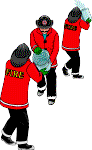 to the mid 1800s, when there was a fire in a city or town, bucket brigades would be formed to combat the fire. Citizens would line up from the town well or another water source and pass buckets full of water to the fire, with empty buckets returning down another line. The problem was that these bucket brigades, although well intentioned, rarely put out any but the smallest of fires. To remedy the inefficiency of the bucket brigades local governments stepped in to create fire companies with better fire fighting equipment. Today we would never think of trying to fight a house fire with a bucket brigade.
Hunger in the United States is a fire that we are currently trying to fight with a bucket brigade. Local citizens in food banks, pantries and soup kitchens across the country are trying to put out the building sized fire of hunger with a bucket sized solution. Just like when the government of yesteryear stepped in to create a more effective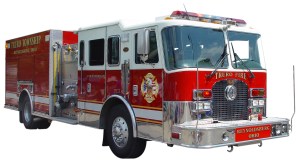 solution to the problem of fires, the government of today needs to reorganize how assistance for those who are food insecure is delivered into a more efficient, effective method. I enjoy volunteering in the food pantry and the good feeling I get from knowing I am helping someone, but I look forward to the time when the emergency food delivery system of food banks, pantries and soup kitchens goes the way of the bucket brigade. Once that happens, maybe the fire of hunger in America will begin to be extinguished.
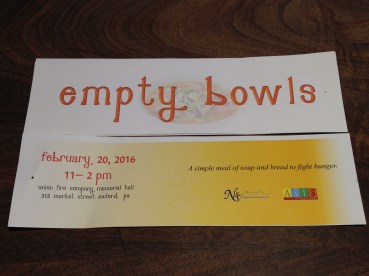
 also available. Students from a local private school had decorated colorful placemats for the tables and music students from the arts’ alliance music programs provided musical entertainment for diners.
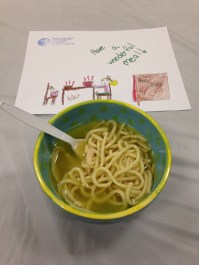 housed. I went over to say hello and while we were talking I asked her about the success of the fundraiser. She said that the arts’ alliance ran out of the 140 bowls purchased for people to decorate. People who did not wish to decorate a bowl or were not able to because the bowls sold out, were still able to purchase tickets and come to the luncheon. While at the luncheon, I saw several people using disposable bowls, indicating more than 140 people participated in this fundraiser. I do not have a definite count of tickets sold or money raised, but the community services director seemed very please with the outcome, indicating it had grown substantially over last year.
 political traditions. This motto aided in the creation of Poland’s 1505 constitutional legislation, which transferred political power from the monarchy to parliament. It also sounds very similar to, and perhaps inspired the creation of, the American Revolutionary War demand “No taxation without representation!” More recently the phrase was used the 1990s in the disabilities rights movement. The ancient phrase expresses the equally age old notion of self-determination, that people want to control their own lives.
 who run food banks invited some of their clients in to talk with them and other community leaders about the problems they are facing? And not just food related problems, but all of the problems they face. What if emergency food providers and other community leaders listened to them as they discussed their problems and believed they were the experts on their problems, including the solutions? What if after that meeting, clients, emergency food providers and community leaders collaborated, using the ideas of the clients coupled with the resources of the community, to address some of these problems? I think all parties involved would be surprised at what might be accomplished. I also think we would see stronger communities, as divisions decrease and understanding and respect grows.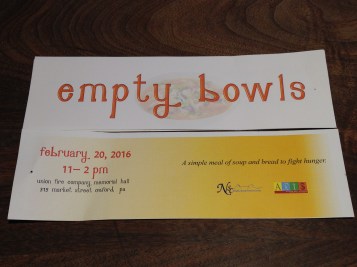
 available the day of the event as long as supplies last. Once the soup has been consumed, the bowl is yours to take home to serve as a reminder that hunger exists in our world.
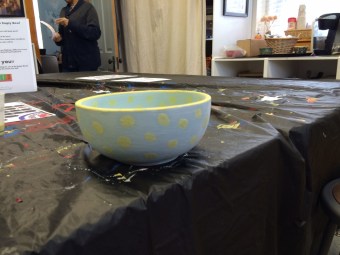
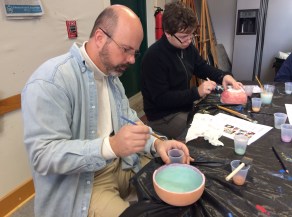 This past Saturday my family went to decorate our bowls, some more enthusiastically than others. (It’s hard to get enthusiasm out of teenagers sometimes!) We got our bowls, chose our color palette and got to work. We all had different styles and ideas. I had been stressing over what to paint, as I am not artistic at all. In the end, I decided it was best to keep it simple and went with stripes and polka dots. When these bowls are fired the colors will darken a bit. Since finishing our bowls we have all mentioned how excited we are to see our finished products. Check back after February 20th and I will have pictures of the fired bowls! There are two more Saturdays left to decorate bowls, so if you live in my community and are looking for a fun, creative, socially aware event to do with your family or just on your own, head on down to the Arts’ Alliance building and get a bowl of your own!
 Happy New Year and welcome to day 190 without a state budget here in Pennsylvania. If you are keeping track, and I am, that is just over half of the 2015-16 fiscal year without a budget and almost that long without any funds being released at all. Governor Wolfe’s refusal to approve of any stop gap funding in lieu of a passed budget came to an end just before 2015 did. On December 29 the Governor announced he would line item veto the state budget sent to him by the legislature. This action allows for $23.4 billion in emergency funds to be released. These funds will flow to school districts, human service agencies and county governments. Of that $23.4 billion, $18.4 million will go to the State Food Purchase Program. Through this program cash grants are awarded to lead agencies in each county, allowing them to buy items in bulk, which are then distributed to smaller emergency food providers–food pantries and cupboards–within the county.
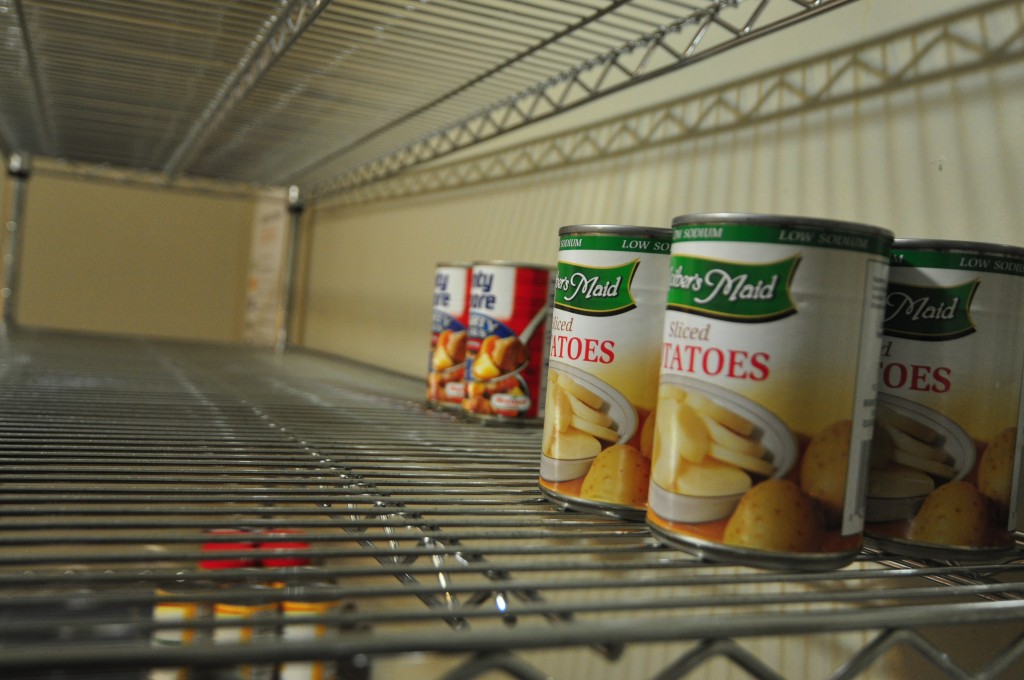
 volunteering at the local food pantry after having taken last week off. I was shocked at how empty the shelves were. We were down to just three types canned vegetables from our usual five or more. We had only one type of cold cereal or oatmeal instead of several selections of cereal, oatmeal, and pancake mix from which clients can choose. We had no spaghetti or dried beans and were almost out of rice, both white and brown.
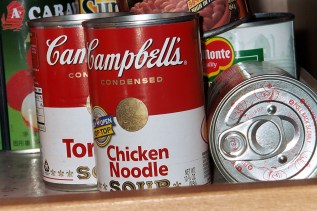 in these boxes, and while soup may seem like, and is, a good thing to donate to a food drive, canned soup contains an outrageous amount of sodium. Giving a client several extra cans of soup to make up for lacking items which could be used in meals clients prepare, like dried beans, means they are most certainly eating a more unhealthy diet this month.
 reflect on that for which I am thankful. I have so much to be thankful for, as do most Americans. I am thankful for the big things–my family and friends, health and home. But I am also thankful for little things that make each day a gift, like the bird that comes to my feeder or the beautiful full moon that greeted me as I took the dog out early this morning or a funny story from one of my sons shared at the dinner table.







 From a Simmer to a Boil