As I mentioned in an earlier post, I wanted to form a committee to help me work on issues affecting those who are food insecure. That group met for the first time this past Monday evening, and the experience, for me, was very uplifting. First, I was just excited that people had shown up! As I chose people to approach to be on the committee, I tried to select members based on skills, contacts or specialized knowledge I thought they might be able to bring to the group. That evening, as each person introduced herself, I was further encouraged to hear that each of them seemed committed to helping the food insecure. Furthermore, I learned that some had personal experiences that brought them to the table and some had additional skills or contacts I hadn’t known about that could prove to be helpful.
Our first plan of action is to do something about the scarcity of summer feeding programs in our community. We discussed what would be entailed in starting a large program that would require the involvement of the school district or some other parent organization like one of the local churches. We also discussed starting a smaller operation that we could handle on our own. Each option had pros and cons and would require the logistics to be arranged. As we discussed the hurdles of each option everyone participated in the dialogue, offering insight and possible solutions. Each member of the group eagerly volunteered to make inquiries or gather information, and we all left the meeting with something to do before the next one.
Throughout the meeting I was inspired by the eagerness of the group to move this project forward and willingness of people to volunteer to help. I am so glad I decided to put this group together. They will keep me encouraged and moving forward, provide points of view previously unconsidered and share insights I do not possess. We will be meeting monthly, and as we clear hurdles and make progress, I will report on those successes.
Pinpointing the first example of meals prepared and distributed to the needy proves an impossible task, as societies through the ages have recognized a moral obligation to feed those of it’s citizens who were hungry. Evidence of providing free meals to the needy can be found through out history in most countries. Organizations providing these meals, often called soup kitchens, were in wide use in the United States during the Great Depression. According to Janet Poppendieck in her book, Sweet Charity? Emergency Food and the End of Entitlement, most societies, including the United States, rejected the idea of soup kitchens as a solution to feeding the hungry, because they stigmatized users by demeaning them and segregating them from the rest of society. Consequently the use of centrally prepared and served meals, like those found in soup kitchens, fell out of favor until the emergency food epidemic of the 1980s, when their numbers begin to increase dramatically (Poppendieck, 14).
Today, organizations providing a prepared meal for those in need take steps to reduce the stigma that receiving a free meal can cause. One popular way organizations attempt to maintain the dignity of those receiving a free meal is to have volunteers function as wait staff and serve diners on real dishes. Efforts are taken to eliminate waiting in long lines. Some larger agencies have moved to a café style operation, where diners can place an order after choosing items from a menu (Poppendieck, 247). Another way organizations providing a meal to those in need reduce the stigma associated with receiving that meal is to invite the whole community to partake of the meal. These meals are often referred to as community meals and everyone is welcome to dine. Usually a donation is suggested, but not required.
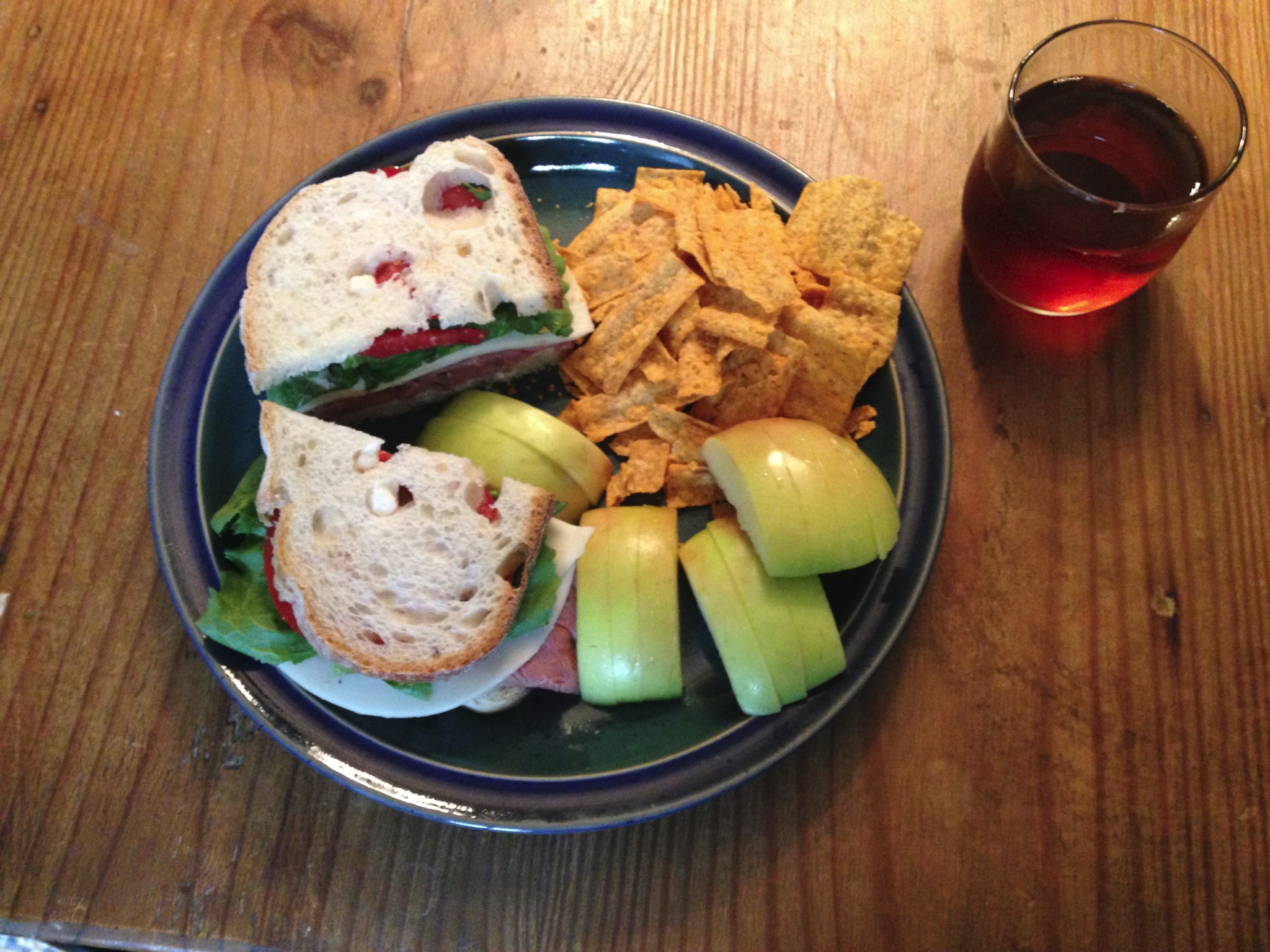
Once a month the Presbyterian Church in our town holds a community meal. The meal is served at dinner time on the last Sunday of the month and is open to anyone. In keeping with most community dinners, a donation is suggested, but not required. The idea for this meal originated with the Church’s youth group in the spring of 2011 and is now overseen by the outreach committee. In the Church’s Fellowship Hall, several rows of long tables are set with placemats, silverware and glasses. As diners arrive they may sit where ever they choose and are served the meal by volunteers on real plates. The meal consists of a meat, starch, vegetable and roll. For beverages, there is a choice of water, iced tea, coffee or hot tea. Once most diners have arrived and been served, those who wish can receive seconds, provided there is enough food left. When diners finish their main meal, several desserts from which to choose are available. Approximately 120 meals are served to diners each month at this community dinner. During these meals, the Church’s Fellowship Hall lives up to its name, as friends, family, neighbors and strangers from all socio-economic levels sit down to eat together.
Twice this past year I have had the opportunity to help at this community dinner by serving the meal, bussing dirty dishes and participating in the final clean up once the meal is finished. The experience, for me, has been a thoroughly enjoyable one. I enjoy the camaraderie of the fellow volunteers, the exchange of pleasantries with those I know and the satisfaction I receive from helping others, both the church’s outreach group and those eating the meal. Of all the tasks I do, I particularly enjoy serving the meal and clearing the plates away when diners are finished. Regardless of one’s life circumstances, being served is a treat. As a mother, I know how much I truly appreciate when someone in my house volunteers to wait on me. So by serving someone who may be food insecure a warm meal with a smile, I feel like I am treating them and giving them back some of the dignity that gets stripped away when a person has to struggle on a daily basis to obtain enough food to feed themselves or their family.
Image courtesy of porbital at FreeDigitalPhotos.net
The first time I remember ever hearing anything about budget impasses or government shutdowns was during the fall/winter of 1995-96 when the Federal Government shutdown twice after President Clinton vetoed a spending bill sent to him by Congress. I remember feeling apprehensive at the thought of our government shutting down. How long would it last? What would happen? Once it was all over, however, what I remember most about these shutdowns was that Yosemite National Park was closed during the shutdown and people who had planned vacations to the park were quite upset. (I was living in California at the time.) Upon reflection, I’m certain there were other, more pressing problems this shutdown caused, like the curtailment of health and welfare services for military veterans, or the suspension of disease surveillance by the CDC, or the furlough of government workers during the holiday season.
Fast forward to the present where it seems that government shutdowns or the threat of a shutdown is a regular occurrence. Take for instance my state of Pennsylvania, where on June 30, 2015, Governor Tom Wolf vetoed the budget bill passed by the General Assembly. It is three months later and the state of Pennsylvania is still operating without a budget. Just yesterday (9/29) Governor Wolf vetoed a stopgap spending bill. While most governmental functions continue, billions of dollars are not flowing to public schools and other social services providers. Caught in this budget impasse are food banks, pantries and other emergency food providers who rely on food from the state food purchase program. Typically food banks and pantries participating in the state food purchase program receive a line of credit which can be drawn down to purchase food to be used for distribution at the food bank or pantry. Unfortunately, no emergency food provider has received their current fiscal year allotment.
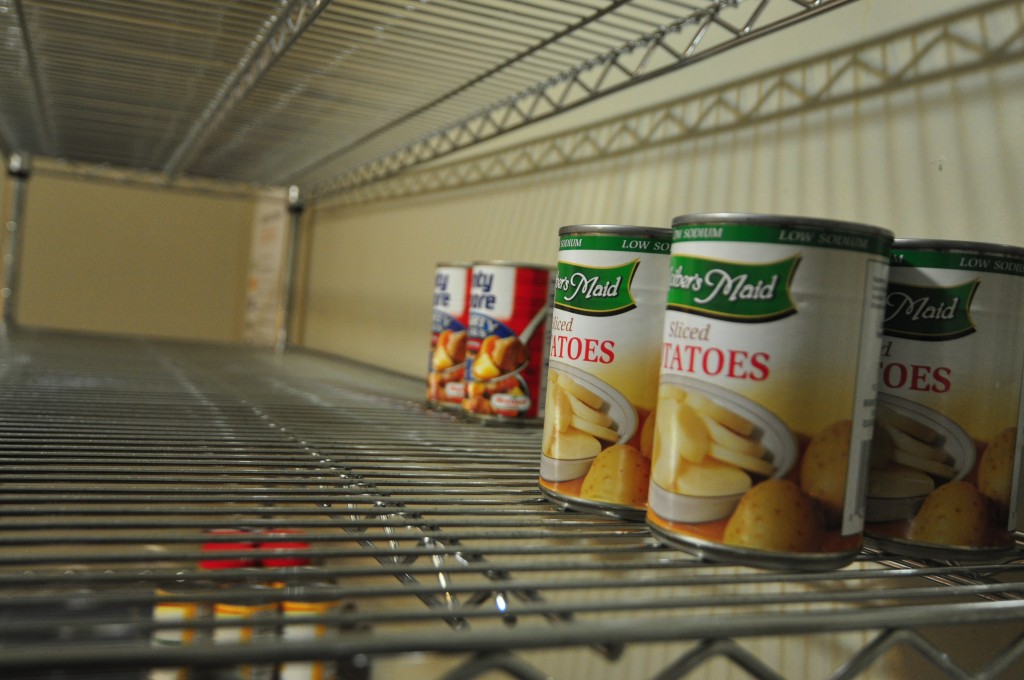
Fortunately, not all emergency food providers are feeling the pinch as a result of this budget impasse, due in part to how they are funded. For instance Philabundance, which is funded mostly with private donations, is probably not feeling the loss of these funds, but at the small food pantry where I volunteered yesterday the effects of the lack of this state funding were readily apparent. The shelves that hold the state supplied food were only half full. The pantry had no milk and very little meat, most of which was ground beef. I have never seen the supplies so depleted! Clients left the pantry with a smaller supply of food. Each week that passes without a resolution to this budget stalemate will result in a dwindling supply of state food for this pantry’s clients.
The purpose of this blog post is not to point fingers or lay blame on one side or the other. Rather, I would like to make readers aware of the consequences resulting from the current unwillingness to compromise that seems to exist at all levels of government. These are real people, often children, senior citizens and people who are disabled, who are being impacted. I worry that as a society we are becoming complacent with our politicians’ unwillingness to compromise. Or even worse, that we view their actions as a virtue. Unfortunately, there are real life consequences when both sides are unwilling to negotiate. The time has come for all politicians to get back to the work of governing, and sometimes that means sitting down with someone who has political beliefs different from the ones you hold and working together through compromise to reach a solution.
In keeping with last week’s blog post about the SNAP Challenge, I want to write about a cookbook I bought earlier this summer. It is called Good and Cheap: Eat Well on $4/Day by Leanne Brown. This cookbook grew out of a capstone project for Ms. Brown’s master’s degree in food studies at New York University. She calls this cookbook a “book of ideas” and a “strategy guide” rather than just a book of recipes. Each recipe has only a few essential ingredients, but most include a list of additional ingredients that could be used to enhance the dish, if one’s budget allowed. Additionally, each recipe includes a beautiful color photo of the dish and a note, providing preparation hints, information about an ingredient in the dish or other helpful information about the dish. Some of the recipes also contain a paragraph set apart by a dotted line with further helpful cooking tips that would pertain to that recipe, making the cookbook very user friendly for the novice cook.
Recipes aren’t the only things you will find in this cookbook, however. It begins with a history of the book and states the author’s philosophy regarding eating, both well and inexpensively (the key is fruits and vegetables). Brown then spends several pages discussing tips for eating well and shopping economically, including supermarket strategies and a list of items she feels are worth the expense. There is a section on what to do with leftovers, so that they are more enticing to eat and a page showing a seasonal growing chart for fruits and vegetables, so that you can purchase produce in season when it tastes best and is the cheapest. Toward the back of the book are sections on flavoring your food, cooking in bulk and other cooking techniques.
The recipes are easy to follow and each dish is nicely displayed. I have only made one recipe out of the book, but it was quite tasty and I will make it again, as well as look for others to try. I love that she offers so many ideas about altering the recipes that the cookbook becomes more of a springboard to countless other creations. I think it is a valuable resource for the cook, especially the novice one, looking to eat well, yet frugally. In addition to assisting those receiving SNAP benefits, it would be a great resource for a college student or someone living on a fixed income. The last thing I really like about this cookbook is the pledge that for every copy bought, a copy will be donated to someone who needs it, but can not afford to purchase it. Furthermore, Brown offers a free downloadable copy of the cookbook on her website for those who either can’t afford a copy or just want to try a recipe or two before purchasing. I encourage you to go to her website and check out this cookbook. The link is provided below.
I have thought about taking the SNAP Challenge several times over the past few years. Participants of the SNAP Challenge pledge to live on roughly $4.00 per person per day, which is the amount of the average daily food stamp benefit. Emergency food providers have taken the challenge. Politicians have taken the challenge. Celebrities have taken the challenge. Although usually garnering positive coverage Gwyneth Paltrow received tons of negative press earlier this year over her food choices when she decided to take the SNAP Challenge.
When I became serious about understanding the issues around food insecurity, taking the SNAP Challenge seemed like one of the most obvious things for me to do if I really wanted to understand what it would be like to experience food insecurity. Yet I never have. I have my reasons. The first being that I have a family, and while this is my mission and they support me, they would not be too happy to subsist on a SNAP Challenge diet, nor do I think it is fair to ask them to participate to that extent for my cause. Additionally, do not I want to do double cooking duty by preparing a separate meal for me. Neither my family’s dietary discomfort, nor my lack of time to prepare double meals is the main reason I have never taken the SNAP Challenge. As a person who likes to cook a wide variety of food, I have a very well stocked kitchen pantry and I have not quite figured out how to take that pantry out of the SNAP Challenge equation. I could decide to not use any items in my pantry, but that seems a bit unrealistic. Most food insecure people have a minimum of kitchen staples to use. I could purchase only ready-made, preprocessed foods, but that doesn’t fit my mission to help those who are food insecure eat as healthfully as they can while stretching what little food resources they have. And so consequently, I have never taken the challenge.
This summer the perfect opportunity to take the challenge presented itself, and if I had only been thinking ahead I could have capitalized on the opportunity. Every few summers my family vacations in a cabin in Maine. The cabin belongs to another family and we rent it from them for the week. While the cabin is stocked with food belonging to the other family, we bring whatever food we need for the week. This would have been the perfect chance for me to take the SNAP Challenge, without having to worry that I was cheating by using some of the staples in my own kitchen. We could have bought our food, staying within the parameters of the challenge, and relied on whatever spices or other small quantity ingredients were available at the cabin. The only problem was that I didn’t think about trying this until half way through our vacation.
To be honest, it is probably for the best. I’m pretty sure my family would have revolted at the thought of turning our vacation dining into a SNAP Challenge even though when we take this vacation we tend to eat simple, easy to prepare meals. (Except for the lobster dinner. We were in Maine after all!) This is in part because the cabin in which we stay does not have electricity, and while it did have running water, it was pumped from the lake and not potable. The adequate, yet primitive nature of our cooking setup, dictates relatively simple meals. Some of the meals we ate included spaghetti with jarred sauce, vegetarian burritos with beans and rice, sandwiches, leftovers and other ready made foods like soup.
Once the missed opportunity occurred to me, however, I did begin thinking about what we had purchased, how much it had cost and what we could have done without. To feed my family of four for a week I would have only had roughly $112 to spend. Our total shopping bill was well over twice as much as that. When you factor out alcohol, lobsters, and items that can not be purchased by SNAP benefits, like toilet paper, our expenses would have been lower, but still considerably more than the SNAP Challenge allotment. Since we were on vacation I bought fun items, like cookies, chips and soda. Those items could have been sacrificed. We also had to bring in all our drinking and cooking water, as the water from the lake was not potable. That is an expense not usually factored into the average SNAP Challenge. Even without all these items I still do not think our total would have been the roughly $112 we would have had as our benefit.
In the abstract I knew SNAP benefits did not allow for much food to be purchased; they are not intended to totally supply a monthly allotment of food, even though they do for many. What this mental exercise accomplished for me was to concretely demonstrate, not only how little food SNAP benefits provide, but how difficult eating well can be if relying on SNAP benefits and how repetitive one’s food choices would be. I will probably never take the SNAP Challenge and I am okay with that. While I understand the intent of the challenge, I find it a bit flawed. Here is the challenge I have for you that I think will demonstrate the point the SNAP Challenge is attempting to make. Next time you go shopping keep your grocery bill. How much was it? Now figure what your household SNAP benefit would be ($4 per person per day for the number of days your shopping trip would cover). After you deduct all the non-food items, how far over that amount is your grocery bill? Now, examine what’s left and decide what you would do without to come within your SNAP benefit range?
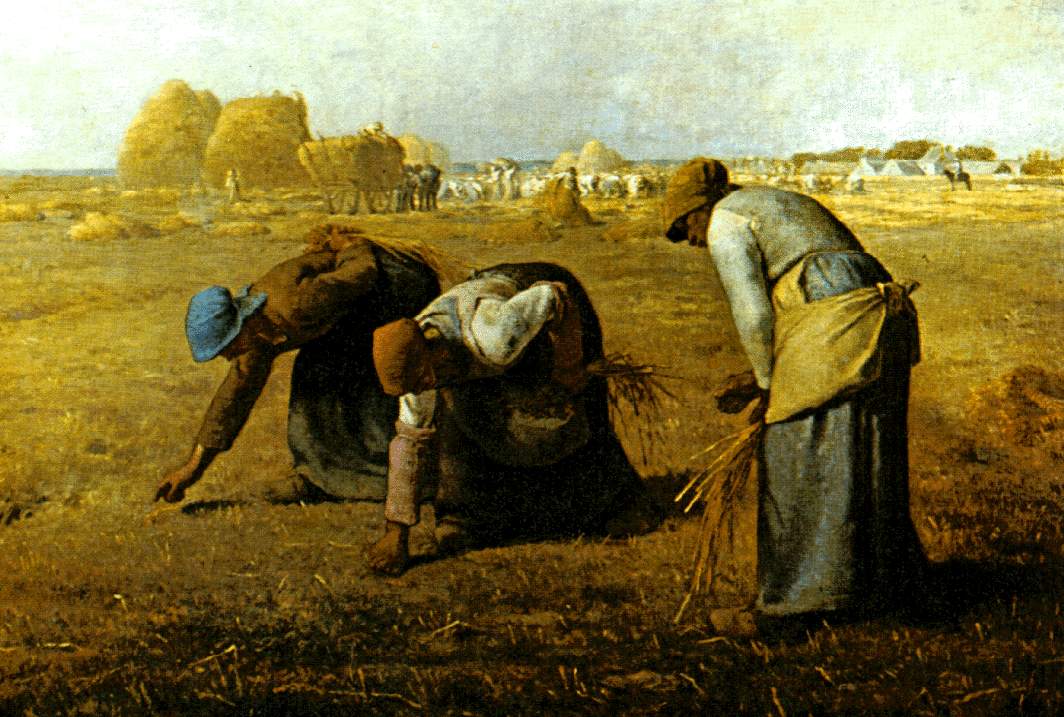
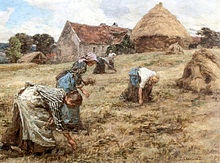
Mention the word glean and most people will think of gathering information from various sources, because that is how the word is mostly used today. But glean has an historical definition, meaning to gather grain or other crops left in the field after a harvest. In some ancient cultures gleaning was encouraged as a method to assist those in need, an early form of helping the food insecure. The Bible and the Torah instructed farmers to leave sections of fields unharvested or to not pick up crops dropped during harvest. These crops were to be left for the poor or strangers.
Today, many emergency food organizations have gleaning programs. Some programs, like FOOD (Food On Our Doorstep) Share in Oxnard, CA coordinate an extensive network of volunteers and growers. This organization harvests an average of 50,000-60,000 lbs. of produces each month, mostly from farms, but also from backyard gardens and fruit trees. Other programs may just have a handful of volunteers who establish a relationship with a few farmers or gardeners. Currently Chester County Food Bank does not seem to have a gleaning program, but they did at one time. When I first considered volunteering at food banks, gleaning was one of the areas in which I had considered volunteering my time. It appeals to me in two ways. First, gleaning helps to eliminate waste. America is an incredibly wasteful society, embarrassingly so in my opinion, and keeping any fresh produce from becoming part of the waste stream, particularly in landfills is a step in the right direction. Secondly, gleaning gets fresh produce into the hands of people who would otherwise not have access to it.
I often wondered how successful a gleaning program would be in our corner of Chester County. While we live in a rural setting, most of the farmers growing on any large scale are Amish. I was unsure whether they would assist the non-Amish community and give away the fruits of their labor. I wasn’t even sure if they would have excess produce to donate. I know many Amish farmers have produce stands and travel to local farmers’ markets, but maybe they would keep any excess produce to share within their community. Or maybe there would be little to no waste because they canned or otherwise preserved their harvest and gave any marginal produce to their livestock to eat. They are such a simple, plain folk, maybe they very conscientiously only grew what they could use, frowning on excess. I just did not know.
This summer I got my answer. Every Tuesday morning a van belonging to one of the local food panties would go to Amish farms to collect what they could not use or sell. During the latter part of summer, when the vegetable harvest is in full swing, the van would return loaded with corn, zucchini, peppers, cucumbers and more! Learning this brought me happiness on many levels. I was glad to see folks in need of food getting access to so much fresh produce. I was pleased to see that food was not going to waste. And I was happy to know that this connection existed between our communities. I am quite fond of the Amish farmer who’s produce stand I frequent, and while I do not completely agree with all of their practices, I do believe we could learn much from them.
Summer is coming to an end. My kids went back to school Monday, and I am left wondering where the time went. This summer didn’t quite go as planned, but not many have and it’s not necessarily a bad thing. At first I felt like I hadn’t made any forward progress with this endeavor of helping those who are food insecure. I didn’t write nearly as many blog posts as I had hoped and I wanted to catch up on a backlog of reading, which did not happen. But as the end of summer approached, I realized that progress sometimes doesn’t feel like progress, because you don’t always move forward in a straight line. Sometimes you move forward by zig zagging or meandering.
This summer was about meandering. At first I felt like I was slacking, but I came to realize that I needed to take some time to be still and look at what I had done thus far and assess what I wanted to accomplish going forward. Luckily for me, the circumstances of summer gave me that time. I determined that I wanted to change my approach to my blog. I had started to look at my blog as my mission, and while it is an important part of my mission, it is not the mission. I also decided that I work better with people, if only to have someone to whom to be accountable. Consequently I have decided to assemble a group of people in my area who share my interest in assisting those who are food insecure.
Concurrently with my decision to form this group, two local women who read my blog about the lack of summer feeding programs in our town approached me to express their concern over this issue and their desire to work to remedy the situation. Eureka, my first two committee members! I have spoke to a couple more people I know are committed to the cause of assisting the food insecure and have a couple more people I want to invite to participate. Over the coming year I hope to work with this group on a summer feeding program and on developing others ideas.
One thing I never stopped doing this summer was volunteering, which was a different experience than volunteering when I first started. I can’t quite say why. Maybe because I am more comfortable with my fellow volunteers and the clients. But I also think it had something to do with the availability of fresh produce, which changed from week to week and became more plentiful as the summer progressed. Sometimes I felt like Santa, handing out presents to a room full of 5 year olds. Just this week while volunteering, I picked 54 pounds of tomatoes. Clients were waiting for them when I put them with the other produce. When I left 2 hours later, only a few pounds remained! Supplying this produce and having the clients eagerly take it fills me with a sense of joy and helps keep me invigorated to continue my journey.
Summer break is almost here! I always view the approach of summer break with a mixture of excitement and relief, but also with a sense of apprehension. It is great not to have all the deadlines of school hanging over the household. To have the freedom to take in a movie, spur of the moment, on a Wednesday night or go on an adventure or just not have to worry about whose assignment is due when. The apprehension comes from past summer experiences. Knowing someone will say, usually within the first week, “I’m bored”, which is usually followed by sibling bickering. Or the dread of the daily battle over the amount of electronic use. One thing I have never had to worry about, though, is whether my kids were going to be hungry over summer break.
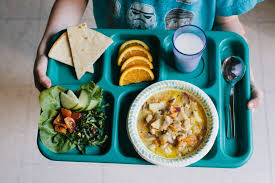
According to the Feeding America website, 22 million children receive free or reduced priced meals in schools. What do those kids do in the summer when the school doors close? The Feeding America website also reports that only 2.7 million children receive free or reduced priced meals through the USDA’s Summer Food Service Program (SFSP). That is a huge difference in the number of children receiving assistance during the school year and the number receiving assistance in the summer. Some children probably receive meal assistance through other summer feeding programs that are not operated through SFSP, but the number of American children that are likely to go hungry this summer is still staggering. Here in Pennsylvania 80% of the children who qualify for summer feeding programs are not receiving assistance, according to a report by the Food Research and Action Center (FRAC). In my own community, where approximately one third of children in our schools qualified for free or reduced meals, I can only find one program that offers meals for children. It is a Christian-based youth group facility, that offers an afterschool meal during the school year, which they continue during the summer months as well. I have to admit I was a little surprised by the lack of options available, locally, for children on summer break and I find it troublesome.
To be honest, until recently I had not given much thought to what the families of kids in the free and reduced breakfast and lunch program did during the summer to replace the meals provided by the schools during the school year. Now that I know how large the percentage of kids participating in this program is in my local school district and the lack of summer feeding programs in my area, this problem weighs heavily on my mind. Since my eyes are now open to this problem, I’m sure I will see these kids everywhere–in the library, on the playground, passing by on the sidewalk. I wonder if our food pantries see an uptick in the number of families coming in over the summer months, either new clients or previous clients who have not needed to come for a few months. The Chester County Food Bank is currently partnering with the United Way of Chester County in a Peanut Butter and Jelly Drive, so I can only assume they are preparing for this increased need.
While we are talking about kids and lunches, I want to mention the equally troublesome story of Della Curry, an elementary school cafeteria manager in the Denver Metro area, who was just fired. She was fired for giving a first grade student, who didn’t qualify for the free or reduced lunch program, lunch when she didn’t have the money to buy lunch. In an interview she admits this isn’t the first time she has done this and does not regret her actions. In the past few days some questions have arisen about the actual reason Ms. Curry was terminated, but regardless of the reason, this story brings to light the real plight of numerous school children across this country who do not qualify for the free or reduced lunch program, but do not have money for lunch. To be clear, I am not referring to the child who occasionally forgets lunch money. These are children who regularly do not have enough money to purchase lunch or bring one from home. Ms. Curry feels the law governing the free and reduced lunch program needs to be changed. She believes lunch should just be a part of public schooling and available free to all students and has vowed to work to bring about this change.
One school district that recently made this change a reality is Baltimore City Public Schools. All schools in this school district will now offer free breakfast and lunch to every student. Their ability to provide these meals to all students is the result of a federally funded program for school districts where at least 40% of the population is considered low income. This program removes the stigma associated with getting free lunch or breakfast, but more importantly, it will also ensure more children get fed, eliminating the problem Della Curry faced. Finally some good news out of Baltimore! Baltimore City Public School district isn’t the first district to make this change. The program is part of the Healthy, Hungry-Free Kids Act of 2010 and has been made available in certain states since the 2011-2012 school year. This school year just ending (2014-2015) is the first year the program has been made available to all qualifying schools nationwide.
I don’t have any answers or solutions to offer for any of these problems. I just encourage you to be aware. These are kids and they are hungry through no fault of their own. If you are in a position to help, do so. Even if it is only to donate a jar of peanut butter and jelly to your local food bank or pantry.
This past Monday I had the opportunity to attend an anti-hunger conference, entitled Coming Together: A Community Response to Hunger, sponsored by the Food Bank of Delaware in partnership with Brae’s Brown Bags and the Food Research and Action Center (FRAC). The organizers of this conference took an interesting approach and invited both adults and children to attend, so in addition to all the adult attendees, about 200 students representing several Delaware school districts were in attendance as well. The speakers included a nice mix of local and national figures. Panel discussions included speakers from the state government, state and federal governmental agencies, the American Academy of Pediatricians, and local and national organizations working to raise awareness of and put an end to hunger. The attendees, including the students, were given numerous opportunities to ask questions of the panelists. I left this conference with a renewed sense of hope and optimism for the future as a result of the genuine concern and eagerness to help displayed by the attending students. I also was reenergized to continue my journey to assist the food insecure. Additionally, I received validation for my assertion that teaching cooking skills to those experiencing food insecurity will provide them with a necessary tool to use in their struggles against hunger.
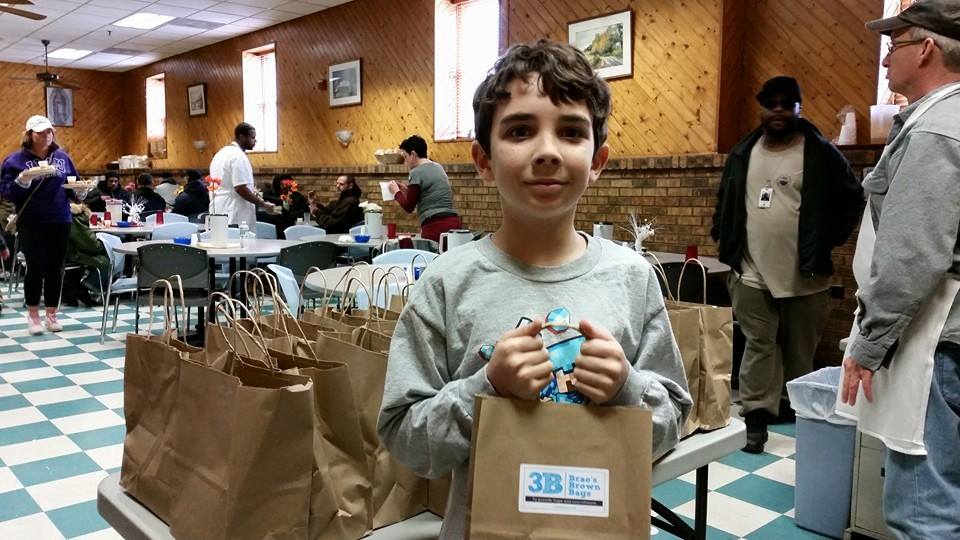
The person who inspired me the most was 11 year old Braeden Mannering, who is responsible for Brae’s Brown Bags. In 2013 Braeden attended the Kids’ State Dinner in Washington, D.C. This luncheon was also attended by First Lady, Michelle Obama, who asked Braeden how he was going to “pay it forward.” He didn’t have an answer for her that day, but out of his search for an answer to that question Brae’s Brown Bags was born. Through his foundation Braeden distributes brown bags, containing a water bottle, 3 healthy snacks, and a brochure listing contact information for shelters and other aid organizations, to homeless people in the area. To date Brae’s Brown Bags has delivered over 3,000 bags to those in need. He hopes to include specialty items, like toiletries, gloves in the winter and books for children, in the future. It was inspiring to see what could be accomplished by a single person with an idea and the will to see that idea realized.
Not only was I impressed with Braeden, but with all the young people who attended. One panel discussion was geared specifically for them. Two State Senators and the Committee Chairman of the DE GOP sat on a panel and answered questions posed only by students. The students asked well thought out questions on topics including what they could do to best help those who are hungry or whether the legislators would support certain items, like locating a food pantry in every Delaware high school. Perhaps the bravest question came from a young lady who asked what help and advice they would offer to her and her family. She stated that even though her mother works 7 days a week, it still isn’t enough to keep them from being hungry. She completed her question with composure, but broke down after returning to her seat. The legislators were visibly moved, as was everyone in the room. It is easy to talk about hunger abstractly, but much harder when you can put a face on it and that face is standing in front of you.
Numerous topics concerning hunger and food insecurity were discussed during the course of the conference, but a considerable amount of time was given to the discussion of childhood nutrition, probably due to the upcoming opportunity to enact a child nutrition reauthorization bill. On the topic of childhood nutrition, panelists discussed school lunch and breakfast programs, afterschool and summer nutrition programs and the Special Supplemental Nutrition Program for Women, Infants and Children (WIC). Additionally, Dr. Sandra Hassink, President of the American Academy of Pediatrics, spoke about the medical implications of poor childhood nutrition. She remarked that this is the first time in our history that we have both an obesity epidemic and significant incidence of food insecurity occurring at the same time, with the distinct possibility that people could be experiencing both problems. Dr. Hassink also stated that it is impossible to eat healthy if you do not know how to cook and rely on prepackaged, processed foods for your meals.
Dr. Hassink’s comment about cooking wasn’t the only time that topic was brought up during the conference. Other speakers and attendees mentioned either the importance of cooking from scratch or the unfortunate loss of knowledge in how to cook from scratch while discussing the importance of good nutrition or the task of helping people with limited resources stretch those resources. Additionally, the importance of cooking from scratch was discussed at the table at which I was sitting. Joining me at the table was a registered dietician from Nemours and a group of women from the University of Delaware Cooperative Extension who staff the Expanded Food and Nutrition Education Program (EFNEP). This program provides nutrition, cooking and budgeting information to residents of DE who qualify for SNAP, WIC, Head Start or free or reduced school meals. After listening to all the discussion about the importance of cooking from scratch, I believe now more than ever that my concern over the loss of cooking skills is well founded and warrants further exploration into ideas to help people learn cooking and other related skills to stretch their food dollars and eat healthier.
I just finished Janet Poppendieck’s book Sweet Charity?: Emergency Food and the End of Entitlement, and as I expected, in the end, we were not too far apart on our assessment of emergency food and the role it plays in assisting the food insecure. That said, she did introduce issues I had not previously considered and challenged the way in which I had thought about certain aspects of providing emergency food. Poppendieck contends that emergency food organizations, like soup kitchens and food banks, are run by caring and compassionate staff and volunteers who are committed to providing food to those who are hungry. In today’s world such people and organizations are a necessity, but she also argues that these same organizations enable the cycle of hunger to continue. By participating in providing emergency food, either through volunteering or donating, Americans may feel like they are solving a problem. In reality, providing emergency food diverts our attention from larger societal problems like poverty and inequality and keeps us from working toward solutions to these problems for which hunger is just a symptom.
In one of the most interesting chapters of the book Poppendieck discusses what is wrong with emergency food. As someone who recently became a volunteer in two food pantries and who has felt positive about my experiences and effort, I was curious about what she would identify as shortcomings. Listed below are the “7 Deadly ‘Ins’” of emergency food Poppendieck has identified.
Insufficiency—Emergency food organizations often have to limit the frequency with which clients can come to the food pantry, whether there is a waiting list for service, and the amount of food distributed to each client.
Inappropriateness–Emergency food organizations can not possibly have enough items to satisfy the preferences or special dietary needs of every client. Both pantries in which I volunteer stock vegetarian beans, a commodity from the Federal government. Very few clients take these beans and most universally say they taste terrible. Additionally, emergency food rarely is appropriate for diabetics or sufferers of high blood pressure, obesity or heart disease.
Nutritional Inadequacy–As touched upon above, many food offerings through emergency food agencies are high in sodium, fats, and sugar. There is very little fresh produce available and often several of the meats offered are processed items like hot dogs, chicken tenders and lunch meat.
Instability–The provision of emergency food relies on surplus food from the government and sometimes businesses, donations from the public and a volunteer workforce. All of these components are subject to fluctuations, causing instability in providing emergency food.
Inaccessibility–Emergency food offerings differ with location. For instance, urban areas tend to have more emergency food options, like food banks and soup kitchens, where more rural areas may have only one or no options. Additionally affecting emergency food’s accessibility is the emergency food organization’s hours of operation and proximity to public transportation.
Inefficiency–Distribution of emergency food duplicates the food delivery system already in place. Often as emergency food distribution agencies increase, inner cities experience a decline in the availability of markets and grocery stores. Additionally, emergency food may seem efficient, but these agencies do not count as an expense anything that is donated, including food, equipment, storage buildings, and labor from volunteers.
Indignity–Distributing emergency food through food banks, pantries and soup kitchens forces those receiving assistance to be segregated from the rest of society. They must go to a place different from where the rest of society gets their food.
As I thought about these “7 deadly ‘ins'” as they related to my volunteering experience I realized I had witnessed every single one. I believe both food pantries in which I volunteer do the very best they can with what they have to offer. Without them, the clients would be in a much worse situation; however, I believe the increased reliance on emergency food to assist these clients is an inadequate solution to the problem they face.
In spite of the shortfalls of emergency food, Poppendieck also addresses its success, and more importantly, the price of its success. The 1980s, when cuts were made in funding public assistance programs, saw a dramatic rise in emergency food providers, an increase that has continued until today. As these agencies proliferated, they became extremely successful at operating, stretching whatever they got, making it work. They highlight these successes when they fundraise or ask for donations to assure donors their donations won’t be squandered. In turn government can rationalize further cuts in public assistance because emergency food providers are so competent in handling the situation. Emergency food provision as enabler for further governmental reduction in public assistance is a new and troubling concept for me.
At the very end of her book, Janet Poppendieck asks what emergency food providers are to do. She outlines a couple of options, but the one that resonated the most with me was to organize and educate, especially the educate part. I believe we need to talk about hunger within the broader context of poverty and inequality. While continuing to provide the best assistance that can be provided, emergency food providers need to be honest with the public, that at best, they are a Band-Aid to the problem of hunger and only through addressing the larger societal issues of poverty and inequality can the numbers of people experiencing food insecurity be diminished.
One last point I would like to make is that at no time does Janet Poppendieck disparage emergency food providers or the assistance they provide. She acknowledges their monumental effort and that without their services the hungry of the United State would be in much worse circumstances.

 community. We discussed what would be entailed in starting a large program that would require the involvement of the school district or some other parent organization like one of the local churches. We also discussed starting a smaller operation that we could handle on our own. Each option had pros and cons and would require the logistics to be arranged. As we discussed the hurdles of each option everyone participated in the dialogue, offering insight and possible solutions. Each member of the group eagerly volunteered to make inquiries or gather information, and we all left the meeting with something to do before the next one.













 From a Simmer to a Boil