Think Nationally, Act Locally

The research for and writing of the past three weeks’ blog posts has been stimulating and thought provoking for me.  I immersed myself in articles, passages from books, reports on webpages and interviews with people speaking on the causes and results of poverty, some sharing first-hand experience.  I could tell I had hit a homerun with the topics, as the response I got from readers was some of the best I’ve had since I started blogging.  Unfortunately, everything I read or listened to when conducting my research was pretty bleak and depressing.  Consequently, as I started to think about what to write about this week,  I wanted to focus on something positive, some small success for those who are food insecure.  While I have to believe those successes are out there, I struck out and could not find any to report.  The result of all that research and the inability to find a single positive story to share this week has left me feeling overwhelmed by the magnitude of the problem of poverty and disheartened that the causes of poverty will ever really be addressed in any meaningful way.  I find myself asking, “How can one person ever hope to make a difference?”

baseball                       CDub jersey                       bats

When I first started on this journey I would often become paralyzed by this sense of despair, but now I have learned to recognize its approach and shift my perspective in order to deflect the feeling of hopelessness brought on by studying the full scope of the problem of poverty on the national level.  When I am ready to throw my hands up in the air and declare my efforts futile, I think about a quote from Mother Teresa that a friend from high school sent to me when I first encountered this paralyzing sense of despair.

If you can’t feed a hundred people, then feed just one.

When I reflect on that quote I remember that the problem of poverty is not mine to solve, nor could I if it were, but I can work locally to try and make a difference in my community.

With that said, I have decided to take the next few weeks to focus on actions I can take to assist the food insecure locally.  I will continue volunteering in the food pantry, as well as spending time planning the initial steps for starting a non-profit.  During this time I will probably post very little, if at all, to the blog, but I have a favor to ask of you.  Take a look in your pantry and let me know what staples you have that you couldn’t imagine having to cook without.  These staples could be spices or condiments or ingredients used in baking, like flour or baking soda.  Keep them practical.  Items like this are usually not available in food pantries, or even larger food banks, but are necessary in order to prepare healthy food that tastes good.  As always, I appreciate your feedback!

This week’s blog pictures brought to you by Baseball!  Sorry for the baseball puns.  I couldn’t resist.


Why We Need a Living Wage

During my shift at the food pantry this week we packed food for a homeless man.  He was very young, not much more than a boy actually.  He came to us because he was desperate and hungry.  He had a job, although he hadn’t had it for long.  He didn’t have a car, so he walked over 3.5 miles each way to work, taking him over an hour.  We packed spamhim what we could, considering he didn’t have a refrigerator or any way to cook or warm his food.  What we gave him was a mish mash and not much of it was very healthy.  He said he would take anything we had to give, because he was really hungry.  We gave him SPAM, Vienna sausages, sardines, saltines, granola bars, tuna fish, peanut butter and a couple tiny jars of jelly.  We were also able to give him canned fruit, applesauce and beef stew and Chef Boyardee products (to be eaten cold).  All of these items had to have pop tops or foil tops because he doesn’t have a can opener.  Luckily we were able to give him some fresh grapefruit and apples.  We were also lucky that someone had donated a package of plastic forks, so we were able to give him something with which to eat.  He was fortunate to have a ride, which meant we were able to give him several bags of food.  If he had been walking we would have only been able to give him what he could carry.

Hopefully this young man’s life is beginning to turn around.  Hopefully he maintains his temp. job and it turns into a permanent position.  For him, this I hope, but here’s something I know.  I have packed food for other employees, permanent, full time employees who work for the same employer where this young man is currently temping.  So while I hope for a better future for this young man, I am not overly optimistic I will never see him at the food pantry again.  The plight of this you man and all the other people who are working full time jobs, yet still need SNAP, housing subsidies, Medicaid or food from a food pantry, clearly illustrates why the minimum wage needs to be raised to a living wage.  The current minimum wage of $7.25/hour barely keeps a single person without dependents, working 40 hours per week, above the poverty line.  Raising the minimum wage to the proposed $10.10/hour will only keep a 3 person household, say a single mom and 2 children, at the poverty line.  It is only when the minimum wage approaches $12-$15/hour that we see households begin to inch away from the poverty line.

factory worker

At the mention of a living wage, some will argue that it is a burden to small businesses and quite possibly for truly small businesses this may be true in many cases.  My family operated a small business for many years and employees were paid minimum wage.  It is quite possible that if my parents had had to pay their employees more per hour that all employees hours would have been cut or that they may have been forced to let someone go.  However, the minimum wage those employees took home was worth more than today’s minimum wage.  The minimum wage has not kept up with inflation.  When my parent’s began operating their business in 1978, the minimum wage was $2.65/hour.  When that salary is adjusted to today’s dollars it equals $9.14/hour.  Today’s minimum wage is $7.25/hour, which is almost $2.00/hour less than the 1978 minimum wage adjusted to today’s dollars.  The minimum wage in 1978 went farther, paid more bills, than the minimum wage of today.  Furthermore, many of the businesses paying employees today’s low minimum wage are large companies which boast sizeable yearly profits and are often run by CEOs who earn exorbitant salaries, suggesting these companies have the resources to increase their employees’ salaries.

Another common argument against raising the minimum wage to a living wage is that it will kill jobs.  Workers will be laid off and employers will be unable to hire employees, causing a stagnate job market.  Most economists used to believe that raising the minimum wage would have a negative effect on employment until the Card-Kruger study conducted in the early 1990s, which found a surprisingly positive effect.  Additionally, former Labor Secretary, Robert Reich, points out that raising the minimum wage puts money directly into the pockets of people who are going to spend that money, mostly in the local economy.  That infusion of money into the economy creates a greater demand for goods and services, resulting in job creation.

mcdonalds archesSo, what happens when employers do not pay their employees a living wage?  Many of those employees are forced to turn to the government for assistance in the form of SNAP, Medicaid and housing and child care subsidies, forcing the U. S. taxpayer to make up the difference caused by their low wages.  According to an article by Clare O’Connor on Forbes.com, Walmart and McDonald’s cost U. S. taxpayers an estimated $6.2 billion and $1.2 billion, respectively, in public assistance because their workforce must turn to these social safety net programs in order to make ends meet.  At one point, McDonald’s even assisted it’s employees in signing up for public assistance programs, because they knew their low wages would not provide enough income for their workers to live on.  As a result of their employees receiving so much in public assistance benefits, Barry Ritholtz, in an article on the website Bloomberg View, labeled Walmart and McDonald’s as America’s largest and most undeserving welfare queens.

Many people in poverty are employed.  The homeless man I packed food for on Tuesday has a job.  Others are retail sales clerks, home health aides, janitorial staff and factory and warehouse workers.  They are performing often physically demanding jobs, doing tasks field workerthat make many of our lives easier, like picking our produce, caring for our children or elderly and ailing parents or cleaning our office buildings.  As Robert Reich so astutely stated when advocating for a living wage, “People who work full time are fulfilling their most basic social responsibility. As such, they should earn enough to live on.”  Raising the minimum wage to a living wage will not only restore dignity to America’s working poor, but it will stimulate the economy and assist in moving more Americans off of assistance and out of poverty.

Note:  A local paper reported this week that Walmart will be giving raises to all associates hired before January 1, 2016.  The average salary for full time associates after the raise will be $13.31.  The pay increase is part of a two year commitment, on the part of Walmart, toward higher pay, more effective training, clearer career paths and increased educational opportunities for workers.  This commitment is projected to cost Walmart $2.7 billion.

Snow Day Fun

snow cardinalTuesday I found myself with some unexpected free time.  Due to a weather forecast of 4-8″ of snow, food pantry clients had been rescheduled to another day, so I did not have to volunteer.  I assumed, however, because of the forecast that my kids would be home from school for the day.  It did snow all day, but the temperature never dipped below freezing, so nothing stuck to the roads.  The kids only had a two hour delay (sorry guys!) and I didn’t have to volunteer.  What to do with this unexpected gift?!  I decided to spend the day going through a cookbook my brother and sister in law gave me for Christmas, entitled Smokehouse Ham, Spoon Bread, & Scuppernong Wine:  The Folklore andscuppernong Art of Southern Appalachian Cooking, by Joseph E. Dabney.

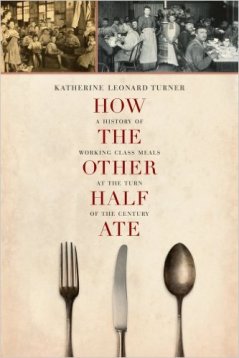
When I initially started thinking about food insecurity and how to assist people who were hungry, one of the first ideas I had was to look to the past to see how folks used to cook, especially during hard times, like the Great Depression.  Prior to the Great Depression the United States also lacked the societal safety nets we have today, so people suffering from poverty really were on their own to survive.  After a bit more research, I learned that not everyone cooked and ate the way I assumed.  My notion of how women 100-125 years ago cooked and provided food for their families was based on a rural society, where there were little work opportunities for women outside the home and most families had enough land on which grow produce and/or keep some livestock.  After reading How the Other Half Ate, by Katherine Leonard Turner, I learned that urban dwelling women approached cooking and feeding their families very differently than rural women, and as the title suggests, different social classes cooked and ate differently as well.

Additionally, I came to realized that cooking like rural women from the past requires a great deal of time.  Initially I didn’t think this would be a problem for most of the people today who suffer from food insecurity, as I believed them to be unemployed.  After all, that is what many politicians and people in the media would have you believe.  I have since learned from my reading and volunteering, that many people who are food insecure are also employed, sometimes working two and three jobs, and therefore do not have an abundance of time to cook from scratch.  Cooking from scratch also requires certain implements and appliances that the food insecure may not own, like large pots and pans, a multiple burner stove or an oven.

With all that said, I do still think there are lessons to be learned from old cookbooks and food traditions of the past, which is why I read old cookbooks and historical accounts of how and what people ate.  This particular cookbook, although not old as it was originally published in 1998, contains the result of research and numerous interviews with old timers conducted by the author.  It is perhaps more an historical account with recipes than it is a cookbook.  The geographical location this book discusses, southern Appalachia, has historically been and still is, one of the poorest areas of the United States.  I was very curious to see what these hardscrabble people ate and how they prepared it and to determine if I could learn something from their practices that I could pass on to people in my community who are struggling today

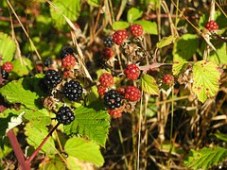
One of the first themes that struck me was that they ate what was available wild in their environment, when it was available.  Some of this practice will not be very practical today.  We live in more populated areas with less open spaces, so foraging off the land will not work as well today.  Additionally, we have mostly lost the knowledge of what is edible, growing wild in our wild-strawberrybackyard or local woods, but it is there.  There is a group in Philadelphia, The Wild Foodies of Philly, whose members forage in the city and there is a global organization called Falling Fruit, whose website contains an interactive map of where people are urban foraging.  Similarly, I can remember as a young girl picking wild strawberries and blackberries, winter cress, persimmons, beach plums and black walnuts, all of which were eaten by my family.  Recently someone gave me some paw paws from a nearby tree growing in a nature preserve and my husband has picked and we have eaten morels and other mushrooms growing in our woods. (A note about gathering wild mushrooms–I am not advocating for anyone to pick and consume a wild mushroom without first taking a class in mycology or going foraging with someone very knowledgeable in wild mushrooms.  Some varieties can make you sick, but others can kill you quite quickly.  Unless you can tell the difference with certainty do not consume foraged mushrooms!)  And almost everyone has dandelions growing in their yard!  I often wonder if the people who spend money on herbicides to get rid of dandelions are sometimes the same people who spend money to buy dandelion greens in Whole Foods.

In addition to wild plants, the mountain people of Appalachia supplemented their diet by hunting wild animals, like rabbit, deer, raccoon, squirrel, opossum and turkeys.  Not everyone today is interested in hunting or has the land available to them on which to huntwild turkeys.  Likewise, our tastes have changed so that few could imagine eating opossum, but I know many families locally, who still supplement their diet with venison, rabbit, wild fowl and small birds, like dove.  The Chester County Food Bank participates in the Pennsylvania program, Hunters Share the Harvest, where hunters can share extra venison with food banks.  I just had a client ask me last week if we had any venison.
With regard to produce, they ate or preserved to eat later what was in season, growing in their garden.  Not many people can or preserve food today, but it was a necessary way to stretch the summer bounty into the winter, when produce was scarce.  Today, eating seasonally is still just as wise as it was in the past, even if you do not have a garden.  Produce in season is going to be cheaper, but also will taste better and be healthier, since it was allowed to ripen fully before being picked.  Even if you do not know how to can produce, many fruits and vegetables can easily be frozen, so if one has access to freezer space, freezing summer produce can be an economical way to enjoy summer’s bounty in the middle of winter.

In conjunction with eating what was available, the people of Appalachia wasted very little.  When they slaughtered an animal or killed wild game, they used almost all parts of the animal in one way or another.  Additionally, many plant products we commonly dispose of today were in the past used in recipes, like corncob jelly and pickled watermelon rind.  While I understand that many of these historical cooking practices are not practical for today, we can take away the lesson of reducing waste in our cooking.  For instance, I just recently purchased a rotisserie chicken for a dip recipe.  Once I had picked the meat off the bones, I put the bones into a pot with a quartered onion, covered it with water and simmered it for about an hour.  When it was done I removed the chicken bones and onion and strained the remaining liquid.  This produced 4 cups of chicken stock, which only cost me my time (mostly unattended cooking) and a few cents for the onion.  Abaconnother easy practice, which reduces waste and creates cooking stock, is to save parts of produce you are not going to eat, like the end of a carrot or broccoli stalks, in the refrigerator.  Once you have a decent amount of this vegetable matter, follow the same steps as with making chicken stock. This process will result in vegetable stock at no extra cost.  Finally, I save most of the fat rendered from frying bacon.  I put it in a container in my refrigerator and use small amounts not only for frying foods, like potatoes, but also to flavor braising water for vegetables when I don’t have any stock on hand.

I thoroughly enjoyed my snow day on Tuesday, sitting with a cup of tea and a cookbook.  While I did not grow up in Appalachia, I did grow up in the country and the people and food ways described in this book spoke to me and reminded me of my childhood.   Unfortunately so much of what I was remembering from my childhood is gone.  The wild strawberries and hedgerows of blackberry canes are not there anymore.  Very little, if any, winter cress grows inblackberry the fields due to herbicides or planting practices.  My grandfather, sharer of persimmons, has long since passed away.  Like the memories of my youth, passing down the practice of cooking from scratch and cooking methods used to stretch the meager food resources of a family have largely disappeared too, especially as busy parents rely more and more on processed, already prepared, packaged food.  Unfortunately, we are losing more than we realize when we give up these practices.

Reflection & Projection

anniversary cakeWell I’ve been at this for a year.  A few weeks ago marked my one year anniversary as a food pantry volunteer and one year ago tomorrow I published my first blog post.  Knowing that I had put forth my intentions and objectives in that first post, I recently went back and reread it.  I wanted to see how close to my mission I had remained, or how far afield I had strayed, as I was worried I had.  I discovered that, while I am not today where I thought I might be, I have accomplished what I set out to do.

I stated that I wanted to understand the problem of food insecurity from a national perspective.  In addition, but perhaps more importantly, I wanted to understand what food insecurity issues were specific to my community and work to address those issues.  I spent the past year reading books, articles and reports, listening to speakers on radio programs and in person and watching documentaries on the topic of poverty and food insecurity in the United States, and feel I have a much better understanding of the issues surrounding this problem.  Additionally I have spent the past year volunteering in a food pantry, as well as observing and listening to the real life circumstances of people in my community who are food insecure.

I also wanted to better understand where gaps exist in what is currently provided in my community for those who are food insecure and what is needed and to work on bridging those gaps.  While I do not think I know all the gaps that exist, I have identified a few, most importantly the lack of a summer lunch program.  I am currently working with a group of other concerned members of my community to establish a summer lunch program for children in need in our town.  Another area in which I saw a need was in encouraging clients to take fresh produce with which they were unfamiliar.  Often clients would want to take something and try it, but were hesitant because they had never eaten it or cooked it and didn’t know how to prepare the item.  A couple of times I printedbns bb pinto out simple recipes for some of the less familiar produce we had on hand, like winter squash, in an effort to encourage clients to take the produce.  Offering these recipes did succeed in getting a few more clients to give the produce a try.

Another goal I set out for myself, and my blog in particular, was to become connected with others who are concerned about food insecurity and create a forum where ideas and information could be exchanged.  The forum aspect of my blog has not quite taken off, and perhaps that is okay.  I am not sure how I would stay on top of moderating numerous comments.  I have, however, received some encouraging and helpful comments, directly to the blog, on other forms of social media and in person.  I appreciate every comment someone has taken the time to make and every exchange I thank-youhave had with someone on the topic of food insecurity.  One of the comments that has meant the most to me was a thank you for shining a light on food insecurity issues from someone whom I suspect is or has struggled with food insecurity.  Ideas and information have also been exchanged as readers have sent me links to articles or have told me about local happenings related to hunger that might be of interest to me.

Perhaps the most promising connection I have made with others as a result of my blog, has been the formation of a committee of concerned citizens who have come together to establish a free summer lunch program in our community.  Two local readers came to me after reading my post about the lack of summer lunch options for kids in our town and said they wanted to help fix this problem.  To be honest they gave me the motivation that I needed to form a coalition and tackle the problem.  We are not there yet, but the group is a committed one and we have received nothing but encouragement to pursue this goal so far.  I am optimistic that, if not by this summer then next, a program will be in place.

All in all I am pleased with the progress I have made so far, but I have more goals I hope to accomplish in the future.  First I will continue to work to establish a free summer lunch program in my community.  I also want to build on the idea of providing clients with recipes.  I hope to work with the food pantry to find out weekly what produce will be delivered and to have recipes available each week when the produce arrives.  I would lemonideally like to be able to give out samples of the produce prepared using the recipe.  I would also like to establish a pilot program of providing spices, herbs or other seasonings like lemons, not currently offered in food pantries, coupled with a food pantry staple and a recipe to clients.  For instance, if a client took oatmeal or apples s/he would also get a jar of cinnamon and a recipe for oatmeal or applesauce.  A whole chicken with lemons and/or garlic would be another paring, along with a recipe for roasted lemon chicken.  If the pilot program is successful, my long term goal would be to form a non-profit organization to supply commonly used spices, herbs and other staples, like brown sugar or cooking oil, to the food pantry.

When I created this blog I said I was on a journey and I was jumping in with both feet.  Well I am still traveling that road and both feet are still wet.  I started on the journey wet feetbecause I was fed up with hearing those suffering from poverty being disparaged and blamed for many of society’s problems.  This past year has helped to restore my faith in humanity.  Along my path I have met numerous people who care greatly for those less fortunate in our society and are doing whatever they can to help.  I have also met many who are in need and most of them possess perseverance and appreciation and retain a sense of optimism that humbles me.  This journey has brought me laughter and tears, hope and despair.  It has enriched my life and challenged me to be a better person.  I knew I would be giving of myself, but I never realized how much I would be getting back.
Freedom from Hunger

“Hunger in America is solvable.  People in America are not hungry due to war or famine or drought.”

The above quote is from a report, released January 4th, entitled Freedom from Hunger:  An Achievable Goal for the United States of America, written by the bipartisan National Commission on Hunger.  This Commission is comprised of members from the fields of nutrition, medicine, hunger relief, public policy and poverty studies, who were appointed by Congressional leaders from both political parties.  The Commission was charged with providing recommendations for reducing hunger in the United States using existing programs and funding.  Consequently, their recommendations require a negligible amount of new resources.  The Commission chose to focus on 7 groups who typically experience higher levels of hunger:  seniors, single parent families with young children, people with disabilities, veterans and active duty military, American Indians, people affected by high incarceration rates and immigrants.  After traveling across the country, holding public forumhearings and visiting numerous programs in both the government and public sector, the Commission compiled 20 sensible recommendations to reduce hunger.

After  having read this report, I was encouraged by several things I read.  First, I like that this Commission is bipartisan.  In the polarized political climate of today to achieve anything requires buy-in from both political parties.  Additionally, addressing difficult problems, like hunger and many other problems facing America today,  requires many different points of view and ideas.  Similarly, I think it is important that the Commission members are from several different disciplines and approach hunger from a variety of perspectives.  The Commission highlighted several root causes of hunger in the United States including, labor market forces and job availability, family structure, education, exposure to violence, historical context and personal responsibility.  As a result of the numerous causes of hunger, the Commission states in the report that hunger can not be eliminated solely by food assistance alone.  The root causes of hunger must be understood and addressed before hunger in the United States can be eradicated.

I was similarly encouraged by the sensible recommendations the Commission puts forth in the report.  Of these 20 recommendations there were about a half dozen that I was particularly pleased to read.  Perhaps one of the most important recommendation I believe the Commission makes concerns the phase down of SNAP benefits as recipient income increases.  In an effort to incentivize work, the Commission suggests allowing States to offer households who have become ineligible for SNAP benefits due to gaining employment, an appropriate extension of those benefits to assist them in assuring they have a sufficient amount of income in place before loosing all assistance.  If this recommendation were to be put into effect, SNAP recipients would no longer automatically loose all of their benefits as soon as they earned more than the eligibility threshold, allowing them to accumulate sufficient funds to be able to adequately cover all necessary expenses and lessening their chances of slipping back into a situation where they need public assistance.

A cluster of four recommendations concern summer feeding programs and since I am currently working to establish a summer feeding program in my community I am particularly pleased at the inclusion of these recommendations.  Three of these recommendations concern increasing the access to summer feeding programs in ruralrural areas, which would benefit my rural community.  Most importantly, the Commission suggests lowering the area eligibility for reimbursement for summer meals from 50% of children eligible for free or reduced school meals to 40 percent.  This change would mean that more children, in areas where poverty is less concentrated, would qualify for free summer meals.  The other recommendation concerning summer feeding programs encouraging to me is the suggestion to issue EBT cards for summer meals in communities where barriers to congregate feeding sites, like neighborhood violence or transportation issues related to remote living conditions, can clearly be demonstrated.  In USDA pilot programs issuing EBT cards to children at risk for hunger in these communities has been proven to reduce hunger.
The list of recommendations calls for funding for the USDA to implement and evaluate several new pilot programs, assessing their effectiveness in reducing hunger.  If successful these pilot programs should be implemented nationwide.  Three of the four pilot programs were of particular interest to me because they suggest taking steps to move households out of poverty, instead of just keeping them from slipping further into it.  The first one involves changing the SNAP benefit calculation from the Thrifty Food Plan to the Low Cost Food Plan, resulting in a more generous benefit.  The second pilot program suggests raising the earning disregard from the current 20%, which may help reduce the danger of families losing benefits prior to being ready to transition to self sufficiency.  The third suggested pilot program, which serves as a hand up rather that merely a handout, involves increasing the maximum excess shelter deduction/allowance in SNAP.  Raising the shelter allowance to more realistically account for the actual cost of housing, particularly in markets with high housing costs, could result in a lack in hunger as more household funds are available for food.

Finally, the Commission concluded their list of recommendations with a call for collaboration across governmental departments and between the public and private sector.  The Commission calls for the creation of a White House Leadership Council to End Hunger.  Representation on this Council will include members from numerous governmental agencies, including but not limited to the Departments of Agriculture, Housing and Urban Development, Health and Human Services and Veteran Services, as well as the National Institutes of Health, the Centers for Disease Control and Prevention and the Center for Medicare and Medicaid Services.  In addition to these governmental departments and agencies, the Council would include members from the corporate, non-profit, university and faith-based sectors.  Lastly, community leaders and those experiencing hunger will also have representation on the Council.  The White House Leadership Council to End Hunger will be charged to develop a coordinated plan to end hunger by collaboration across agencies and to integrate funding streams and eligibility and delivery systems.

In this election year, in a highly polarized political climate, I do not know how likely the enactment of any of these recommendations are.  I do take heart in the fact that the Commission is bipartisan and came to unanimous conclusions.  The recommendations they put forth are sensible and require negligible additional resources to implement.  Additionally, they call for action from both government and civic agencies, as no entity alone can solve the problem.  Lastly, the report acknowledges that the root causes of hunger are many and all of them need to be addressed before any action to eliminate hunger can be expected to succeed, but succeed we can.

 “Our country-with all its strength, genius, creativity, and spirit of community-has the ability to be free from hunger.”

The More Things Change. . .

how other half ateI recently read the book, How the Other Half Ate:  A History of Working Class Meals at the Turn of the Century, and attended a talk by the author, Katherine Leonard Turner.  As someone who is interested in what we eat and why, as well as being a history geek, I found the topic enlightening, but not in the ways I might have first imagined.  I approached the book with the romantic notion that at the turn of the 19th century most women cooked everything from scratch and that this knowledge of how to cook helped working class families survive with meager resources.  What I discovered upon reading the book was that this notion was not the reality at all, especially in urban areas.  The situation for working class families at the turn of the 19th century was not unlike that of those struggling to get by today.  How the working class ate and society’s response to their eating habits was also remarkably similar to the eating patterns of the food insecure and attitudes of today toward those patterns.

At the turn of the 19th century most women of the working class were not homemakers, particularly in an urban setting.  They were working.  If they were not working in a factory, they were doing piecework in their home.  The money they earned from their work was necessary to help maintain their families’ subsistence.  Consequently, they lacked the time required to cook meals which required several hours of preparation.  Additionally, many of these households lacked items needed to prepare meals from scratch.  Some households lacked the necessary cooking implements, while others lacked the money for the food itself or the fuel with which to cook the food.

The lack of time and resources these women and their families experienced caused them to turn to alternative ways to feed themselves and their families.  Working class families at the turn of the 19th century ate a surprisingly large amount of their meals outside of the home.  Family members who worked in factories often purchased the equivalent of today’s fast food  from a pushcart or went to a local pub, where for a nickel beer they could get a free lunch.  Not only did families eat food prepared outside the home, but they rarely ate together, due to the varied work schedules of all the working family members.

Similarly, the social reformers of the late 19th/early 20th century held some of the same opinions voiced today with regard to the plight of these working class families.  They believed that wives and mothers in these households were neglecting their families by not cooking and allowing their family members to rely on cheaper food prepared by someone else.  They counseled these women to spend a few more hours a day cooking and cleaning, suggesting that this time and effort was the key element needed to improve their family’s situation.

These women were cast as the cause of their families’ dire situation by some, instead of examining closely their actual situations.  Working was a necessity for these women just so that they could help keep their family clothed, fed and housed.  They and their family members ate food prepared by others because it was either cheaper or these women lacked the luxury of time, cooking implements, fuel or the food to cook, not because these women were lazy or did not care about their families.  I hear strains of this sentiment today, when members of society blame those who are food insecure for their situation.  These people who are struggling to feed their families are often castigated for not cooking and relying on fast food or prepackaged, processed foods.

What is missing from society’s assessment of those who are food insecure, both today and in the past, is a careful examination of the actual circumstances of the lives of these groups of people.  When one does that, what becomes evident it that most of them are and were working very hard, being paid very little and making difficult decisions about how to feed their families with the limited resources available to them.  Sometimes the more things change, the more they stay the same.

Thanksgiving

Tomorrow is Thanksgiving and I just wanted to take a few minutes to wild-turkeyreflect on that for which I am thankful.  I have so much to be thankful for, as do most Americans.  I am thankful for the big things–my family and friends, health and home.  But I am also thankful for little things that make each day a gift, like the bird that comes to my feeder or the beautiful full moon that greeted me as I took the dog out early this morning or a funny story from one of my sons shared at the dinner table.

I am thankful that I have spent this past year volunteering in our local food pantries, helping others and learning about the reality of their situations.  I am glad I was able to volunteer yesterday, as the pantry was busier than usual.  The morning was full of smiles, thank yous and wishes of “Happy Thanksgiving!”.  I left with a wonderful feeling knowing that I helped to make a few people’s Thanksgiving better.

pumpkin pie

If you have been following me, I am thankful for your interest and time.  Although the comments here have been few, I have received personal emails with comments and had local readers stop me and share a thought or ask how they can help.  Each time I get feedback I feel bolstered and encouraged to press forward.   Thank you!

Happy Thanksgiving!


The Struggle Continues

pennsylvania sealOver a month ago, on September 30th, I wrote a post about how the Pennsylvania budget impasse was impacting one of our local food pantries.  Well it is 43 days later and we still do not have a budget in the state of Pennsylvania.  Today is day 135 without a budget, and while I have not been back to that particular food pantry, I can only imagine their situation is even more bleak.  Food banks and pantries across the Commonwealth, in places like the city of Carlisle and  Juniata, Bucks and Carbon County, are struggling to meet the needs of the numerous people in their communities who rely on them to make their food ends meet.

According to the PA Department of Agriculture website, Pennsylvania leads the nation in the amount of food assistance it provides to its residents under the State Food Purchase Program (SFPP).  Actually, only a handful of states even provide state revenue for an emergency assistance food program for low income residents.  This program serves PA residents with an annual income at or below 150% of the poverty line ($27,795 for a family of three).  Through this program cash grants are awarded to lead agencies in each county, allowing them to buy items in bulk, which are then distributed to smaller emergency food providers within the county.  These food purchases are made at wholesale or competitively bid prices to further stretch the funds available.

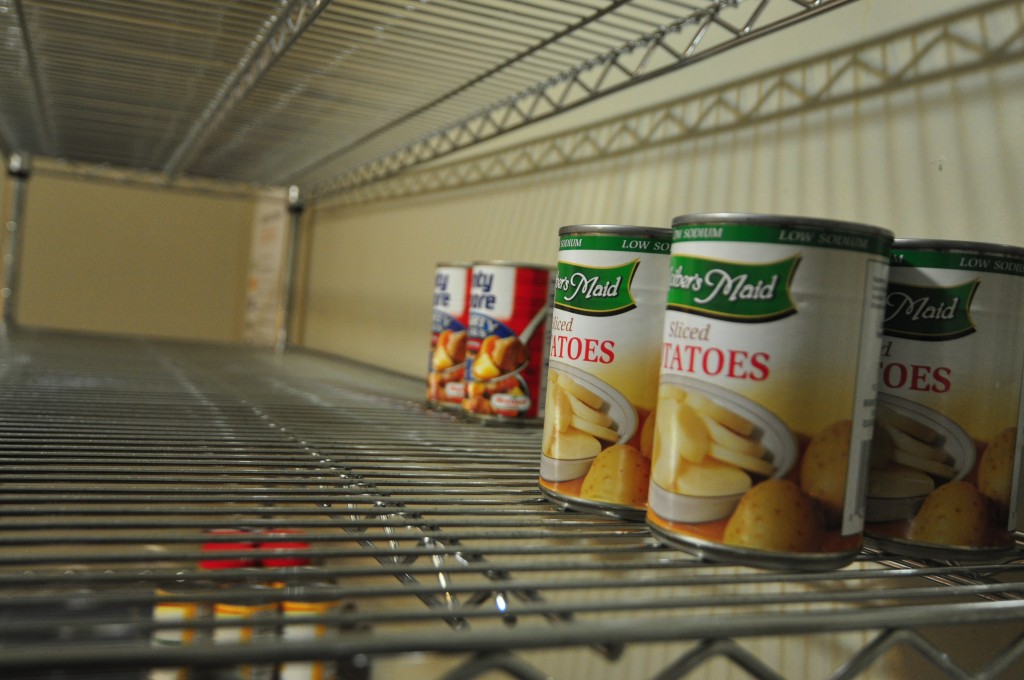
This week the struggle to continue to assist people needing emergency food, while dealing with the lack of funds resulting from budget impasse, hit home once again.  Tuesday is my usual day to volunteer in the other local food pantry in my neighborhood.  When I arrived I was informed about the new guidelines for distributing food we had to follow as a result of the lack of funding from the state.  Basically we are having to ration what we have, because we do not know how long we will have to go until we receive food from the lead county agency that receives SFPP empty shelvesfunding.  For smaller households, 3 and under, the reduction in the amount of non-perishable food they received was not that noticeable, but for the larger households, and on Tuesday we packed food for two households of 6, the non-perishable food allotment was almost cut in half.  Luckily we have a wide variety of produce in stock and because it is perishable, must be moved in regular quantities.  Between the produce and donated items, like bread, we were able to augment the diminished supply of non-perishable food the clients received.  But winter is coming and the produce supply will dwindle and the amount of donated bread varies from week to week, so some weeks we will have little with which to supplement the non-perishable food.

The approach of Thanksgiving and Christmas causes further concern for many food banks and pantries.  This is a time of year when utilization of emergency food services surges, as people who may not regularly frequent emergency food providers turn to them for the food for their Thanksgiving and Christmas tables.  Without the necessary state funding, meeting this extra demand will be a challenge for many food banks and pantries, like King’s Kettle Food Pantry in Shippensburg, who has already had to draw on extra funds they had set aside for their annual Thanksgiving turkey dinner baskets, just to keep the doors open these past few months.  Similarly, Project SHARE (Survival Help and Recipient Education) in Carlisle wonders if their Thanksgiving meal boxes will be able to be distributed if they do not receive their state funds.  They currently have less than 100 turkeys, but expect 1500 families to turn out to receive these Thanksgiving meal boxes.

Thanksgiving dinner

Thanksgiving is my youngest son’s favorite holiday.  He loves turkey and all the other side dishes that adorn our Thanksgiving table.  I can’t imagine looking into his expectant eyes and telling him that we will not be able to have Thanksgiving this year.  Even more difficult to imagine would be having to tell my family on a daily basis that we will have to eat less in order to make our diminished allowance from the food pantry last for the month.  If you live in Pennsylvania I strongly urge you to contact the Governor’s office and your local members of the General Assembly to insist they seriously work on reaching a compromise to get the budget passed.  These are real people who are being affected by this stalemate.

http://www.governor.pa.gov/contact/

http://www.legis.state.pa.us

Additionally, I urge you to seek out your local food pantry and ask what their current need might be.  Many food pantries have a list of their most needed items if you want to donate food items.  If your local food pantry is distributing turkeys for Thanksgiving and Christmas meals, you can also give them the grocery store coupon you may have earned for a free turkey. Cash donations are always appreciated as well.  Food pantries may have the ability to purchase items at a discounted rate, further stretching any monetary donation.


Barely a Drop in the Bucket

The food pantry where I volunteer operates on an appointment basis.  One client is scheduled every half hour.  This method of operation ensures a manageable flow of clients receiving food and keeps the waiting area from becoming too congested.  Unfortunately it also creates a backlog of clients waiting to receive an appointment for food, sometimes as long a two weeks.  When a client is unable to keep an appointment, they go back into the line of clients waiting for an appointment.

day-planner

The past two weeks, during my time volunteering at the food pantry, something unusual has happened.  Clients scheduled to come and get food have not come in for their appointment.  I volunteer from 9am-12pm, so usually only 6 clients can come in during that time to receive their monthly allotment of food.  Often we have one client out of the six not show up, but this past week only one client came in for food.  During that time we were also able to assist someone who came in without an appointment, but was eligible to receive food.  The previous week only half of the scheduled clients kept their appointments.

At first glance clients not coming in for food may seem like a good thing.  Maybe their situation has changed for the better.  Maybe they are no longer food insecure.  But after almost a year volunteering in food pantries I have learned this is probably not the case.  In the past clients influenzausually fail to keep appointments to get food because their ride fell through or their car broke down.  They have missed appointments due to illness, either their own or another family member.  During the winter months weather is a factor, particularly for the clients who walk.  Sometimes clients schedule their appointments to coincide with a break from work, but for whatever reason that break doesn’t happen as scheduled.

My point in sharing my concern with clients not showing up for their appointments is not to complain about wasted time or denigrate our clients.  My intent is to show how this situation perfectly illustrates one of the “Seven Deadly ‘ins'” of the emergency food system, as posited by charity bookJanet Poppendieck in her book Sweet Charity.  The “deadly in” to which I am referring is inaccessibility.  This particular food bank is open from 9am-4pm, 3-4 days per week, but only on week days.  Furthermore clients must have an appointment to receive food.  They must remember to call two weeks before their eligibility date because of the roughly a two week waiting period for an appointment.  If they find at the time of the appointment they can not make it, as stated above, them must start the process all over again.  Calling to cancel is helpful for food pantry staff, but usually the cancelation, if it comes at all, is last minute as the reason is usually unforeseen.  Consequently, staff is rarely able to reschedule another client on such short notice; therefore, not only has the originally scheduled client not received food, but s/he has also kept someone else from getting an appointment.  All of these clients are in need of food, but due to the limitations of the emergency food delivery system it is inaccessible to them.

This example of food pantry clients missing their appointments also highlights another of Poppendieck’s “Seven Deadly ‘ins,'” the inefficiency inherent in the delivery of emergency food.  Not only does this method of delivery require a sizeable three tiered system (federal, state and local agencies) to distribute the food, but it duplicates the food delivery system already in place in society–the grocery store.  In our rural community there are at least 3 large grocery storessupermarket which are open seven days a week, two of which are open 24 hours a day.  Additionally, there are several markets in and around town and a weekly farmers’ market during the growing season.  Wouldn’t it be more efficient and cost effective to just increase the monthly SNAP allowance and make sure all those who are eligible to receive those benefits are getting them, instead of funding this inefficient, parallel food delivery system?  This option would allow those who are food insecure and need assistance to use the system already in place in society when it is convenient for them, given their daily commitments, instead of relying on a parallel food delivery system that is much less convenient to access.

In a chapter from A Place at the Table, the companion book to the documentary of the same name, Joel Berg compares the emergency food delivery system to the fireman’s bucket brigade of the past.  Prior Fireman_brigadeto the mid 1800s, when there was a fire in a city or town, bucket brigades would be formed to combat the fire.  Citizens would line up from the town well or another water source and pass buckets full of water to the fire, with empty buckets returning down another line.  The problem was that these bucket brigades, although well intentioned, rarely put out any but the smallest of fires.  To remedy the inefficiency of the bucket brigades local governments stepped in to create fire companies with better fire fighting equipment.  Today we would never think of trying to fight a house fire with a bucket brigade.

Hunger in the United States is a fire that we are currently trying to fight with a bucket brigade.  Local citizens in food banks, pantries and soup kitchens across the country are trying to put out the building sized fire of hunger with a bucket sized solution.  Just like when the government of yesteryear stepped in to create a more effectivefire truck solution to the problem of fires, the government of today needs to reorganize how assistance for those who are food insecure is delivered into a more efficient, effective method.  I enjoy volunteering in the food pantry and the good feeling I get from knowing I am helping someone, but I look forward to the time when the emergency food delivery system of food banks, pantries and soup kitchens goes the way of the bucket brigade.  Once that happens, maybe the fire of hunger in America will begin to be extinguished.


Hunger Walk

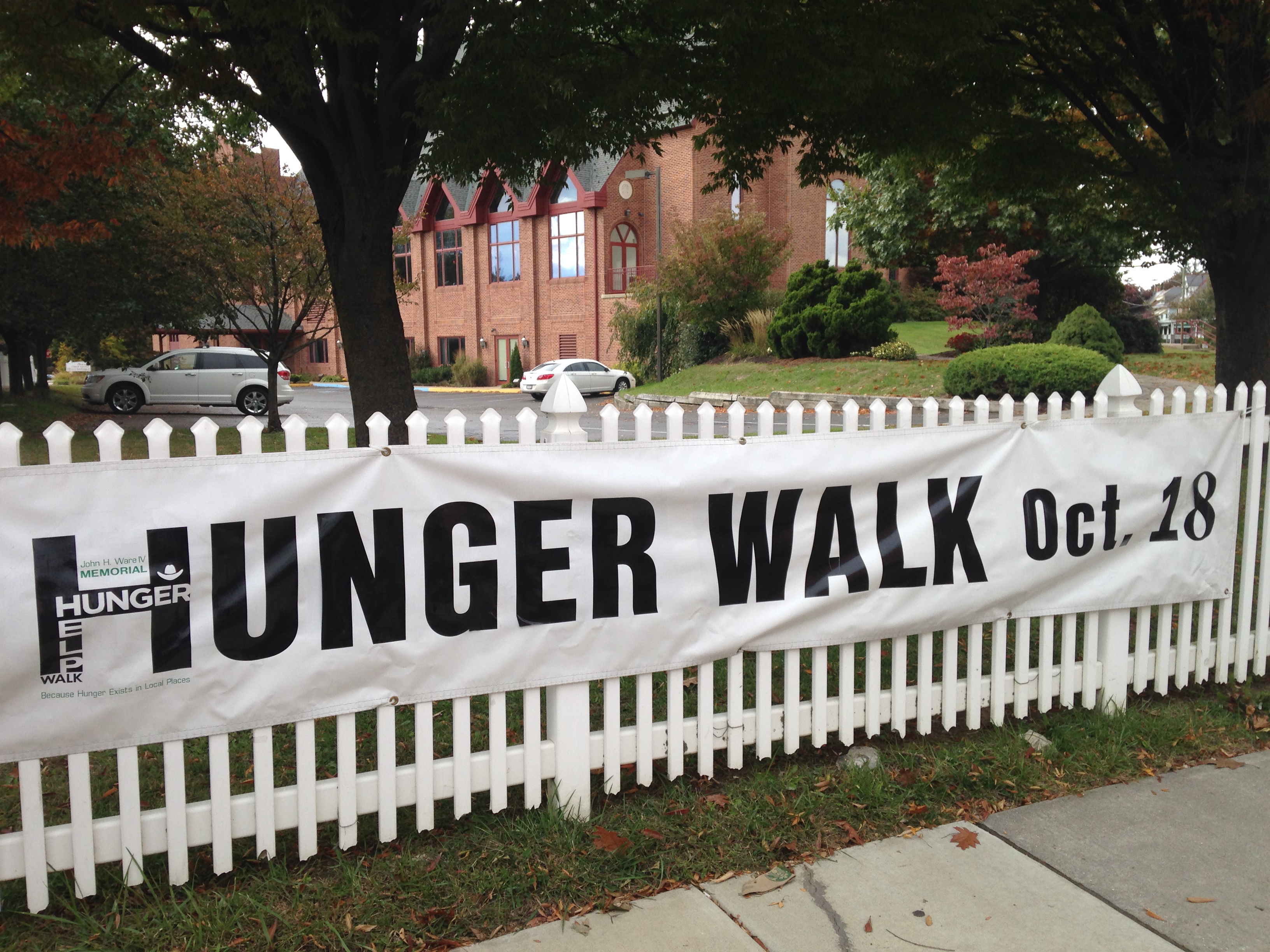
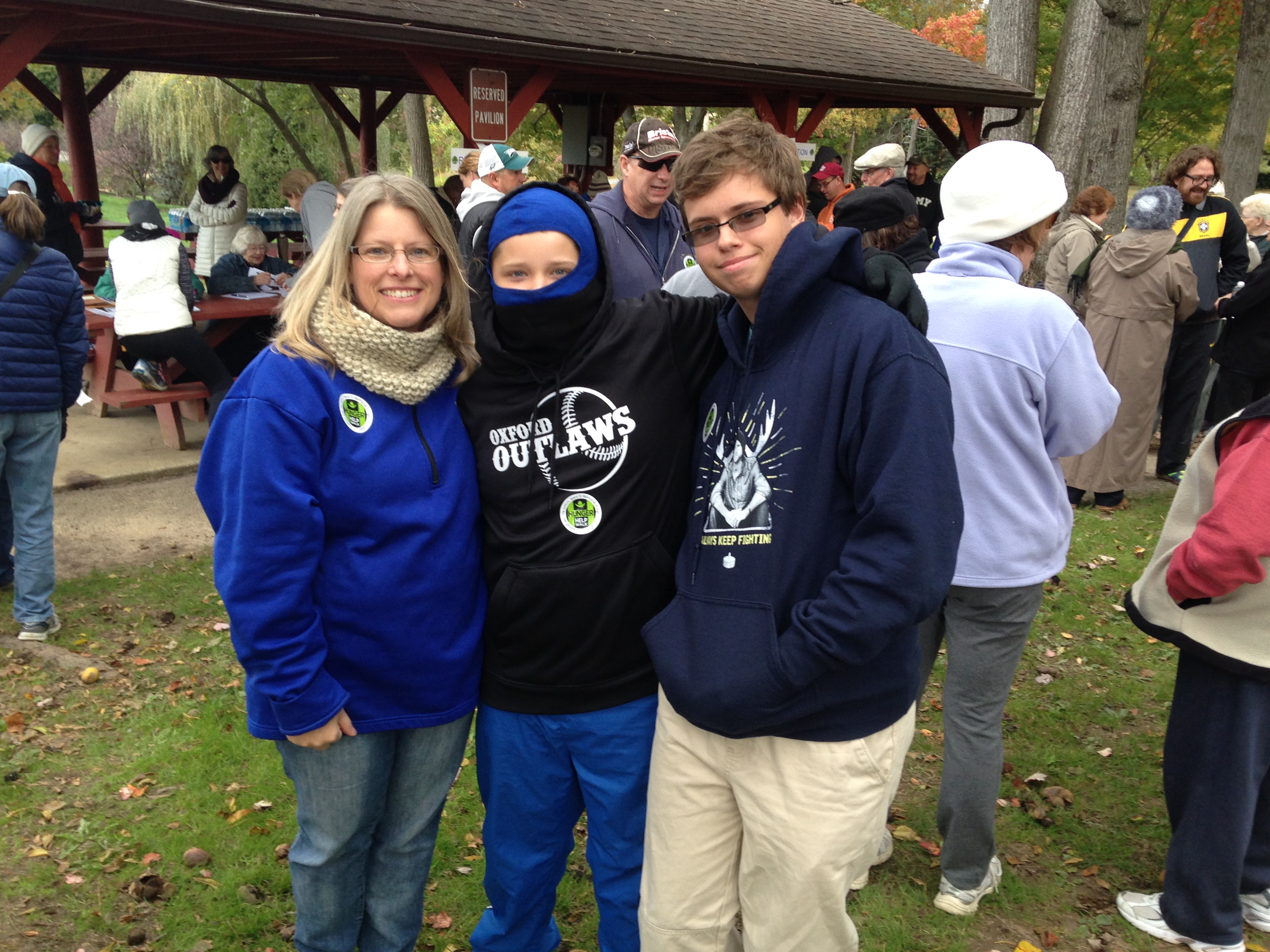
hunger walk bannerThis past Sunday I couldn’t get the 10cc song, Things We Do For Love, out of my head.  (I know.  I’m dating myself.)  That’s because of this line in the song, Like walking in the rain and the snow, and that is what we were doing, walking in the rain and the snow to help those who were hungry.   My sons and I participated in the inaugural John H. Ware IV Memorial Hunger Help Walk to benefit 4 local organizations that help combat the problem of hunger in our area.  In past years this walk has been part of the CROP Hunger Walk, sponsored by World Church Service.  The local organizers in my town decided to break with that organization and sponsor the walk on their own for two reasons.  First, the local entities receiving the funds raised by this walk did not see those funds for several months, often almost a year after the walk.  Secondly, only 25% of the funds raised in our town came back to the local organizations.  The remaining dollars stayed with the World Church Service, presumably to cover administrative costs and assist with efforts abroad to combat hunger.

Over 150 people turned out in spite of a dramatic dip in temperatures to participate in the walk, which included 3 different loop options–a 1 mile, 5K or 10K walk/run.  Participants included people of all ages.  I was especially pleased to see a large group of teenagers, many of whom were walking in support of a local youth organization that wasme hunger walk receiving a portion of the money raised by the walk.  The chilly wind and clouds did not seem to dampen spirits and as we started off, we were greeted with a brief snow shower, followed by a couple of light showers later in the walk.  The inclement weather only seemed to add to the sense of camaraderie among the walkers.

I applaud these local organizers for deciding to take on the sponsorship and organization of this walk and keep the funds raised in the community.  At the opening ceremonies when this change was discussed, those gathered vocalized their approval as well.  Unless people are making a donation to a specific disaster or tragedy relief effort, most people want their donations to stay in the local community.  Furthermore, I think this walk helps to make people, who may not be, aware that a hunger problem does exist in their community and that there are resources within that community trying to assist those in need.  When I talk to folks about my endeavors and volunteering in the local food pantries, I have been surprised how often the response I receive is one of astonishment that we have food pantries in town.  I hope this new model works for the organizers and future years walks will be able to operate in the same manner, with all the proceeds remaining in the local community.

hunger walk sticker