“Hunger in America is solvable. People in America are not hungry due to war or famine or drought.”
The above quote is from a report, released January 4th, entitled Freedom from Hunger: An Achievable Goal for the United States of America, written by the bipartisan National Commission on Hunger. This Commission is comprised of members from the fields of nutrition, medicine, hunger relief, public policy and poverty studies, who were appointed by Congressional leaders from both political parties. The Commission was charged with providing recommendations for reducing hunger in the United States using existing programs and funding. Consequently, their recommendations require a negligible amount of new resources. The Commission chose to focus on 7 groups who typically experience higher levels of hunger: seniors, single parent families with young children, people with disabilities, veterans and active duty military, American Indians, people affected by high incarceration rates and immigrants. After traveling across the country, holding public 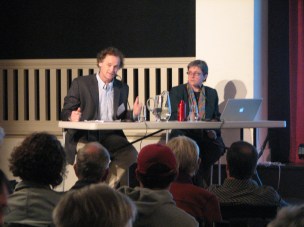 hearings and visiting numerous programs in both the government and public sector, the Commission compiled 20 sensible recommendations to reduce hunger.
After having read this report, I was encouraged by several things I read. First, I like that this Commission is bipartisan. In the polarized political climate of today to achieve anything requires buy-in from both political parties. Additionally, addressing difficult problems, like hunger and many other problems facing America today, requires many different points of view and ideas. Similarly, I think it is important that the Commission members are from several different disciplines and approach hunger from a variety of perspectives. The Commission highlighted several root causes of hunger in the United States including, labor market forces and job availability, family structure, education, exposure to violence, historical context and personal responsibility. As a result of the numerous causes of hunger, the Commission states in the report that hunger can not be eliminated solely by food assistance alone. The root causes of hunger must be understood and addressed before hunger in the United States can be eradicated.
I was similarly encouraged by the sensible recommendations the Commission puts forth in the report. Of these 20 recommendations there were about a half dozen that I was particularly pleased to read. Perhaps one of the most important recommendation I believe the Commission makes concerns the phase down of SNAP benefits as recipient income increases. In an effort to incentivize work, the Commission suggests allowing States to offer households who have become ineligible for SNAP benefits due to gaining employment, an appropriate extension of those benefits to assist them in assuring they have a sufficient amount of income in place before loosing all assistance. If this recommendation were to be put into effect, SNAP recipients would no longer automatically loose all of their benefits as soon as they earned more than the eligibility threshold, allowing them to accumulate sufficient funds to be able to adequately cover all necessary expenses and lessening their chances of slipping back into a situation where they need public assistance.
A cluster of four recommendations concern summer feeding programs and since I am currently working to establish a summer feeding program in my community I am particularly pleased at the inclusion of these recommendations. Three of these recommendations concern increasing the access to summer feeding programs in  rural areas, which would benefit my rural community. Most importantly, the Commission suggests lowering the area eligibility for reimbursement for summer meals from 50% of children eligible for free or reduced school meals to 40 percent. This change would mean that more children, in areas where poverty is less concentrated, would qualify for free summer meals. The other recommendation concerning summer feeding programs encouraging to me is the suggestion to issue EBT cards for summer meals in communities where barriers to congregate feeding sites, like neighborhood violence or transportation issues related to remote living conditions, can clearly be demonstrated. In USDA pilot programs issuing EBT cards to children at risk for hunger in these communities has been proven to reduce hunger.
The list of recommendations calls for funding for the USDA to implement and evaluate several new pilot programs, assessing their effectiveness in reducing hunger. If successful these pilot programs should be implemented nationwide. Three of the four pilot programs were of particular interest to me because they suggest taking steps to move households out of poverty, instead of just keeping them from slipping further into it. The first one involves changing the SNAP benefit calculation from the Thrifty Food Plan to the Low Cost Food Plan, resulting in a more generous benefit. The second pilot program suggests raising the earning disregard from the current 20%, which may help reduce the danger of families losing benefits prior to being ready to transition to self sufficiency. The third suggested pilot program, which serves as a hand up rather that merely a handout, involves increasing the maximum excess shelter deduction/allowance in SNAP. Raising the shelter allowance to more realistically account for the actual cost of housing, particularly in markets with high housing costs, could result in a lack in hunger as more household funds are available for food.
Finally, the Commission concluded their list of recommendations with a call for collaboration across governmental departments and between the public and private sector. The Commission calls for the creation of a White House Leadership Council to End Hunger. Representation on this Council will include members from numerous governmental agencies, including but not limited to the Departments of Agriculture, Housing and Urban Development, Health and Human Services and Veteran Services, as well as the National Institutes of Health, the Centers for Disease Control and Prevention and the Center for Medicare and Medicaid Services. In addition to these governmental departments and agencies, the Council would include members from the corporate, non-profit, university and faith-based sectors. Lastly, community leaders and those experiencing hunger will also have representation on the Council. The White House Leadership Council to End Hunger will be charged to develop a coordinated plan to end hunger by collaboration across agencies and to integrate funding streams and eligibility and delivery systems.
In this election year, in a highly polarized political climate, I do not know how likely the enactment of any of these recommendations are. I do take heart in the fact that the Commission is bipartisan and came to unanimous conclusions. The recommendations they put forth are sensible and require negligible additional resources to implement. Additionally, they call for action from both government and civic agencies, as no entity alone can solve the problem. Lastly, the report acknowledges that the root causes of hunger are many and all of them need to be addressed before any action to eliminate hunger can be expected to succeed, but succeed we can.
“Our country-with all its strength, genius, creativity, and spirit of community-has the ability to be free from hunger.”

 available the day of the event as long as supplies last. Once the soup has been consumed, the bowl is yours to take home to serve as a reminder that hunger exists in our world.
 This past Saturday my family went to decorate our bowls, some more enthusiastically than others. (It’s hard to get enthusiasm out of teenagers sometimes!) We got our bowls, chose our color palette and got to work. We all had different styles and ideas. I had been stressing over what to paint, as I am not artistic at all. In the end, I decided it was best to keep it simple and went with stripes and polka dots. When these bowls are fired the colors will darken a bit. Since finishing our bowls we have all mentioned how excited we are to see our finished products. Check back after February 20th and I will have pictures of the fired bowls! There are two more Saturdays left to decorate bowls, so if you live in my community and are looking for a fun, creative, socially aware event to do with your family or just on your own, head on down to the Arts’ Alliance building and get a bowl of your own!

 Happy New Year and welcome to day 190 without a state budget here in Pennsylvania. If you are keeping track, and I am, that is just over half of the 2015-16 fiscal year without a budget and almost that long without any funds being released at all. Governor Wolfe’s refusal to approve of any stop gap funding in lieu of a passed budget came to an end just before 2015 did. On December 29 the Governor announced he would line item veto the state budget sent to him by the legislature. This action allows for $23.4 billion in emergency funds to be released. These funds will flow to school districts, human service agencies and county governments. Of that $23.4 billion, $18.4 million will go to the State Food Purchase Program. Through this program cash grants are awarded to lead agencies in each county, allowing them to buy items in bulk, which are then distributed to smaller emergency food providers–food pantries and cupboards–within the county.
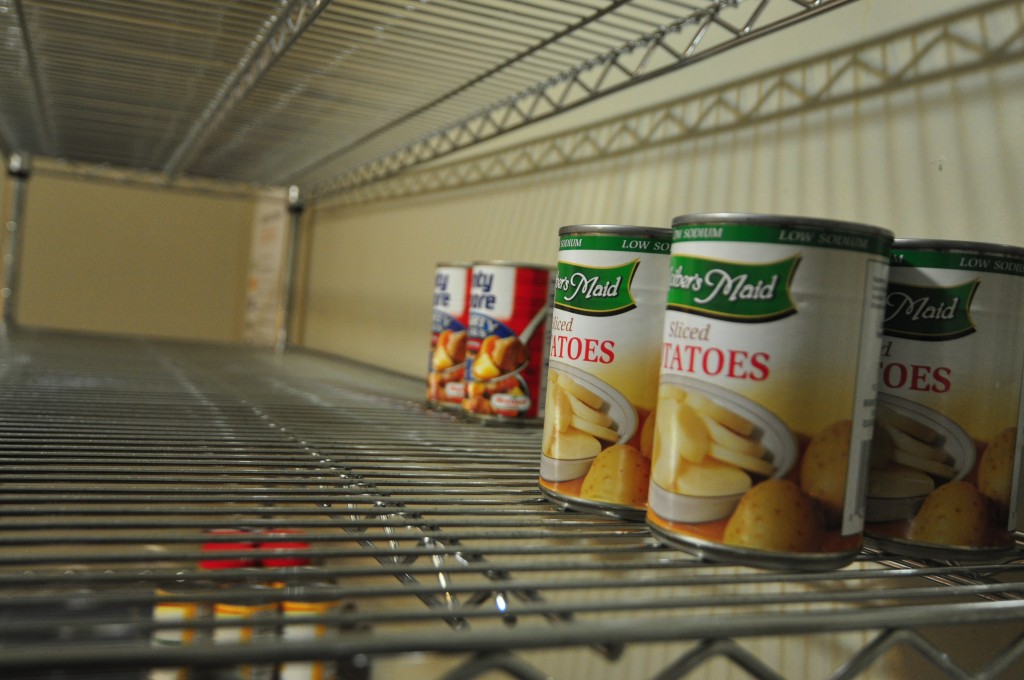
 volunteering at the local food pantry after having taken last week off. I was shocked at how empty the shelves were. We were down to just three types canned vegetables from our usual five or more. We had only one type of cold cereal or oatmeal instead of several selections of cereal, oatmeal, and pancake mix from which clients can choose. We had no spaghetti or dried beans and were almost out of rice, both white and brown.
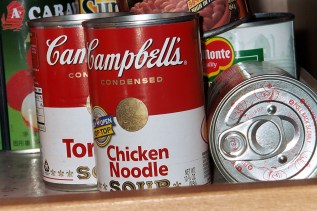 in these boxes, and while soup may seem like, and is, a good thing to donate to a food drive, canned soup contains an outrageous amount of sodium. Giving a client several extra cans of soup to make up for lacking items which could be used in meals clients prepare, like dried beans, means they are most certainly eating a more unhealthy diet this month.
 decorations and the act of giving, presents, time, love and caring. I grew up in the country and have fond memories from when I was a child of caroling on country roads in the back of a hay wagon being pulled by a local farmer’s tractor. One year I remember making stops at a few houses so that my dad could run a bag of groceries up to the front steps. I have always been touched by that small gesture that probably meant a great deal to the person receiving the unexpected gift.
 boots! As with the night caroling, I was struck by the realization of how much these items will mean to the children receiving them on Christmas morning. I am glad this organization and many others like it exist and I am gratified to assist them.
 societal safety net programs. This article caused him to ask the question “Who is the typical person receiving welfare?” We have since had a few conversations on both the topic of why some people are voting against their own best interests and who the typical public assistance recipient is. When we have a minute or two, both of us have been searching for an answers to his question.
 Supplemental Nutrition Assistance Program (SNAP). She was forced to give up the WIC benefits because she lacked daycare for her kids so that she could attend the classes required by the program. Her SNAP benefits took 6 months to get because of a delay due to an in-house paperwork backup. In the end, her SNAP benefit is so low she is still forced to go to a food pantry monthly to have enough food for her family.
 been waiting 18 months to see a specialist. The receptionist confided in her that he would probably never see the specialist, because privately insured patients would constantly be moved ahead of him.
 free during the school year, lose that access they are more likely to rely on cheap, calorie dense foods which provide little nutritious value. This switch in diet can lead to a weight gain in the summer among food insecure children that is two to three times higher than their weight gain during the school year. Providing nutritious summer lunches in place of cheap, calorie dense foods can mitigate this weight gain and reduce the susceptibility to chronic diseases like, asthma, type 2 diabetes and heart disease for these children. Additionally, decreasing food insecurity can lessen rates of mental illness and risk of hospitalization for chronic diseases.
 most evident in reading achievement. According to the study having enough nutritious food to eat helps combat cognitive decline which can lessen summer learning loss. Decrease in summer slide can save schools significant funds, as it is estimated to cost $1,540 per student to re-teach a student struggling with summer learning loss.
 Impact Analysis, schools offering a summer lunch program experienced a 5.3% increase in students graduating from high school. As high school graduates typically earn approximately $10,090 more per year than non graduates and experience a 4% higher employment rate, these summer lunch programs will not only beneficially impact the student who graduates, but will also serve to strengthen the economy in the long term, as these students are better able to be productive members of society.
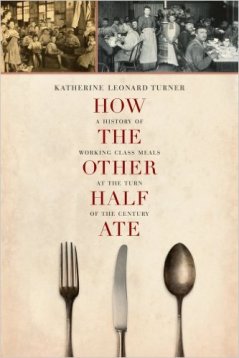 I recently read the book,
  reflect on that for which I am thankful. I have so much to be thankful for, as do most Americans. I am thankful for the big things–my family and friends, health and home. But I am also thankful for little things that make each day a gift, like the bird that comes to my feeder or the beautiful full moon that greeted me as I took the dog out early this morning or a funny story from one of my sons shared at the dinner table.



 From a Simmer to a Boil