This past year, in addition to paying close attention to governmental proposals affecting the social safety net, I have also followed proposals concerning legal and undocumented immigrants. For now, most of the proposals concerning the social safety net have not been enacted. Unfortunately, the same can not be said for proposals affecting the  immigrant population, and although these policies are targeted at undocumented immigrants, the ripples of fear they have caused are moving through the qualified immigrant population as well.
Before I retell the narrative I have chosen this month I want to restate the regulations regarding immigrants and their ability to qualify for social safety net programs. Most of these regulations have been firmly in place since the late 1990s, but some date back to the inception of the program. Undocumented immigrants are not eligible for federal governmental assistance, like the Supplemental Nutritional Assistance Program (SNAP) or Temporary Assistance for Needy Families (TANF), not now, not ever. Any children of undocumented immigrants who have been born in the United States, and are therefore US citizens, are, however, eligible for this assistance. Just the children are eligible and the amount of assistance the household receives is only commensurate to the number of eligible children. For instance if you have a family of 5: two undocumented parents, two undocumented children, and one child born in the U.S., the household would only receive SNAP benefits for one, not five, members of the household. With the 1996 passage of Personal Responsibility and Work Opportunity Act (PRWORA), and subsequent legislation passed in 1998 and 2002, documented immigrants are eligible to receive benefits, but only after they have resided legally in the U.S. for 5 years. There are some some exceptions to the 5 year waiting period for protected classes of documented immigrants, like refugees. Furthermore, for all who receive assistance from TANF, whether documented immigrant or U.S. citizen, there is a lifetime limit of no more than 60 months of benefits, but that lifetime limit can vary from state to state with some states having a maximum 24 month lifetime limit on benefits. In all states TANF recipients must get a job within 24 months of getting benefits to avoid reduction or termination of benefits. The Supplemental Nutrition Assistance Program does not have a lifetime limit for benefits, except for Able-Bodied Adults without Dependents (AWBADS).
My point in explaining these rules is to convey that immigrants can not come to the United States and live off our government, especially those who come illegally, since they are ineligible to receive any assistance at all. Even under the best of circumstances, immigrants must reside legally in the U.S. for 5 years to be eligible for any public assistance. I do not intend to argue the pros and cons of immigrants coming to the United States, legally or otherwise, merely to discuss the reality for those who are currently here, living and working in our communities. For undocumented immigrants, like the subjects of the following narrative, this is the reality they have been facing for years, maybe even decades.
The family whose story I am going to tell consists of 2 undocumented immigrant parents and their children living in my greater community. I did not meet this family personally, but a very trustworthy friend did and conveyed their circumstances to me. While the parents are undocumented, all of the children were born in the United States, and are therefore American citizens. The oldest child is 17, so that means this couple has been residing in the United States for at least 17 years, almost 2 decades, making ends meet without receiving public assistance, while contributing to our local economy. They were able to do this because the father worked full-time and supplemented his take home pay by doing additional farm work. The mother stayed home raising the children. The kids are good students, and the 17 year old approached senior year with visions of attending college.
For almost 2 decades this arrangement worked for this family, until one day the father was killed in a horrific accident, witnessed by his children. And just like that their life turned into a horrible nightmare. Within a week of losing their husband and father, this family lost their housing. The 17 year old, who had aspirations of attending college, now faced the potential of having to drop out of school and start working. The mother did not know where to turn. She feared going to any agency for help in securing the benefits for which her children were eligible due to their status as U.S. citizens. She worried about drawing attention to her undocumented status, triggering her removal from her children who had just lost a parent, and her likely deportation. When I decided I was going to write about this family, I went back to my friend to ask what had happened to them. Sadly, I can not report any update. My friend, unable to help them personally, referred them on to an agency better equipped to help. I can only hope they were able to find some assistance.
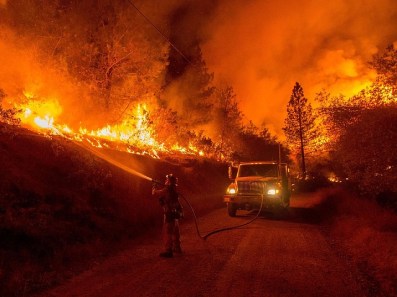 Unfortunately, the heartbreaking story of this family is not an isolated event. Last fall fires burned out of control in large areas of Sonoma and Napa counties in California, including business and residential areas in the city of Santa Rosa. The countryside surrounding Santa Rosa is lovely wine country, but Santa Rosa itself is a large city, with tens of thousands of residents. A wildfire in the vineyards on hills would harm the economy, but a wildfire within the city of Santa Rosa would cause devastation for thousands. At the time of the fires, I didn’t stop to think who would suffer the most as a result of these fires, or that vastly different levels of suffering would even be experienced. On reflection, I realize the immigrant population will experience a greater loss as a result of these fires. Santa Rosa, like most California cities and towns, has a large immigrant population, both documented and undocumented. These immigrants, who lost everything in these fires, can only receive governmental assistance if they meet the previously explained requirements. Additionally, FEMA assistance, which is vital to help those experiencing a disaster put their lives back together, is only available for U. S. citizens, non-citizen nationals (Somoans), and qualified aliens (those living legally in the U.S. for at least 5 years) . For the others, there will be no money for them to rebuild their lives after this disaster.
The story of this local immigrant family haunts me as does reading about the hundreds, if not thousands, of immigrant victims of the wildfires in Santa Rosa who do not qualify for public assistance. Prior to these horrific events, these households were surviving without assistance from the federal government. Now, ineligible for help, what are they to do? Immigrants, qualified and undocumented, live in almost every community in our country. They mostly work in low paying, back breaking or otherwise unpleasant jobs that most American employers are unable fill using U.S. citizens. They put money back into those local economies and pay taxes. In return, during a time of need, they receive little to nothing. What have we as a society gained from this? And equally important, what have we lost?
 I wanted to let my Facebook followers know that I have launched a
  The other day, as I was scrolling through my Facebook feed, I came across a reposted blog entitled
  advantage of you and/or the system.
 In addition to being non-judgmental and compassionate, however, we try to offer kindness and restore a little bit of dignity to those who are struggling daily with the weight of poverty. When we learn about a client facing a particularly difficult situation, we try to brighten that person’s day. For the grandmother who is raising some of her grandchildren or the caretaker of an ailing family member, we try to slip in a brownie mix or some other special treat if we have them. We keep on hand some birthday gift bags filled with all the fixings for a birthday party for households where a child is celebrating a birthday, but there is no money for a celebration. For clients who are cancer patients we give scented lotions and soaps donated from a local store when they rotate their stock. I can tell the aim of offering these niceties is successful in lessening the burden of shame these people carry by the look on the recipient’s face and the thank yous, often said repeatedly, we receive when we let them know about the item. And this is why I have chosen the items I have for my food drives. I wanted to pick things which would be a treat and would, if only for the amount of time it takes to drink a cup of coffee, allow someone in poverty to put down the weight of shame society has asked them to carry and and live like a person worthy of dignity.
 As one year comes to a close and another opens, full of possibilities and potential, it is only natural to reflect on what has transpired over the past year, and to look forward and plan for the upcoming year. Many set resolutions for themselves based on goals they wish to attain, and others start new ventures. I am no different than most. This morning I made friends with my treadmill again and started logging my daily water intake, in hopes maintaining a better level of hydration. I have not limited my reflections and resolutions to just my personal life, however. As a result of stepping away, over the past year, from my bi-monthly schedule of locating, researching, and writing posts about interesting and informative topics concerning poverty and food insecurity, I have been able to think about what I hope to accomplish by writing the blog, to what degree I have been successful, and what, if any, changes need to be made. Consequently, I have decided to introduce monthly narratives about people I encounter as I assist those who are experiencing food insecurity.
 frequently experienced when talking with others about poverty, especially with regard to public assistance. The comments causing my frustration concern the questioning of the deservedness of those who receive any form of public assistance, whether that assistance is welfare (TANF), food stamps (SNAP) or food from a food pantry. I’ve heard individuals classify those receiving assistance as lazy and living off the hard work of taxpayers or as illegal immigrants who have only come to the United States to get a handout. Running through all of these comments is the theme that those in poverty are at fault for their situation, should feel shame, and any help they receive should carry a punitive component. Over the past few years of writing this blog, I have presented statistics and facts about the average individual receiving assistance in an attempt to educate those who make such statements as to who the typical individual receiving public assistance is and the typical circumstances causing his or her need. Unfortunately, I do not think I have made much headway in convincing those critical of public assistance that the majority of those receiving it are truly deserving.
 Refusing to give up, I have used my time away from writing to think about another strategy I can use to encourage these folks to stop and consider the possibility that the majority of individuals receiving public assistance are in dire straits, are working as hard as they can to get out of their situation, and do deserve the assistance they are receiving during their time of need. As I have engaged others in a dialogue about poverty and the deservedness of those receiving public assistance, I have noticed that quite often the individual questioning the legitimacy of those in poverty to receive assistance is familiar with a person or family’s story which demonstrates for them genuine, legitimate need. Those critical of public assistance give a pass to the individuals in these cases. As a result of this observation, I have decided to write each month about a real person who is struggling with poverty and food insecurity, and whose story will hopefully give pause to someone who doubts the necessity of a strong social safety net in the United States. For these monthly narratives, I intend to draw on firsthand encounters
 From a Simmer to a Boil