As I started to collect coffee, tea and hot chocolate mix for our food pantry’s Warm Their Hearts drive, my husband expressed concern about something I too had been wrestling with. He pointed out that the items I had held food drives for were luxury items and that maybe those folks who had helped out might rather donate items that are more of a staple item, like canned vegetables or peanut butter. I certainly saw his point and understood  his concern. The debate of what is an appropriate food item for someone who is requiring assistance with food, either through SNAP or from a food pantry, has been debated in American society many times. After some more thought on my part and discussion with some people who had participated in both drives I am comfortable with the two items that have been chosen for our food drives, and I now understand that providing these items to our food pantry clients has been beneficial to both the recipients and the donors.
Most people have experienced hunger, if only for a little while, when our busy schedules force us to delay or even skip a meal, but very few of us have had to experience the psychological toll privation has on those who are food insecure. Contemplating the absence in my life of the food items I chose for these recent food drives illustrates for me what that psychological toll would begin feel like if I suffered from food insecurity. I know if I could not bake Christmas cookies I would experience a profound sadness, because I could not bake cookies with my sister for my family and friends. Additionally, life without coffee is almost unimaginable to me. I start my day with coffee and use it as a reward, a pick me up, a reason to take a break. Plain and simple, coffee makes me happy. Neither the holiday cookies nor the daily coffee are necessary for my daily sustenance, but without 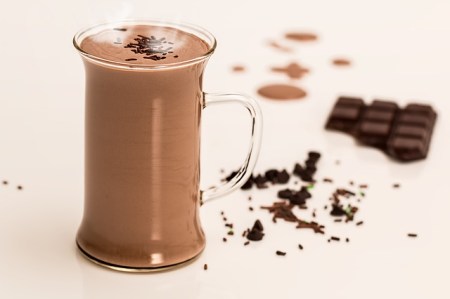 them my mental outlook on life would be very different. Consequently, receiving an unexpected treat, like a cookie mix or coffee, tea or hot chocolate might lift the spirits of those who struggle with food insecurity and must go without these unaffordable extras on a regular basis.
The recipients, however, are not the only ones who psychologically benefit from these food drives. The donors do too. The benefit to donors was not immediately evident to me. I know that I experience a sense of pleasure at knowing I am brightening someone else’s day by helping them get food at the food pantry and by helping provide these treats, but I wasn’t sure that same sentiment was felt by everyone who was participating in the food drives. A recent thank you letter from a reader and donor, as well as conversations with a couple of other donors has made me realize those who choose to participate in these food drives receive a positive psychological boost as well. The feedback I received indicated they loved these ideas and were very happy to participate in donating items. From these interactions I was also able to determine that these specific food drives had allowed the donors to also contemplate the psychological toll food insecurity might have on a person. Perhaps most encouraging to me, however, is that each of these individuals has mentioned wanting to participate in future drives and/or has suggested other ways in which they could donate.
I would like to say that each action I take is part of some larger plan, but more often than not I am just making it up as I go along. When some aha moment happens and gives me a  moment of clarity or understanding, I try to translate that understanding or clarity to my readers who are following me on my journey. Like the SNAP Challenge, these food drives have been a device to help illustrate more clearly what being food insecure is truly like. I can go without all kinds of food for a day, or week to try and replicate food insecurity, but I probably never would have thought to stop drinking coffee. It would never have occurred to me, until I heard someone who is really food insecure ask if we might possibly have some to give out. I don’t know what the next food drive will be, but I do want my readers to know, that I will always take substitutions if you disagree with the item being collected. As a matter of fact, I will take almost any unexpired food or personal care item you want to donate, any time you want to donate it. It will always go to good use.
 For over a year I have been troubled by the problem homeless clients, especially those on foot, present. We can not overcome some of the limitations that prevent us from providing our homeless clients with certain types of food. For instance, if they have no way to keep food refrigerated, we can not give them food that requires refrigeration. Similarly, if they do not have a means to cook food, we can not give them anything that requires even minimal cooking, like ramen noodles. One problem unique to providing food to homeless clients that I have felt we can solve, however, is limitation on the quantity of food we are able to give them at one time. The strategy to solving this problem involves a two-pronged approach–increasing the quantity and variety of food and nonfood items specifically for the homeless and coming up with solutions that allow homeless clients on foot leave with more food.
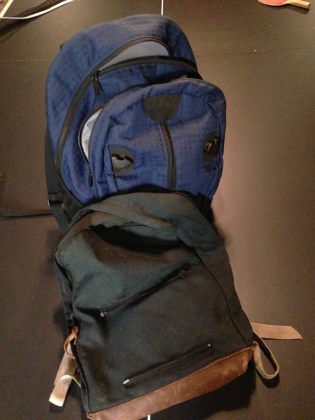 food homeless clients can take with them involves figuring out a way for them to carry more food away, so that their allotment more closely resembles the amount an individual with transportation is able to take. When packing food for a homeless client one of the questions we ask is whether s/he has a backpack. Backpacks can be packed with heavier items and to capacity, as it is easier to carry something heavy on your back. We have on occasion gotten backpacks donated, but do not always have them on hand for new homeless clients. Additionally purchasing new ones is cost prohibitive. Consequently, I starting searching for a more inexpensive alternative. We usually pack as much food for clients as we can in boxes, but that is not very practical for homeless clients on foot, so most of their items are put into plastic bags. Over time carrying multiple plastic bags in one’s hand can become uncomfortable or even painful if the bags are heavy, as anyone who has ever gone shopping at the mall can attest. Thinking about these mall trips made me remember a sales clerk who rigged up a handle that the other handles went through so that I was only having to carry one handle in my hand. She did this mostly so I didn’t drop a bag, but the result was also more comfortable to carry.
 I began searching the Internet for an item that could be fed through the handles of multiple bags and then closed, making one single handle to carry. What I found was
 From a Simmer to a Boil