The Struggle Continues

pennsylvania sealOver a month ago, on September 30th, I wrote a post about how the Pennsylvania budget impasse was impacting one of our local food pantries.  Well it is 43 days later and we still do not have a budget in the state of Pennsylvania.  Today is day 135 without a budget, and while I have not been back to that particular food pantry, I can only imagine their situation is even more bleak.  Food banks and pantries across the Commonwealth, in places like the city of Carlisle and  Juniata, Bucks and Carbon County, are struggling to meet the needs of the numerous people in their communities who rely on them to make their food ends meet.

According to the PA Department of Agriculture website, Pennsylvania leads the nation in the amount of food assistance it provides to its residents under the State Food Purchase Program (SFPP).  Actually, only a handful of states even provide state revenue for an emergency assistance food program for low income residents.  This program serves PA residents with an annual income at or below 150% of the poverty line ($27,795 for a family of three).  Through this program cash grants are awarded to lead agencies in each county, allowing them to buy items in bulk, which are then distributed to smaller emergency food providers within the county.  These food purchases are made at wholesale or competitively bid prices to further stretch the funds available.

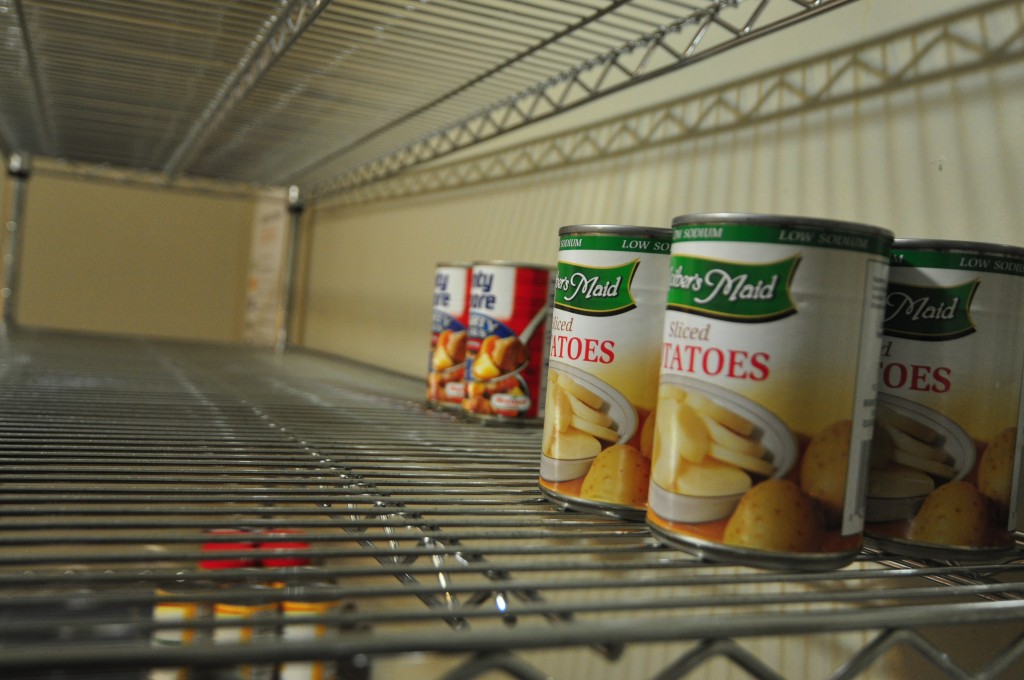
This week the struggle to continue to assist people needing emergency food, while dealing with the lack of funds resulting from budget impasse, hit home once again.  Tuesday is my usual day to volunteer in the other local food pantry in my neighborhood.  When I arrived I was informed about the new guidelines for distributing food we had to follow as a result of the lack of funding from the state.  Basically we are having to ration what we have, because we do not know how long we will have to go until we receive food from the lead county agency that receives SFPP empty shelvesfunding.  For smaller households, 3 and under, the reduction in the amount of non-perishable food they received was not that noticeable, but for the larger households, and on Tuesday we packed food for two households of 6, the non-perishable food allotment was almost cut in half.  Luckily we have a wide variety of produce in stock and because it is perishable, must be moved in regular quantities.  Between the produce and donated items, like bread, we were able to augment the diminished supply of non-perishable food the clients received.  But winter is coming and the produce supply will dwindle and the amount of donated bread varies from week to week, so some weeks we will have little with which to supplement the non-perishable food.
The approach of Thanksgiving and Christmas causes further concern for many food banks and pantries.  This is a time of year when utilization of emergency food services surges, as people who may not regularly frequent emergency food providers turn to them for the food for their Thanksgiving and Christmas tables.  Without the necessary state funding, meeting this extra demand will be a challenge for many food banks and pantries, like King’s Kettle Food Pantry in Shippensburg, who has already had to draw on extra funds they had set aside for their annual Thanksgiving turkey dinner baskets, just to keep the doors open these past few months.  Similarly, Project SHARE (Survival Help and Recipient Education) in Carlisle wonders if their Thanksgiving meal boxes will be able to be distributed if they do not receive their state funds.  They currently have less than 100 turkeys, but expect 1500 families to turn out to receive these Thanksgiving meal boxes.
Thanksgiving dinner

Thanksgiving is my youngest son’s favorite holiday.  He loves turkey and all the other side dishes that adorn our Thanksgiving table.  I can’t imagine looking into his expectant eyes and telling him that we will not be able to have Thanksgiving this year.  Even more difficult to imagine would be having to tell my family on a daily basis that we will have to eat less in order to make our diminished allowance from the food pantry last for the month.  If you live in Pennsylvania I strongly urge you to contact the Governor’s office and your local members of the General Assembly to insist they seriously work on reaching a compromise to get the budget passed.  These are real people who are being affected by this stalemate.

http://www.governor.pa.gov/contact/

http://www.legis.state.pa.us

Additionally, I urge you to seek out your local food pantry and ask what their current need might be.  Many food pantries have a list of their most needed items if you want to donate food items.  If your local food pantry is distributing turkeys for Thanksgiving and Christmas meals, you can also give them the grocery store coupon you may have earned for a free turkey. Cash donations are always appreciated as well.  Food pantries may have the ability to purchase items at a discounted rate, further stretching any monetary donation.


 

Barely a Drop in the Bucket

The food pantry where I volunteer operates on an appointment basis.  One client is scheduled every half hour.  This method of operation ensures a manageable flow of clients receiving food and keeps the waiting area from becoming too congested.  Unfortunately it also creates a backlog of clients waiting to receive an appointment for food, sometimes as long a two weeks.  When a client is unable to keep an appointment, they go back into the line of clients waiting for an appointment.

day-planner

The past two weeks, during my time volunteering at the food pantry, something unusual has happened.  Clients scheduled to come and get food have not come in for their appointment.  I volunteer from 9am-12pm, so usually only 6 clients can come in during that time to receive their monthly allotment of food.  Often we have one client out of the six not show up, but this past week only one client came in for food.  During that time we were also able to assist someone who came in without an appointment, but was eligible to receive food.  The previous week only half of the scheduled clients kept their appointments.

At first glance clients not coming in for food may seem like a good thing.  Maybe their situation has changed for the better.  Maybe they are no longer food insecure.  But after almost a year volunteering in food pantries I have learned this is probably not the case.  In the past clients influenzausually fail to keep appointments to get food because their ride fell through or their car broke down.  They have missed appointments due to illness, either their own or another family member.  During the winter months weather is a factor, particularly for the clients who walk.  Sometimes clients schedule their appointments to coincide with a break from work, but for whatever reason that break doesn’t happen as scheduled.

My point in sharing my concern with clients not showing up for their appointments is not to complain about wasted time or denigrate our clients.  My intent is to show how this situation perfectly illustrates one of the “Seven Deadly ‘ins'” of the emergency food system, as posited by charity bookJanet Poppendieck in her book Sweet Charity.  The “deadly in” to which I am referring is inaccessibility.  This particular food bank is open from 9am-4pm, 3-4 days per week, but only on week days.  Furthermore clients must have an appointment to receive food.  They must remember to call two weeks before their eligibility date because of the roughly a two week waiting period for an appointment.  If they find at the time of the appointment they can not make it, as stated above, them must start the process all over again.  Calling to cancel is helpful for food pantry staff, but usually the cancelation, if it comes at all, is last minute as the reason is usually unforeseen.  Consequently, staff is rarely able to reschedule another client on such short notice; therefore, not only has the originally scheduled client not received food, but s/he has also kept someone else from getting an appointment.  All of these clients are in need of food, but due to the limitations of the emergency food delivery system it is inaccessible to them.

This example of food pantry clients missing their appointments also highlights another of Poppendieck’s “Seven Deadly ‘ins,'” the inefficiency inherent in the delivery of emergency food.  Not only does this method of delivery require a sizeable three tiered system (federal, state and local agencies) to distribute the food, but it duplicates the food delivery system already in place in society–the grocery store.  In our rural community there are at least 3 large grocery storessupermarket which are open seven days a week, two of which are open 24 hours a day.  Additionally, there are several markets in and around town and a weekly farmers’ market during the growing season.  Wouldn’t it be more efficient and cost effective to just increase the monthly SNAP allowance and make sure all those who are eligible to receive those benefits are getting them, instead of funding this inefficient, parallel food delivery system?  This option would allow those who are food insecure and need assistance to use the system already in place in society when it is convenient for them, given their daily commitments, instead of relying on a parallel food delivery system that is much less convenient to access.

In a chapter from A Place at the Table, the companion book to the documentary of the same name, Joel Berg compares the emergency food delivery system to the fireman’s bucket brigade of the past.  Prior Fireman_brigadeto the mid 1800s, when there was a fire in a city or town, bucket brigades would be formed to combat the fire.  Citizens would line up from the town well or another water source and pass buckets full of water to the fire, with empty buckets returning down another line.  The problem was that these bucket brigades, although well intentioned, rarely put out any but the smallest of fires.  To remedy the inefficiency of the bucket brigades local governments stepped in to create fire companies with better fire fighting equipment.  Today we would never think of trying to fight a house fire with a bucket brigade.

Hunger in the United States is a fire that we are currently trying to fight with a bucket brigade.  Local citizens in food banks, pantries and soup kitchens across the country are trying to put out the building sized fire of hunger with a bucket sized solution.  Just like when the government of yesteryear stepped in to create a more effectivefire truck solution to the problem of fires, the government of today needs to reorganize how assistance for those who are food insecure is delivered into a more efficient, effective method.  I enjoy volunteering in the food pantry and the good feeling I get from knowing I am helping someone, but I look forward to the time when the emergency food delivery system of food banks, pantries and soup kitchens goes the way of the bucket brigade.  Once that happens, maybe the fire of hunger in America will begin to be extinguished.


Hunger Walk

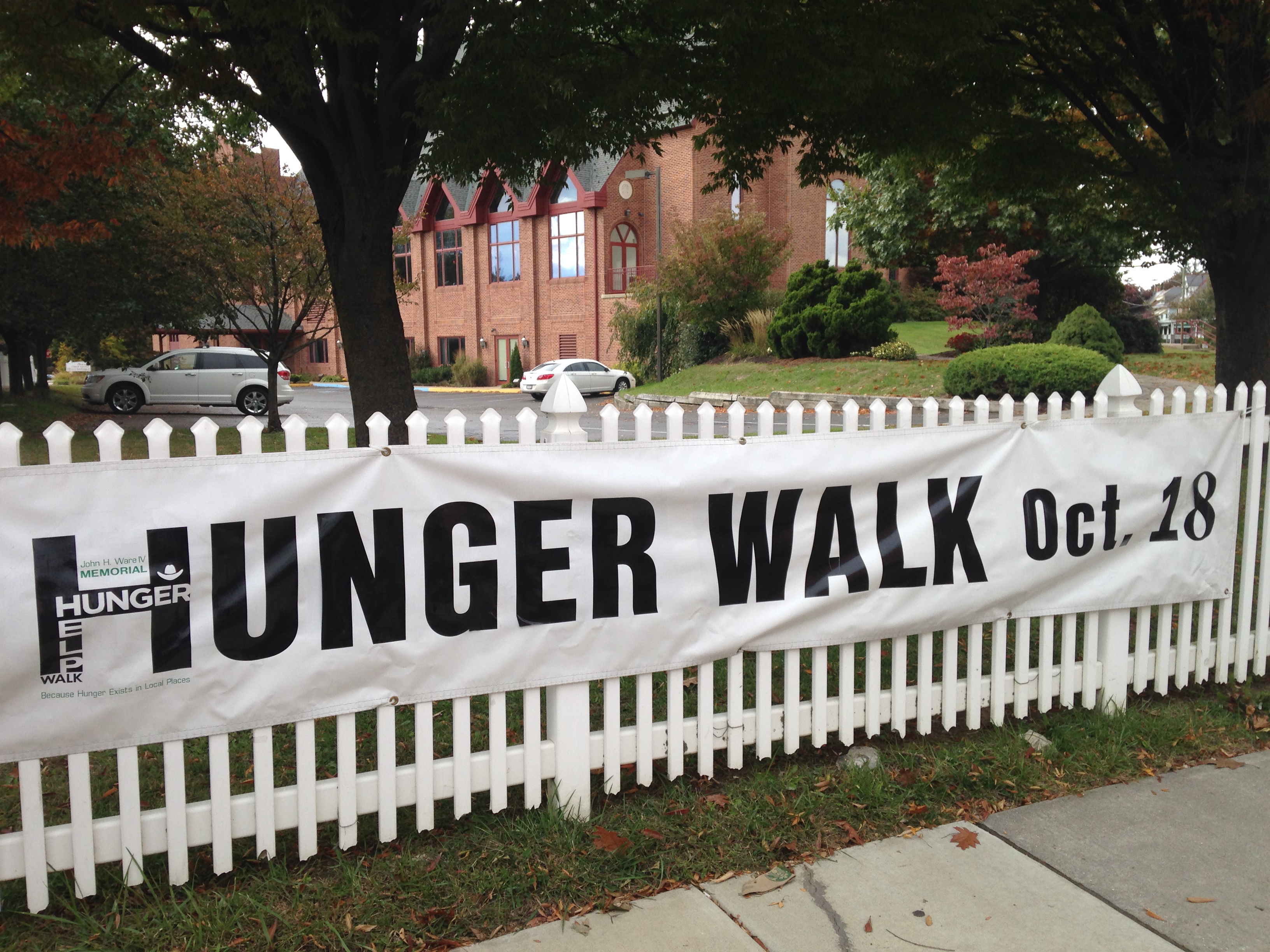
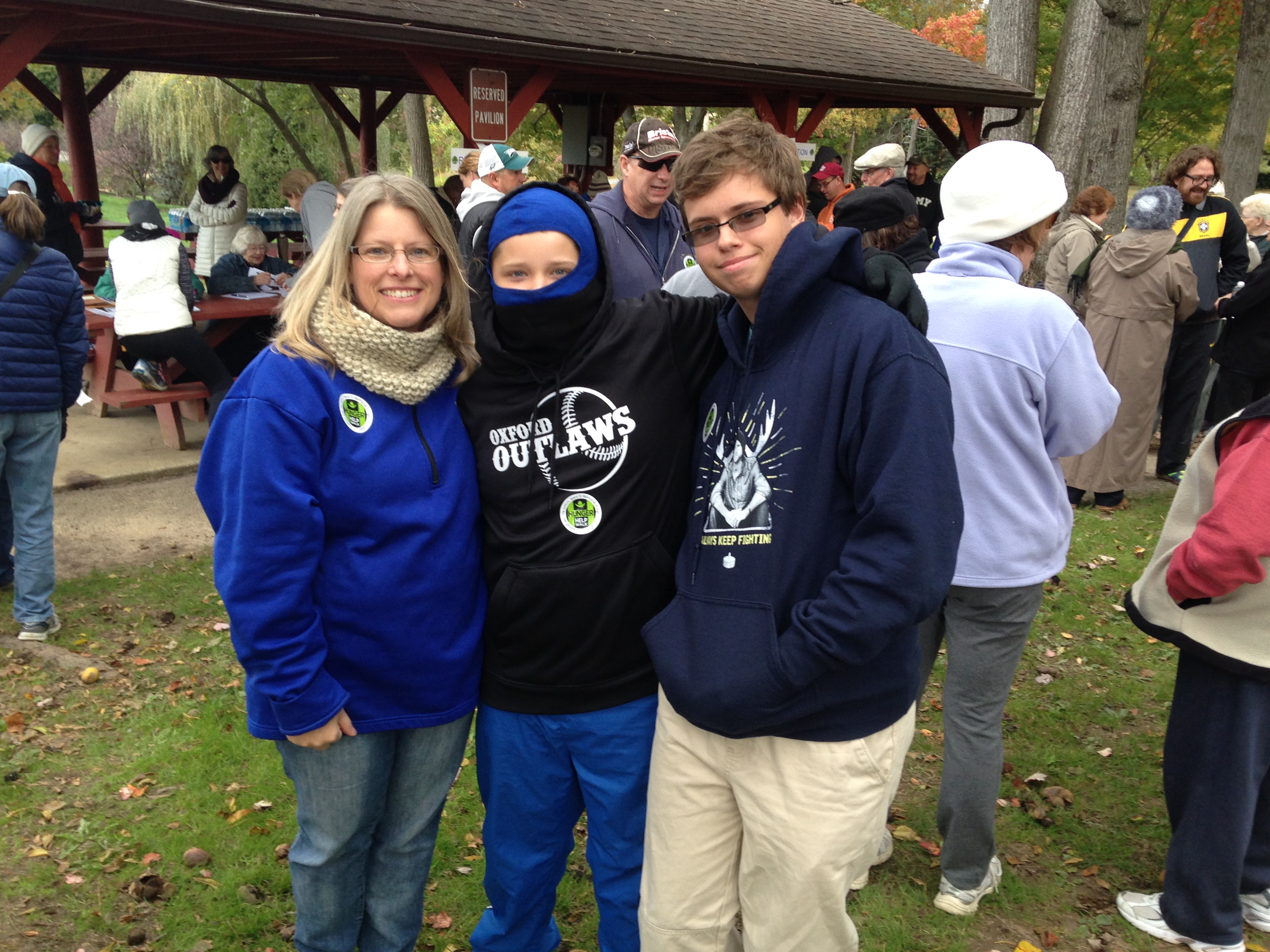
hunger walk bannerThis past Sunday I couldn’t get the 10cc song, Things We Do For Love, out of my head.  (I know.  I’m dating myself.)  That’s because of this line in the song, Like walking in the rain and the snow, and that is what we were doing, walking in the rain and the snow to help those who were hungry.   My sons and I participated in the inaugural John H. Ware IV Memorial Hunger Help Walk to benefit 4 local organizations that help combat the problem of hunger in our area.  In past years this walk has been part of the CROP Hunger Walk, sponsored by World Church Service.  The local organizers in my town decided to break with that organization and sponsor the walk on their own for two reasons.  First, the local entities receiving the funds raised by this walk did not see those funds for several months, often almost a year after the walk.  Secondly, only 25% of the funds raised in our town came back to the local organizations.  The remaining dollars stayed with the World Church Service, presumably to cover administrative costs and assist with efforts abroad to combat hunger.

Over 150 people turned out in spite of a dramatic dip in temperatures to participate in the walk, which included 3 different loop options–a 1 mile, 5K or 10K walk/run.  Participants included people of all ages.  I was especially pleased to see a large group of teenagers, many of whom were walking in support of a local youth organization that wasme hunger walk receiving a portion of the money raised by the walk.  The chilly wind and clouds did not seem to dampen spirits and as we started off, we were greeted with a brief snow shower, followed by a couple of light showers later in the walk.  The inclement weather only seemed to add to the sense of camaraderie among the walkers.

I applaud these local organizers for deciding to take on the sponsorship and organization of this walk and keep the funds raised in the community.  At the opening ceremonies when this change was discussed, those gathered vocalized their approval as well.  Unless people are making a donation to a specific disaster or tragedy relief effort, most people want their donations to stay in the local community.  Furthermore, I think this walk helps to make people, who may not be, aware that a hunger problem does exist in their community and that there are resources within that community trying to assist those in need.  When I talk to folks about my endeavors and volunteering in the local food pantries, I have been surprised how often the response I receive is one of astonishment that we have food pantries in town.  I hope this new model works for the organizers and future years walks will be able to operate in the same manner, with all the proceeds remaining in the local community.

hunger walk sticker

Progress

Startup Stock Photos

As I mentioned in an earlier post, I wanted to form a committee to help me work on issues affecting those who are food insecure.  That group met for the first time this past Monday evening, and the experience, for me, was very uplifting.  First, I was just excited that people had shown up!  As I chose people to approach to be on the committee, I tried to select members based on skills, contacts or specialized knowledge I thought they might be able to bring to the group.  That evening, as each person introduced herself, I was further encouraged to hear that each of them seemed committed to helping the food insecure.  Furthermore, I learned that some had personal experiences that brought them to the table and some had additional skills or contacts I hadn’t known about that could prove to be helpful.

Our first plan of action is to do something about the scarcity of summer feeding programs in ourlunch community.  We discussed what would be entailed in starting a large program that would require the involvement of the school district or some other parent organization like one of the local churches.  We also discussed starting a smaller operation that we could handle on our own.  Each option had pros and cons and would require the logistics to be arranged.  As we discussed the hurdles of each option everyone participated in the dialogue, offering insight and possible solutions.  Each member of the group eagerly volunteered to make inquiries or gather information, and we all left the meeting with something to do before the next one.

Throughout the meeting I was inspired by the eagerness of the group to move this project forward and willingness of people to volunteer to help.  I am so glad I decided to put this group together.  They will keep me encouraged and moving forward, provide points of view previously unconsidered and share insights I do not possess.  We will be meeting monthly, and as we clear hurdles and make progress, I will report on those successes.

Community Meal, With a Side of Dignity

Pinpointing the first example of meals prepared and distributed to the needy proves an impossible task, as societies through the ages have recognized a moral obligation to feed those of it’s citizens who were hungry.  Evidence of providing free meals to the needy can be found GD soup kitchen linethrough out history in most countries.  Organizations providing these meals, often called soup kitchens, were in wide use in the United States during the Great Depression.  According to Janet Poppendieck in her book,  Sweet Charity?  Emergency Food and the End of Entitlement, most societies, including the United States, rejected the idea of soup kitchens as a solution to feeding the hungry, because they stigmatized users by demeaning them and segregating them from the rest of society.  Consequently the use of centrally prepared and served meals, like those found in soup kitchens, fell out of favor until the emergency food epidemic of the 1980s, when their numbers begin to increase dramatically (Poppendieck, 14).

Today, organizations providing a prepared meal for those in need take steps to reduce the stigma that receiving a free meal can cause.  One popular way organizations attempt to maintain the dignity of those receiving a free meal is to have volunteers function as wait staff and serve dinersplace setting2 on real dishes.  Efforts are taken to eliminate waiting in long lines.  Some larger agencies have moved to a café style operation, where diners can place an order after choosing items from a menu (Poppendieck, 247).  Another way organizations providing a meal to those in need reduce the stigma associated with receiving that meal is to invite the whole community to partake of the meal.  These meals are often referred to as community meals and everyone is welcome to dine.  Usually a donation is suggested, but not required.

Once a month the Presbyterian Church in our town holds a community meal.  The meal is served at dinner time on the last Sunday of the month and is open to anyone.  In keeping with most community dinners, a donation is suggested, but not required.  The idea for this meal originated with the Church’s youth group in the spring of 2011 and is now overseen by the outreach committee.  In the Church’s Fellowship Hall, several rows of long tables are set with placemats, silverware and glasses.  As diners arrive they may sit where ever they choose and are Chicken Parmaserved the meal by volunteers on real plates.  The meal consists of a meat, starch, vegetable and roll.  For beverages, there is a choice of water, iced tea, coffee or hot tea.  Once most diners have arrived and been served, those who wish can receive seconds, provided there is enough food left. When diners finish their main meal, several desserts from which to choose are available.  Approximately 120 meals are served to diners each month at this community dinner.  During these meals, the Church’s Fellowship Hall lives up to its name, as friends, family, neighbors and strangers from all socio-economic levels sit down to eat together.

Twice this past year I have had the opportunity to help at this community dinner by serving the meal, bussing dirty dishes and participating in the final clean up once the meal is finished.  The experience, for me, has been a thoroughly enjoyable one.  I enjoy the camaraderie of the fellow volunteers, the exchange of pleasantries with those I know and the satisfaction I receive from helping others, both the church’s outreach group and those eating the meal.  Of all the tasks I do, I particularly enjoy serving the meal and clearing the plates away when diners are finished.  Regardless of one’s life circumstances, being served is a treat.  As a mother, I know how much I truly appreciate when someone in my house volunteers to wait on me.  So by serving someone who may be food insecure a warm meal with a smile, I feel like I am treating them and giving them back some of the dignity that gets stripped away when a person has to struggle on a daily basis to obtain enough food to feed themselves or their family.


SNAP Challenge

Gwyneth's food
Gwyneth Paltrow’s SNAP Challenge purchases

I have thought about taking the SNAP Challenge several times over the past few years.  Participants of the SNAP Challenge pledge to live on roughly $4.00 per person per day, which is the amount of the average daily food stamp benefit.  Emergency food providers have taken the challenge.  Politicians have taken the challenge.  Celebrities have taken the challenge.  Although usually garnering positive coverage Gwyneth Paltrow received tons of negative press earlier this year over her food choices when she decided to take the SNAP Challenge.

When I became serious about understanding the issues around food insecurity, taking the SNAP Challenge seemed like one of the most obvious things for me to do if I really wanted to understand what it would be like to experience food insecurity.  Yet I never have.  I have my reasons.  The first being that I have a family, and while this is my mission and they support me, they would not be too happy to subsist on a SNAP Challenge diet, nor do I think it is fair to ask them to participate to that extent for my cause.  Additionally, do not I want to do double cooking duty by preparing a separate meal for me.  Neither my family’s dietary discomfort, nor my lack of time to prepare double meals is the main reason I have never taken the SNAP Challenge.  As a person who likes to cook a wide variety of food, I have a very well stocked kitchen pantry and I spice cabinethave not quite figured out how to take that pantry out of the SNAP Challenge equation.  I could decide to not use any items in my pantry, but that seems a bit unrealistic.  Most food insecure people have a minimum of kitchen staples to use.  I could purchase only ready-made, preprocessed foods, but that doesn’t fit my mission to help those who are food insecure eat as healthfully as they can while stretching what little food resources they have.  And so consequently, I have never taken the challenge.

This summer the perfect opportunity to take the challenge presented itself, and if I had only been thinking ahead I could have capitalized on the opportunity.  Every few summers my family vacations in a cabin in Maine.  The cabin belongs to another family and we rent it from them for the week.  While the cabin is stocked with food belonging to the other family, we bring whatever food we need for the week.  This would have been the perfect chance for me to take the SNAP Challenge, without having to worry that I was cheating by using some of the staples in my own kitchen.  We could have bought our food, staying within the parameters of the challenge, and relied on whatever spices or other small quantity ingredients were available at the cabin.  The only problem was that I didn’t think about trying this until half way through our vacation.

To be honest, it is probably for the best.  I’m pretty sure my family would have revolted at the thought of turning our vacation dining into a SNAP Challenge even though when we take this spaghetti and saucevacation we tend to eat simple, easy to prepare meals. (Except for the lobster dinner.  We were in Maine after all!)  This is in part because the cabin in which we stay does not have electricity, and while it did have running water, it was pumped from the lake and not potable.  The adequate, yet primitive nature of our cooking setup, dictates relatively simple meals.  Some of the meals we ate included spaghetti with jarred sauce, vegetarian burritos with beans and rice, sandwiches, leftovers and other ready made foods like soup.

Once the missed opportunity occurred to me, however, I did begin thinking about what we had purchased, how much it had cost and what we could have done without.  To feed my family of four for a week I would have only had roughly $112 to spend.  Our total shopping bill was well over twice as much as that.  When you factor out alcohol, lobsters, and items that can not be purchased by SNAP benefits, like toilet paper, our expenses would have been lower, but still considerably more than the SNAP Challenge allotment.  Since we were on vacation I bought fun items, like cookies, chips and soda.  Those items could have been sacrificed.  We also had to bring in all our drinking and cooking water, as the water from the lake was not potable.  That is an expense not usually factored into the average SNAP Challenge.  Even without all these items I still do not think our total would have been the roughly $112 we would have had as our benefit.

no snacks

In the abstract I knew SNAP benefits did not allow for much food to be purchased; they are not intended to totally supply a monthly allotment of food, even though they do for many.  What this mental exercise accomplished for me was to concretely demonstrate, not only how little food SNAP benefits provide, but how difficult eating well can be if relying on SNAP benefits and how repetitive one’s food choices would be.  I will probably never take the SNAP Challenge and I am okay with that.  While I understand the intent of the challenge, I find it a bit flawed.  Here is the challenge I have for you that I think will demonstrate the point the SNAP Challenge is attempting to make.  Next time you go shopping keep your grocery bill.  How much was it?  Now figure what your household SNAP benefit would be ($4 per person per day for the number of days your shopping trip would cover).  After you deduct all the non-food items, how far over that amount is your grocery bill?  Now, examine what’s left and decide what you would do without to come within your SNAP benefit range?

Elevator Pitch

help quoteAs I started out on this journey, and occasionally over the past few months, there have been two recurring questions I get asked:  Why am I doing what I’m doing and what do I hope to accomplish.  When asked a version of one of these questions I often get a lump in my throat and my pulse quickens.  I think to myself maybe my effort is just folly.  What can I hope to accomplish?  Then I remind myself that not everyone is aware of the plight of those experiencing hardships and having a difficult time obtaining adequate food.  Or some people may just be curious why I picked this cause.  Additionally, answering these questions periodically reminds me why I became active in assisting those who are food insecure and keeps me focused on the goals I would like to achieve.

So why am I doing what I’m doing and what do I hope to accomplish?  Over the past several years I have been increasingly frustrated with the trendency to blame those in poverty, the insistence that they are in their predicament through some fault of their own or a flaw in their character or the belief that they lack a strong work ethic or feel entitled to a handout from the government.  For a humorous, yet spot on, criticism of one media outlet’s negative characterization of those struggling to make it, check out this clip from John Stewart.  Those negative stereotypes are not the reality I have experienced when interacting with people less fortunate than I am.  I feel compelled to state that just because I have witnessed very little abuse of the assistance provided to those in need, does not mean that I am suggesting it does not exist.  Rather I believe it is the exception, not the norm.  I have encountered more people working one or more jobs and still not being able to make ends meet, or people who were doing okay until some catastrophy hits, like the loss of a job or unexpected medical bills.  The norm is more like Simcha Fisher’s experience, which she chronicled in her blog.  Please follow the link and read it.  I guarantee it will make you think about how our society views people in poverty.

I grew so tired of hearing the disparaging comments about people who needed assistance, that I decided to channel my frustration into action and do something to help the situation.  But what?  I wanted to make sure my assistance would be appropriate to the need.  Too many times people, with good intentions, try to provide help in unintentionally unhelpful ways.  I had some ideas of my own, but decided to volunteer locally to see the reality of the situation in my community.  I also created this blog in hopes of sharing my ideas and getting feedback on them, as well as additional ideas.

Businesspeople in elevator

Before attending the recent conference on hunger, my husband suggested I work on my elevator pitch.  For those of you unfamiliar with the term, an elevator pitch is a short synopsis of your idea or vision that you could share with someone during the time span of the average elevator ride.  It was a good exercise and served to answer the question of what I hope to accomplish.  Here it is:

Short term goal  I would like to create recipes, using ingredients found in the food bank or pantry, to make available to clients of that food bank or pantry.  These recipes would focus on healthy items like fresh fruits and vegetables or unprocessed proteins like chicken, hamburger and beans.

Longer term goal  I would like to start a non-profit business to provide food banks and pantries with items used in healthy cooking that are not regularly found there, like spices, flour and condiments like vinegar.  Additionally, I would like this non-profit to provide cooking utensils, implements and small appliances, like crock pots or hot plates, at a reduced cost to those unable to purchase them in regular outlets.

Ultimate goal  I would like to sponsor classes, or a series of classes, that would focus on cooking, healthy eating, budgeting and shopping.

Putting your ideas out for the world to see is intimidating, at least it is for me.  It is a little bitghandi quote easier answering those questions now, having started down the path, than it was before I started.  I do not know how long it will take me to accomplish my goals or whether they will remain unmodified.  I do know that I have received interest and encouragement from most people with whom I have shared my ideas and that encouragement motivates me to keep going.  For now I am following the advice of Ghandi and trying to be the change.

Plenty of Food for Thought

I just finished Janet Poppendieck’s book Sweet Charity?: Emergency Food and the End of Entitlement, and as I expected, in the end, we were not too far apart on our assessment of emergency food and the role it plays in assisting the food insecure.  That said, she did introduce issues I had not previously considered and challenged the way in which I had thought about certain aspects of providing emergency food.  Poppendieck contends that emergency food organizations, like soup kitchens and food banks, are run by caring and compassionate staff and volunteers who are committed to providing food to those who are hungry.  In today’s world such people and organizations are a necessity, but she also argues that these same organizations enable the cycle of hunger to continue.  By participating in providing emergency food, either through volunteering or donating, Americans may feel like they are solving a problem.  In reality, providing emergency food diverts our attention from larger societal problems like poverty and inequality and keeps us from working toward solutions to these problems for which hunger is just a symptom.food pantry open sign

In one of the most interesting chapters of the book Poppendieck discusses what is wrong with emergency food.   As someone who recently became a volunteer in two food pantries and who has felt positive about my experiences and effort, I was curious about what she would identify as shortcomings.  Listed below are the “7 Deadly ‘Ins’” of emergency food Poppendieck has identified.

  • Insufficiency—Emergency food organizations often have to limit the frequency with which clients can come to the food pantry, whether there is a waiting list for service, and the amount of food distributed to each client.
  • Inappropriateness–Emergency food organizations can not possibly have enough items to satisfy the preferences or special dietary needs of every client.  Both pantries in which I volunteer stock vegetarian beans, a commodity from the Federal government.  Very few clients take these beans and most universally say they taste terrible.  Additionally, emergency food rarely is appropriate for diabetics or sufferers of high blood pressure, obesity or heart disease.
  • Nutritional Inadequacy–As touched upon above, many food offerings through emergency food agencies are high in sodium, fats, and sugar.  There is very little fresh produce available and often several of the meats offered are processed items like hot dogs, chicken tenders and lunch meat.
  • Instability–The provision of emergency food relies on surplus food from the government and sometimes businesses, donations from the public and a volunteer workforce.  All of these components are subject to fluctuations, causing instability in providing emergency food.
  • Inaccessibility–Emergency food offerings differ with location.  For instance, urban areas tend to have more emergency food options, like food banks and soup kitchens, where more rural areas may have only one or no options.  Additionally affecting emergency food’s accessibility is the emergency food organization’s hours of operation and proximity to public transportation.
  • Inefficiency–Distribution of emergency food duplicates the food delivery system already in place.  Often as emergency food distribution agencies increase, inner cities experience a decline in the availability of markets and grocery stores.  Additionally, emergency food may seem efficient, but these agencies do not count as an expense anything that is donated, including food, equipment, storage buildings, and labor from volunteers.
  • Indignity–Distributing emergency food through food banks, pantries and soup kitchens forces those receiving assistance to be segregated from the rest of society.  They must go to a place different from where the rest of society gets their food. soup kitchen line

As I thought about these “7 deadly ‘ins'” as they related to my volunteering experience I realized I had witnessed every single one.  I believe both food pantries in which I volunteer do the very best they can with what they have to offer.  Without them, the clients would be in a much worse situation; however, I believe the increased reliance on emergency food to assist these clients is an inadequate solution to the problem they face.

In spite of the shortfalls of emergency food, Poppendieck also addresses its success, and more importantly, the price of its success.  The 1980s, when cuts were made in funding public assistance programs, saw a dramatic rise in emergency food providers, an increase that has continued until today.  As these agencies proliferated, they became extremely successful at operating, stretching whatever they got, making it work.  They highlight these successes when they fundraise or ask for donations to assure donors their donations won’t be squandered.  Infood drive turn government can rationalize further cuts in public assistance because emergency food providers are so competent in handling the situation.  Emergency food provision as enabler for further governmental reduction in public assistance is a new and troubling concept for me.

At the very end of her book, Janet Poppendieck asks what emergency food providers are to do.  She outlines a couple of options, but the one that resonated the most with me was to organize and educate, especially the educate part.  I believe we need to talk about hunger within the broader context of poverty and inequality.  While continuing to provide the best assistance that can be provided, emergency food providers need to be honest with the public, that at best, they are a Band-Aid to the problem of hunger and only through addressing the larger societal issues of poverty and inequality can the numbers of people experiencing food insecurity be diminished.

One last point I would like to make is that at no time does Janet Poppendieck disparage emergency food providers or the assistance they provide.  She acknowledges their monumental effort and that without their services the hungry of the United State would be in much worse circumstances.

America’s New National Pastime

baseball

No, I don’t mean baseball!  I have just started reading a book entitled Sweet Charity?:  Emergency Food and the End of Entitlement, by Janet charity bookPoppendieck.  In this book she contends that so many Americans participate in the fight to end hunger by donating to or volunteering in soup kitchens or food banks and pantries that it has become a national pastime.  Poppendieck chronicles the increased reliance on charity as a response to poverty and hunger in the United States, while noting the erosion of government provided assistance.  She contends that this resurgence in charity is a Band-Aid approach to ending poverty and hunger and is not the positive force it appears to be at first glance.

Her argument is two-fold.  First she states that America soundly rejected this form of poverty remediation over half a century ago.  Private charitable organizations, Poppendieck suggests, are inefficient and vary from location to location in the amount of assistance they provide.  She further states that serving meals and distributing groceries is inadequate assistance and serves to separate and segregate those in poverty from the rest of society.

The second point in Poppendieck’s argument is that participating in a charitable response to hunger and poverty diverts our attention from an actual solution to poverty in America.  Volunteering in and donating to charitable food distribution organizations, she contends, makes many Americans feel good and gives them a sense that the hunger problem is being addressed.  Poppendieck suggests that all this goodwill Americans feel prevents us from working to implement national policies with the goal of truly ending poverty and hunger in America.

As someone who has just committed a large amount of my time to volunteering in food pantries and working to fill some of the gaps that exist in assisting the food insecure, I was taken aback by the notion that I might be doing more harm than good.  I am, however, intrigued by what she has to say.  I have a feeling in the end we will not be too far apart on our assessment of the situation and what needs to occur to eliminate food insecurity in the United States.  That said, I do think this book will at times challenge my beliefs and opinions.

I think it is healthy to challenge the beliefs we hold, be they religious, political, or philosophical.  Part of the problem we face in the United States today stems from the fact that people surround themselves with information and people that reinforce their belief structure.  But that is a whole other discussion and one I don’t plan to undertake on this blog.   As I stated, I have just started reading the book, but I will share with you my thoughts on the topic and the book when I am done.  I am curious to see how or if it will alter the course of my journey to assist the food insecure.

I would be interested in your initial response to Poppendieck’s premise, or if you have read the book, what you thought about it.

Fuzzy Logic

One of the reasons I felt so compelled to act to help the food insecure is to combat the troubling attitude in the United States that people are in poverty through some fault of their own.  Too often I hear, “What’s wrong with those people?”  I guess the thought is that people are poor because they are lazy or have some other flaw causing their situation.  Many Americans reason that if the poor only took responsibility for their lives or learned a good work ethic they could find work and their situation would change.  All too often this set of beliefs is propagated by the media or our politicians.

suburban poverty2My personal experience with those in poverty, however, is that most of them are at the point of needing assistance through no fault of their own.  Many of them have lost a job or had to take a lower paying job.  Several have been bankrupted by crippling medical bills.  Then there are those who can not work–the elderly, disabled and children.  The new face of poverty can be found in America’s suburbs where since 2000 the poverty rate has skyrocketed by 64 percent.

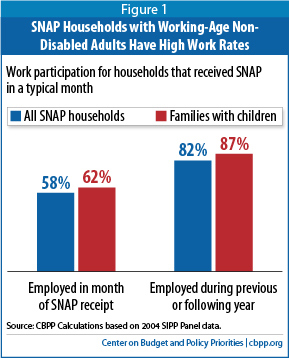
Believing that it is the poor’s fault that they are poor leads to further flawed fact vs myththinking and myths.  The other day a graphic showed up on my Facebook feed showing SNAP myths and realities.  The realities seemed correct to me, but I decided to fact check them,  since no sources were given.  I found credible sources for all of the stated realities. According to the USDA, SNAP fraud is about 1% of benefits and this is an all time low, down from 4% over the last 15 years.   My experience with people receiving SNAP benefits is that most who can work either are or are SNAP households workdesperately looking for work, and this graph substantiates my experiences.  The figure of 8-10 months that the average person receives SNAP benefits comes from USDA data.  Finally, Mark Zandi, chief economist for Moody’s Analytics, states that every dollar spent on SNAP benefits creates $1.76 in economic activity.  He states that SNAP benefits are the fastest way to infuse cash into the economy because those benefits will get spent immediately and that spending will ripple into other sectors of the economy like paying clerks’ salaries.

The other night my family was watching the movie, Witness, from the early eighties, and depicted in this movie is an Amish barn raising.  One of my sons turned to me and said, “See what can be accomplished when people work together.”   He then asked, “Why don’t we (as a society) do that?”  I didn’t have an answer for him.  With regard to poverty, I think it might be easier to blame to the poor for their situation.  To accept that they are in their situation due to circumstances beyond their control means that our system does not work.  Since our system theoretically comes from the people in the form of voting, that puts some responsibility on us.  We allowed the system to get broken and we are not doing all we can to fix it.  It also means that maybe people in poverty aren’t too different than those of us who are not, suggesting we, too, could wind up in the same situation.  That is a pretty scary thought for most people, so it is easier to believe that people in poverty are there because of something they did wrong.

Last summer I was listening to a Radio Times program about hunger in the suburbs.  One of the guests being interviewed suggested that instead of looking at those in poverty and saying, “What’s wrong with those people?” we change our inner dialogue to, “What happened to them?  What is their story?”  I like that shift.  Most people in poverty have a reason they find themselves in that situation.  They are not in poverty because they are bad or lazy.  If as a nation we can listen to the stories of the poor, we might come to understand their struggle and how we can help them, help themselves.