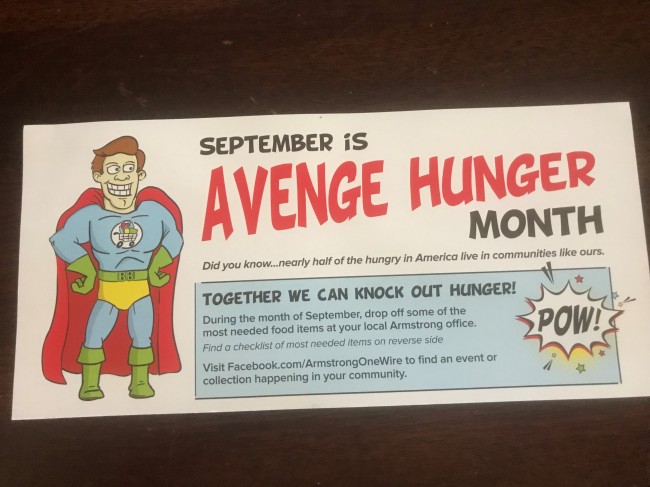
This insert came in my last month’s cable bill from Armstrong, our local cable provider. The insert alerts Armstrong’s customers about a food drive, benefiting local food banks and soup kitchens. They are sponsoring this food drive during the month of September as part of Feeding America’s Hunger Action Month. The nonprofit organization, Feeding America, started Hunger Action Month in 2008, in an effort to increase involvement nationwide in the fight against food insecurity in the United States. On their website, Feeding America urges Americans to stand up and Pass the Plate, by pledging to take some action to end hunger and then sharing that pledge with friends and family. The web page has a drop down menu of actions from which you can choose–donate, volunteer, contact legislators–or you can write in your own actions.
I like the idea, evoked by my cable company’s flyer, of inflicting harm on hunger on behalf of those who are hungry, and that this campaign will help individuals locally. I also support the call to action encouraged by Feeding America, and that they provide more than one suggestion for how the general population can fight hunger. One person may volunteer because he lacks the extra money to donate. Another may donate money to an organization like Feeding America or items to a food drive, because she lacks the time to volunteer. Charitable organizations who work tirelessly to assist those who are food insecure need both of these people and the resources they bring to bear in the fight against hunger. But the one action we all must must take is the third option provided in the drop down menu–contact our legislators.
The reason all those participating in this Pass the Plate campaign must engage their legislators, at all levels, is because non-profit organizations, all of them combined, can not feed all of the hungry in America. Nor can a cable company avenge hunger. Hunger and food insecurity in the United States is as formidable a foe as any of the Avengers has ever faced. As I have written before, charitable organizations alone can not solve this problem. At best they can provide stop gap measures which only serve as a band-aid on the problem. To really tackle hunger in America requires a strong social safety net and legislation which addresses the root causes of poverty in our country. So continue to volunteer and donate, as what you give enables charitable organizations to provide the stop gap measures those who are hungry need immediately, but also take the time to contact your legislators to insist that the programs which strengthened our social safety net be enacted and that steps be taken to address the root causes of poverty in America. Only then can we truly avenge hunger.

 trepidation, about the approaching end of the school year. Other folks are starting to plan summer vacations or daydream about heading to the beach. And if you are like me, you are eagerly looking forward to the arrival of summer fruits and vegetables, as well as foods cooked on the grill.
 like the perfect choice for a summertime food drive.
 The other day, as I was scrolling through my Facebook feed, I came across a reposted blog entitled
  advantage of you and/or the system.
 In addition to being non-judgmental and compassionate, however, we try to offer kindness and restore a little bit of dignity to those who are struggling daily with the weight of poverty. When we learn about a client facing a particularly difficult situation, we try to brighten that person’s day. For the grandmother who is raising some of her grandchildren or the caretaker of an ailing family member, we try to slip in a brownie mix or some other special treat if we have them. We keep on hand some birthday gift bags filled with all the fixings for a birthday party for households where a child is celebrating a birthday, but there is no money for a celebration. For clients who are cancer patients we give scented lotions and soaps donated from a local store when they rotate their stock. I can tell the aim of offering these niceties is successful in lessening the burden of shame these people carry by the look on the recipient’s face and the thank yous, often said repeatedly, we receive when we let them know about the item. And this is why I have chosen the items I have for my food drives. I wanted to pick things which would be a treat and would, if only for the amount of time it takes to drink a cup of coffee, allow someone in poverty to put down the weight of shame society has asked them to carry and and live like a person worthy of dignity.
 Today is #Giving Tuesday, a global day of giving, intended to kickoff the end of year charitable giving season. This movement was started in 2012 by a group at the
  families in need at Christmas. But food pantries need donations throughout the year and are always happy to receive staples, like canned fruit and vegetables, pasta, soups, peanut butter and jelly, and tuna to name a few items. One consideration to keep in mind when collecting these staple items is to try to find the healthiest versions possible, as people receiving food from a food pantry want, and often need, to eat healthy too. For instance, when purchasing canned vegetables, soups, and peanut butter look for low and no sodium options. Try to buy canned fruit packed in light syrup or its own juices and for canned meat, like tuna or chicken, choose those packed in water rather than oil. Finally, look for hot and cold cereals which are 100% whole grain or at least list a whole grain as the first ingredient.
 Pennsylvania and through the statewide program
 Being involved in a food pantry during the holiday season results in a seesawing of emotions for me. I have more than once found myself leaving a volunteer shift in low spirits over the holiday season. Hearing the stories of individuals and families who find themselves in such heartbreaking and often desperate situations is extra difficult when the balance of your life is filled with thoughts of and plans for the gastronomic bounty that is Thanksgiving and the excitement of giving and receiving that comes with Christmas. The juxtaposition of these two very different life situations can leave me filled with a combination of anger, sadness and helplessness.
 she will provide Christmas presents for her children, but how she will feed them dinner on Christmas Day. And I can not begin to explain to you the look of excitement and joy I saw on the faces of several young children as they picked out the sweet treat we gave out last December.
 This past Saturday the Chester Country chapter of the A.B.A.T.E. motorcycle group delivered the results of their annual food drive to the food pantry. The group estimates this year’s drive netted approximately 10 tons of food and personal care products. I was unable to be there when the food arrived, but I hope to be able to attend this event next year. The caravan of motorcycles and pickup trucks pulling trailers loaded with food was met at the edge of town and given a police escort through the town center to the building that houses the food pantry. To me one of the joys of living in a small town is the hoopla that occurs for an event like this. I’m certain when I witness it firsthand I will tear up.
 life.
life. To truly change the plight of the food insecure requires a much larger nationwide effort, starting with a strong social safety net and jobs which pay a livable wage, and yet, as a nation Americans currently seem very reluctant to embrace these policies. This divide between the individual acts of generosity I have witnessed repeatedly and the willingness of the greater American society to support policies that will cut aid to the very same people that local generosity has helped is befuddling to me. I have read articles and books to try to understand it. I have engaged in conversation with and listened to those who support cuts to the social safety net to try to understand it. And still I do not. So as I celebrate this Fourth of July with family and full table of food, I will be thankful for the individual generosity of others and hopeful that their generosity continues to be enough to bridge the gap for those in need until our society can come together nationally to work toward nationwide solutions to food insecurity which will lift people up rather than just bridge a gap.
 would result in a huge loss for Chester County’s Meals on Wheels program, as 35% of their budget comes from government contracts.
 My oldest son, a sophomore in high school, recently took the PSAT. Consequently, we now have a flood of college materials pouring into our house. Some days he gets more mail than everyone else in the house combined. Some of the colleges just send postcards directing him to the website, while others send packets with color pictures and testimonials highlighting the good qualities of their school. What none of these materials highlight, however, is the campus food pantry and/or other services the university provides to students struggling with food insecurity, and yet a growing number of colleges and universities house a food pantry on their campuses in an effort to assist these students, whose numbers ballooned after the recession and show no signs of deflating. I was alerted to this issue by a piece on NPR’s Morning Edition and after some more research I was surprised to learn that there are 447 member institutions registered with
  State University and Oregon State University to support campus food banks currently in operation as well as those just opening.
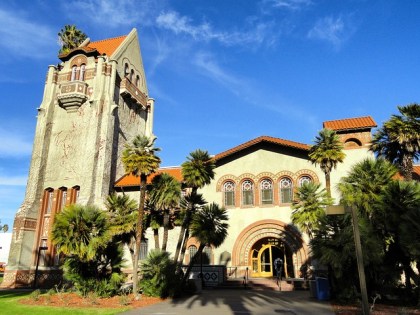 The report offers some recommendations to colleges and universities to address the issue of food insecurity on their campuses. To date most of the initiatives in place on college campuses, like campus food pantries or dining center meal donation programs, like
  state university using money I had saved from working while in high school, supplemented with money earned by working a few hours a week while at college and full time in the summer. Gone are the days when many college students are able to work to put themselves through college, at least not at a normal college pace of 4-5 years to complete a Bachelor’s Degree. College tuition has skyrocketed, even at the once reasonably priced state institutions, and financial aid for low income students, like Pell Grants, is less readily available, making it more difficult, if not almost impossible for some to be able to afford college. At the same time, colleges are seeing a rise in nontraditional students–lower income students, first generation college students and adults, some with families, fully responsible for their own living expenses–enrolling in higher education. These new college enrollees present college and university administrations with a set of challenges few are likely to have previously faced, but these challenges are not insurmountable. The ability of these college students experiencing food insecurity to succeed at college is as important as any other college student’s ability to succeed at college. Ensuring their success is important to the vitality of our nation’s work force and the strength of our economy.
 his concern. The debate of what is an appropriate food item for someone who is requiring assistance with food, either through SNAP or from a food pantry, has been debated in American society many times. After some more thought on my part and discussion with some people who had participated in both drives I am comfortable with the two items that have been chosen for our food drives, and I now understand that providing these items to our food pantry clients has been beneficial to both the recipients and the donors.
 them my mental outlook on life would be very different. Consequently, receiving an unexpected treat, like a cookie mix or coffee, tea or hot chocolate might lift the spirits of those who struggle with food insecurity and must go without these unaffordable extras on a regular basis.
 moment of clarity or understanding, I try to translate that understanding or clarity to my readers who are following me on my journey. Like the SNAP Challenge, these food drives have been a device to help illustrate more clearly what being food insecure is truly like. I can go without all kinds of food for a day, or week to try and replicate food insecurity, but I probably never would have thought to stop drinking coffee. It would never have occurred to me, until I heard someone who is really food insecure ask if we might possibly have some to give out. I don’t know what the next food drive will be, but I do want my readers to know, that I will always take substitutions if you disagree with the item being collected. As a matter of fact, I will take almost any unexpired food or personal care item you want to donate, any time you want to donate it. It will always go to good use.
 From a Simmer to a Boil