On the Brighter Side

bns and greensI just looked back over my posts so far, and while I am proud of what I read, the overall tone is a bit depressing.  Perhaps not surprising given the topic, but I also want to keep readers hopeful by reporting on successes and positive outcomes.  I have “liked” my county’s food bank on Facebook, and recently I have gotten a couple of posts from them on my news feed that have made me smile.  Today I will pass their upbeat posts on to you.  The food bank reported that in the past few weeks volunteers have peeled, cut and bagged 15,000 lbs. of butternut squash.  I love butternut squash and am excited to see so much of it being offered in our local food bank and pantries.  They additionally released the amount of venison they received this year from Hunters Sharing the Harvest–3,000 lbs.  As someone who regularly dodges deer as they dash across the road, I am glad this successful program is in place.  Finally, on this St. Patrick’s Day, the food bank posted that the spring greens have been planted in their local greenhouses!  I look forward to seeing those greens as they are distributed to the food pantries in the coming months.

family cooking

I am very encouraged and pleased fresh produce and unprocessed meat is being offered in our local food bank and pantries.  I will explain why over the next few weeks as I publish a series of posts about cooking.  This series will be at least three parts.  I will be discussing the decline in cooking in the United States, and by cooking I mean from scratch.  I also will explain why I think it is important to cook from scratch whenever possible and how cooking from scratch is beneficial to those experiencing food insecurity.  Finally, I will address how I think the decline in cooking is often unintentionally aided by food banks and pantries and propose some ideas they can use to combat this decline.

This series will take a bit of research and careful thought, so stay tuned over the next couple of weeks as I formulate and publish these related posts.  While I always welcome comments, this topic is one area where I really want to hear what others think.  I realize there will be some challenges and hurdles to overcome in what I am proposing, so I need help in looking at the topic from several points of view.   In the meantime, find some time to dust off some of your favorite recipes or find some new ones and cook something!

America’s New National Pastime

baseball

No, I don’t mean baseball!  I have just started reading a book entitled Sweet Charity?:  Emergency Food and the End of Entitlement, by Janet charity bookPoppendieck.  In this book she contends that so many Americans participate in the fight to end hunger by donating to or volunteering in soup kitchens or food banks and pantries that it has become a national pastime.  Poppendieck chronicles the increased reliance on charity as a response to poverty and hunger in the United States, while noting the erosion of government provided assistance.  She contends that this resurgence in charity is a Band-Aid approach to ending poverty and hunger and is not the positive force it appears to be at first glance.

Her argument is two-fold.  First she states that America soundly rejected this form of poverty remediation over half a century ago.  Private charitable organizations, Poppendieck suggests, are inefficient and vary from location to location in the amount of assistance they provide.  She further states that serving meals and distributing groceries is inadequate assistance and serves to separate and segregate those in poverty from the rest of society.

The second point in Poppendieck’s argument is that participating in a charitable response to hunger and poverty diverts our attention from an actual solution to poverty in America.  Volunteering in and donating to charitable food distribution organizations, she contends, makes many Americans feel good and gives them a sense that the hunger problem is being addressed.  Poppendieck suggests that all this goodwill Americans feel prevents us from working to implement national policies with the goal of truly ending poverty and hunger in America.

As someone who has just committed a large amount of my time to volunteering in food pantries and working to fill some of the gaps that exist in assisting the food insecure, I was taken aback by the notion that I might be doing more harm than good.  I am, however, intrigued by what she has to say.  I have a feeling in the end we will not be too far apart on our assessment of the situation and what needs to occur to eliminate food insecurity in the United States.  That said, I do think this book will at times challenge my beliefs and opinions.

I think it is healthy to challenge the beliefs we hold, be they religious, political, or philosophical.  Part of the problem we face in the United States today stems from the fact that people surround themselves with information and people that reinforce their belief structure.  But that is a whole other discussion and one I don’t plan to undertake on this blog.   As I stated, I have just started reading the book, but I will share with you my thoughts on the topic and the book when I am done.  I am curious to see how or if it will alter the course of my journey to assist the food insecure.

I would be interested in your initial response to Poppendieck’s premise, or if you have read the book, what you thought about it.

Fuzzy Logic

One of the reasons I felt so compelled to act to help the food insecure is to combat the troubling attitude in the United States that people are in poverty through some fault of their own.  Too often I hear, “What’s wrong with those people?”  I guess the thought is that people are poor because they are lazy or have some other flaw causing their situation.  Many Americans reason that if the poor only took responsibility for their lives or learned a good work ethic they could find work and their situation would change.  All too often this set of beliefs is propagated by the media or our politicians.

suburban poverty2My personal experience with those in poverty, however, is that most of them are at the point of needing assistance through no fault of their own.  Many of them have lost a job or had to take a lower paying job.  Several have been bankrupted by crippling medical bills.  Then there are those who can not work–the elderly, disabled and children.  The new face of poverty can be found in America’s suburbs where since 2000 the poverty rate has skyrocketed by 64 percent.

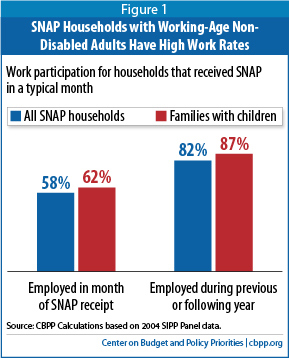
Believing that it is the poor’s fault that they are poor leads to further flawed fact vs myththinking and myths.  The other day a graphic showed up on my Facebook feed showing SNAP myths and realities.  The realities seemed correct to me, but I decided to fact check them,  since no sources were given.  I found credible sources for all of the stated realities. According to the USDA, SNAP fraud is about 1% of benefits and this is an all time low, down from 4% over the last 15 years.   My experience with people receiving SNAP benefits is that most who can work either are or are SNAP households workdesperately looking for work, and this graph substantiates my experiences.  The figure of 8-10 months that the average person receives SNAP benefits comes from USDA data.  Finally, Mark Zandi, chief economist for Moody’s Analytics, states that every dollar spent on SNAP benefits creates $1.76 in economic activity.  He states that SNAP benefits are the fastest way to infuse cash into the economy because those benefits will get spent immediately and that spending will ripple into other sectors of the economy like paying clerks’ salaries.

The other night my family was watching the movie, Witness, from the early eighties, and depicted in this movie is an Amish barn raising.  One of my sons turned to me and said, “See what can be accomplished when people work together.”   He then asked, “Why don’t we (as a society) do that?”  I didn’t have an answer for him.  With regard to poverty, I think it might be easier to blame to the poor for their situation.  To accept that they are in their situation due to circumstances beyond their control means that our system does not work.  Since our system theoretically comes from the people in the form of voting, that puts some responsibility on us.  We allowed the system to get broken and we are not doing all we can to fix it.  It also means that maybe people in poverty aren’t too different than those of us who are not, suggesting we, too, could wind up in the same situation.  That is a pretty scary thought for most people, so it is easier to believe that people in poverty are there because of something they did wrong.

Last summer I was listening to a Radio Times program about hunger in the suburbs.  One of the guests being interviewed suggested that instead of looking at those in poverty and saying, “What’s wrong with those people?” we change our inner dialogue to, “What happened to them?  What is their story?”  I like that shift.  Most people in poverty have a reason they find themselves in that situation.  They are not in poverty because they are bad or lazy.  If as a nation we can listen to the stories of the poor, we might come to understand their struggle and how we can help them, help themselves.

Ex Libris

In my blog title I call this a journey and that is what it is and what it has been.  I have been socially conscious for as long as I remember, but my interest in this topic has developed and increased over time.  I would like to share with you some of the books I have read that have increased my interest in food insecurity or helped me to understand the complexities of the issue.  Most of the books I will share are not specifically about food insecurity, but seem crucial in my journey.  All of them, however, are good reads!

animal-vegetable-miracleThe title that probably started me down my current path of helping the food insecure is Barbara Kingsolver’s book Animal, Vegetable, Miracle: A Year of Food Life.  This book chronicles Kingsolver and her family’s attempt to eat locally.  They intended to eat only food that had been produced so close to their home that they knew who grew or raised it or they grew or raised it themselves.  From this book I learned the importance of eating locally and seasonally.

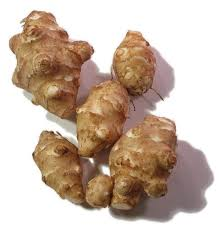
As a result, I changed the way I feed my family.  Our yard is too shady to grow a garden, so I frequent farmers’ markets and farm stands.  I also purchase a share in a CSA (Consumer Shared Agriculture).  A CSA share is vital in the winter when most of the farmers’ markets and stands are not operating.  In the grocery store I try to stay away from produce that I know could notsunchoke or Jerusalem artichoke possibly be grown around here at the given time of year.  There is no way asparagus is grown within a hundred miles of Pennsylvania in December!  As a result, we are not only eating better tasting produce, we are eating new things too.

You may think it is a leap to go from this book to food insecurity, but it wasn’t for me.  This book got me thinking about how people used to eat, generations ago, when giant grocery stores did not exist.  That thought lead to how people manage today if they don’t have access to all the food in today’s giant grocery stores either because they can’t afford the food or because they live in a food desert.  Additionally,  Animal, Vegetable, Miracle touches on our current agriculture industry, including how we farm and what gets subsidized.  Topics, I would later learn, that are critical in understanding how we can grow so many crops and yet still have hungry people.

Within a few month of reading Animal, Vegetable, Miracle I read The Omnivore’s Dilemma: A Natural omnivore's dilemmaHistory of Four Meals by Michael Pollan.  In this book Pollan follows food from it’s source to the final meal.  He examines how Americans feed ourselves by looking at industrial food production, organic or alternative food production and foraged food.  This book rocked my world and shattered more than one belief I held about what I should be eating.  If there was a list of books that all Americans were required to read, I would argue that this book should be on that list.

Like the Kingsolver book, The Omnivore’s Dilemma does not discuss food insecurity or even hunger in America, but it does address how we feed ourselves and how far we have drifted from how our great grandparents fed themselves.  Several of the problems Pollan addresses in his book are the same ones touched upon in Kingsolver’s work and are interwoven into the problem of hunger in America.

Both of these authors have websites associated with either the specific book or the entirety of their writing.  I will include links below.  The website for Animal, Vegetable, Miracle contains excerpts and indices from the book, links to websites referenced in the book and all of the recipes discussed in the book.  Michael Pollan’s website has links to synopses of all his books, his articles, and websites he finds to be good resources.

I will continue to share books and articles that have influenced and/or educated me on the topic of food insecurity as well as the broader topic of food in America.  I welcome suggestions as well.  I’d love to hear what has shaped your thinking on this topic.

Homeless in Winter

freezing thermometerIn the past week in southeastern Pennsylvania it has snowed twice, once with a topping of freezing rain and sleet.  Last Friday morning the temperature with the wind chill was between -10 and -15 degrees.  The coldest weather this area has seen in 50+ years.  This morning it was 1 degree without the wind chill.  When people meet in public the topic is how cold it is and how ready everyone is for Spring to get here.

This morning at the food pantry I met Bill (not his real name).  He is ready for Spring to come too.  Bill is homeless and lives in a tent.  He knows exactly how cold it has been and what type of precipitation has been falling from the sky.  Twice his tent has collapsed on him from the weight of the snow.  He has a kerosene heater, but no kerosene.  Bill keeps warm with and cooks over an open fire.  He has been given permission to “camp” within the patrolled area of a local food manufacturer’s property because his tent has been burglarized more than once.  What little money he has, Bill makes from selling firewood, otherwise he has no income.  He cleans a friend’s home in exchange for her driving him places and allowing him to store items, like eggs, in her refrigerator.

His homeless situation presented us with challenges in gathering his food.  First we had to make sure he had gotten a ride, which he luckily had.  Otherwise he could only take what he could carry.  The other volunteer working with me today knew of Bill’s situation, so she knew he could only have cans and only ones with a pop tops.  He needs cans because he can put them right in his fire to warm them and pop tops because his can opener has been stolen twice.  The extreme temperatures make keeping liquids problematic for him.  He does have a cooler but he said the water he had, had frozen solid the other day even in the cooler.  In spite of these challenges, we were able to send Bill on his way with several items.

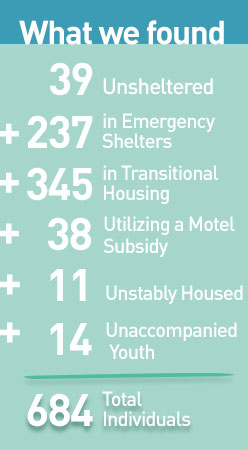
D2D-PIT-CallOut-2014According to a Point-in-Time count conducted on January 29, 2014, 684  people were experiencing homelessness on that night here in Pennsylvania’s wealthiest county.  Point-in-Time counts are used to help determine how many people are experiencing homeless on any given night in an area.  This figure includes those in emergency shelters, transitional housing, receiving motel subsidies and, like Bill, unsheltered.  Even if Bill had wanted to come in out of the cold, there are no shelters in our corner of this county.  The nearest ones are 25-30 miles away.

I would have not been surprised if Bill had been bitter or angry, but he was not.  He said he had too much to do to think about being cold, but he lingered with us as long as he could.  It is forecast to be below average in temperature for at least the next week.  Tonight, as I get into my bed with flannel sheets and three blankets, I will think about Bill and hope that he is okay.  At least I know he won’t be hungry.

Who’s in the Pantry?

As I mentioned in an earlier blog post, I have seen young and old, men and women and several different ethnic groups using the two food banks where I volunteer.  I now want to try and flesh out how many people are using food pantries and some of the reasons they find themselves there. I will mostly be using statistics from Pennsylvania and/or the county in which I live.

According to statistics from the USDA, 49.1 million Americans, or 14.3%, live in a food insecure household.  These residents do not consistently have access to the necessary food needed to lead an active, healthy life.  Pennsylvania’s food insecurity rate falls below the national average.  State of Hunger: Pennsylvania 2013, a document prepared by the Coalition Against Hunger, states that 1.6 million Pennsylvania residents, or 1 in 8, are food insecure.  In my county the food insecurity rate is 10% in general and 14% for children.  While not everyone who is food insecure uses a food pantry or soup kitchen, the State of Hunger:  Pennsylvania 2013 report states that 105,044 county residents (503,897 total county population) participated in the State Food Purchase Program which provides food to charities, like food pantries, who help feed low income residents.

That’s a lot of people.  Each person who uses a food pantry has his or her own personal story of how they became food insecure.  Most clients of a food pantry come because they have little choice.  For many, they only go to the food pantry when their Supplemental Nutrition Assistance Program (SNAP) benefits have run out.  According to the USDA, the average monthly household SNAP benefit for Pennsylvania residents in 2014 was $241.05.  This benefit amount has declined every year in Pennsylvania since 2011 and it is projected to decline even more in 2015.  When those meager dollars run out, many turn to the local food pantry to help close the gap.  While volunteering, I have noticed it is busier at the end of the month than it is at the beginning when SNAP benefits are distributed.

With the cuts in SNAP benefits, less and less people qualify for the program.  In my county, 25,614 residents participated in SNAP in April 2014 or 5% of the county population.  The county’s food insecurity rate is 10%, meaning that approximately half of the county’s food insecure are not receiving benefits.  Currently to qualify for SNAP benefits your gross monthly income needs to be at or below 130% of poverty.  It is accepted, however, that families need an income at or above 200% of poverty just to make ends meet.  As you can see, there is a huge gap between the income that qualifies someone for SNAP benefits and what that person really needs to survive.  People falling into that gap are certainly coming to the food pantry.

If all these numbers and words don’t help you put a face on who is using food banks, I encourage you to watch a powerful documentary called A Place at the Table.  A companion book by the same name was also published.  This movie focuses on the experiences of three Americans struggling with food insecurity.  You can stream it live from Amazon Prime or Netflix.

Two things stuck with me from this movie.  The first is the following quote from Jeff Bridges.

35 million people in the U.S. are hungry or don’t know where their next meal is coming from, and 13 million of them are children. If another country were doing this to our children, we’d be at war.

The second item that has stayed with me is the fact that we almost ended hunger in America in the recent past.  In 1969 President Nixon declared war on hunger and called for governmental action to end hunger in America.  In response funding was increased for existing programs and new programs, like the Special Supplemental Food Program for Women, Infants and Children (WIC), were created.  Within a decade hunger in the United States was almost eradicated.

We have tackled this problem before and almost succeeded.  I am saddened that we have allowed so much ground to be lost over the last few decades, but I also have hope that Americans can once again rise to the challenge and eliminate hunger in the United States.  I choose to focus on that hope.

What’s in the pantry?

In 1980 200 food banks existed in the entire United States.  Today there are over 40,000 food banks, pantries and soup kitchens.  With all the recent cuts in the Supplemental Nutrition Assistance Program (SNAP, formerly called the Food Stamp Program) food banks are doing the heavy lifting in ensuring those who are hungry get the food they need.  Food banks were once considered a place to turn in an emergency, for a little while.  Now they are a necessity to many.  So how do food banks work?

Individual food banks are often networked together with other food banks and coordinated at the county or state level.  State and Federal resources are then funneled from the parent organization to each food pantry in the network.  The individual food banks serve local areas often defined by a local government jurisdiction or school district boundaries.  They have set hours each week when clients can come get their food.  Clients are allowed to come once a month to receive a full allotment of groceries, but often the pantry will allow clients to come weekly to get donated bread/baked goods and perishable items like fresh produce when available.

Most of the food at food banks comes not from donations, but from State and Federal food distribution programs.  The Federal program, The Emergency Food Assistance Program (TEFAP), provides USDA purchased commodities and has been in existence since 1981.  The State Food Purchase Program supplements TEFAP by providing funds to food agencies.  These agencies buy food in bulk and then distribute it to the food banks in their network.  These two programs provide the majority of food distributed by food pantries.

food driveFood banks and pantries, however,  receive food other ways.  Who hasn’t given a donation to a local organization sponsoring a food drive.  I have sent food in to my kids’ schools and every year a Boy Scout troop distributes empty bags in our neighborhood one week and comes back to collect the filled bags the next week.  Right now (not long after the winter holidays) one food pantry in which I volunteer is still sorting through boxes of food donated during the holidays.

breadBoth of the food pantries I am familiar with get large weekly donations of bread/bakery products.  A staff member at one pantry goes to a local grocery store and takes all the bakery items the store can no longer sell and was going to throw away.  The other pantry has a volunteer who picks up similarly expired bread products from a local chain restaurant that specializes in sandwiches.  In both pantries these items are frozen to be distributed to clients through the week.

produceFood banks and pantries have learned to capitalize on what is unique or abundant in their area.  For instance here in rural Pennsylvania, we have many farmers.  In the summer when produce is plentiful, sometimes too plentiful (zucchini again?!) farmers can donate their extra produce to the food bank.  In addition to taking donations of produce, the main county food bank has partnered with local farmers who grow produce for the county food bank network.  That produce is then distributed to the food banks in the network who are able to take it.  Additionally, food pantries that have the land available grow their own produce in garden plots and/or raised beds.

Finally, living in rural Pennsylvania there are many hunters and many more deer.  Our county food bank participates in a statewide program called Hunters Sharing the Harvest.  Hunters can donate their deer to a participating butcher for processing.  The food bank picks up the processed venison and distributes it to the participating local pantries.  I think this is a  great win win situation–hunters are helping those in need and controlling the deer population.

doe

Here are some links to websites I found helpful and informative

I encourage you to take a look at what is happening in your area.  Is there a way you can help?  Often food banks have a list of items most needed.  Next time you donate to a food drive, find out what is most needed.  I’d love to hear of any innovative programs offered by other food banks.


Volunteering

food pantryFor the past month, weather permitting, I have been volunteering in two local food pantries.  They serve our area and are part of the larger county food bank network.  The setting for each pantry is different.  One is affiliated with a church and the food pantry is the only service provided at that building.  It is also on the outskirts of town, so most clients arrive in a car.  The other is located in a building that houses other social services.  It is located in town and many clients walk to the pantry.

Each of the food pantries has its own mix of clientele, but all walks of life are represented.  There are large families, usually multiple generations living in one house and clients who live alone.  There are children and senior citizens.  There are Hispanics, Caucasians, and African Americans.  There are those who are disabled and the able bodied.  In many households someone is suffering from an ailment, sometimes something chronic like diabetes, sometimes just a virus or the flu.  Except for those with disabilities or who have retired, at least one person in most households was employed.  Those who were unemployed were looking.  One client even asked me if I knew anybody who was hiring.OLYMPUS DIGITAL CAMERA

My primary task is to assist clients with getting their food.  The food in each pantry is similar, often identical, because most of it comes from the same agencies.  The differences that exist are due to what each pantry orders to serve its unique clientele and the donated items it receives.  There are guidelines about what and how much clients can take, but clients also have some input in what they receive.  More often than I expected they do not take all to which they are entitled.  Most only take what they need right then.  Additionally, several clients I encountered came only when they were truly running short on food.  In other words, they do not make appointments to come when they do not need the extra assistance, even though they would still qualify to receive that assistance.

Many of the clients initially seemed wary of me, probably because I am a new face.  I imagine being there is not easy for them.  One of the other volunteers told me that when clients sign up to use the food pantry, particularly for the first time ever, they always cry.  I try to do whatever I can to put them at ease.  I look them directly in the eye and smile.  I make small talk, no talk or offer a handshake.  I try to catch their name so I can address them properly.

The manner in which I complete my tasks at each of these two food pantries has been different, due to the constraints of each location.  What has not been different is what I take away each time I have volunteered.  I always feel that warm feeling you get in your heart when you help someone else, but there is more.  I also feel inspired by the manner in which these individuals meet the adversities in their lives. With each encounter I have I learn more about the reasons people find themselves at a food pantry.  Consequently, I find myself more committed than ever to this endeavor.

Giving Thanks

Most people who are passionate about an issue have an event or experience they can point to, that changed the way they thought about the topic.  For me that event happened in November 1999.  At the time I was working as the librarian at a vocational school near Oakland, CA.  Most of our students were women.  A lot of them were single parents and many of them were just getting by.  The vocational school was rather small and had a wonderful tradition at Thanksgiving.  The director of each of program was asked to choose one student most in need of a free Thanksgiving meal.  From these six students, one student would be chosen to receive a Thanksgiving meal–a turkey and all the fixings–from the school.  To prevent the student from feeling self conscious about his or her situation, the student was told that s/he had won a drawing out of all the students’ names in the school.

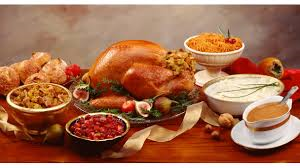
Thanksgiving dinner I thought this was a nice tradition and listened as the directors tried to decide which one of their students each would nominate.  All of them admitted it was a difficult decision to make as several of their students were deserving.  I had several conversations with the Director of the Dental Assisting program who that particular year had a very easy choice to make.  The student she was nominating was a woman in her early twenties.  She was the single parent of a young child and was struggling to turn her life around.  She was a good student, who gave her all, but financially was barely surviving.  I knew the student.  She was always smiling and upbeat.  The last day of classes before Thanksgiving break that Director stopped by the library to let me know that her student had been selected to receive the Thanksgiving dinner.

I had another memorable visitor stop by the library that day to wish me a happy Thanksgiving and to let me know, with a big smile on her face, that she had won the “drawing” for the Thanksgiving dinner.  She was so happy, she told me, because she and her child had just eaten the last of their white rice for breakfast and they didn’t have any other food, nor did she know where they would get any more food until the first of December when her food stamps  (now SNAP) would come. I’m pretty sure the smile on my face froze.  I know my heart jumped up in my throat and I hope a tear did not spring to my eye.

Several thoughts hit me at once.  Thanksgiving fell on November 25th in 1999.  So my first thought was how many more days were left in the month before the first of December.  Since this was Wednesday, November 24th, December 1st was still a week away.  I could not fathom not knowing where the food for my next meal would come from, let alone where I would get food for the next week. white rice

The next thought I had centered on what she and her child had for their last meal.  Plain white rice.  Not white rice with milk, brown sugar and cinnamon, like I sometimes had for breakfast when I was a child, but just plain white rice.  No fruit, no flavoring, not much nutrition.  I was so happy this woman and child would have a flavorful, nutritious meal for Thanksgiving, and probably several days afterward.

I don’t remember that student’s name and her face is a blurry memory, but I will never forget her story.  That Thanksgiving and every Thanksgiving since I have thought about her and her child.  She completed the program, and I hope with all my heart that she has turned her life around and has never had to approach another Thanksgiving wondering where her meal would come from.

That was my first significant encounter with the hardships of food insecurity.  It opened my eyes and made me aware of how little some in this country have.  What encounters have you had with food insecurity?

Jumping in with both feet

I have done it!  Over the past couple of years it has become increasingly important to me to find time in my life to become involved in efforts to assist those experiencing food insecurity, particularly in my own community.  So I said good bye to my job and reorganized some of my household responsibilities to find the time to pursue this endeavor.

I started by doing a bit of research on the topic of food insecurity in America.  While I wanted to understand the problem nationally, I wanted to focus my help locally.  I looked around in my own community to determine what assistance was available for those without enough food.  I discovered two food pantries and I have contacted them about volunteering my time.  In addition to helping immediately by volunteering with existing programs, I want understand where gaps in the assistance that is currently provided exist and propose solutions to fill some of those gaps.

To assist with that goal I have started this blog.  With this blog I hope to connect with others who are similarly concerned about food insecurity.  These folks might be running a program helping people get the food they need.  Maybe they, themselves are experiencing food insecurity or know someone who is.  Or maybe, like me, they are just someone who has reached the boiling point and said enough.

In addition to a chronicle of my experiences, I hope this blog will become an exchange of ideas.  A place where others can offer suggestions and insight.  I want to know what has been successful as well as what didn’t succeed and why.  I welcome all points of view as long as they are presented respectfully.  If you have made it this far and you are still reading, I hope you will join me.  I believe that when people work collectively, great things are possible.