 Today is #Giving Tuesday, a global day of giving, intended to kickoff the end of year charitable giving season. This movement was started in 2012 by a group at the Belfer Center for Innovation and Social Impact at the 92nd Street Y in New York City. The creators hoped to continue the theme of giving, spurred by Black Friday and Cyber Monday, by designating a day to focus on charitable giving. I wrote a blog post about #Giving Tuesday last year as well, but because I had completely missed the day, the focus of that post was to urge readers to not relegate giving to just one day and to give throughout the year. I still believe in giving throughout the year, and so while I am encouraging you to give to a charitable organization today, I want to highlight ways you can give to your local food pantry throughout the year.
Giving to food banks and pantries often spikes in November and December as people are moved to be more charitable during the holidays of Thanksgiving and Christmas. As I have been grocery shopping over the past two weeks I have started collecting items for my reverse Advent box, and later in December I will purchase some clothing and toy items to donate to our parent organization as they assist 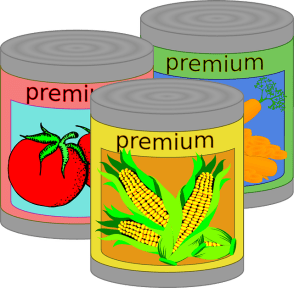 families in need at Christmas. But food pantries need donations throughout the year and are always happy to receive staples, like canned fruit and vegetables, pasta, soups, peanut butter and jelly, and tuna to name a few items. One consideration to keep in mind when collecting these staple items is to try to find the healthiest versions possible, as people receiving food from a food pantry want, and often need, to eat healthy too. For instance, when purchasing canned vegetables, soups, and peanut butter look for low and no sodium options. Try to buy canned fruit packed in light syrup or its own juices and for canned meat, like tuna or chicken, choose those packed in water rather than oil. Finally, look for hot and cold cereals which are 100% whole grain or at least list a whole grain as the first ingredient.
In addition to dried goods, other food and non-food items may be welcome donations at your local food pantry. With the same focus on providing healthy food options, many food banks and pantries will accept excess produce from gardens, so the next time you find yourself uncertain as to what you are going to do with 25 pounds of zucchini, consider donating some to your local food pantry. Additionally, shotgun season for deer just opened here in Pennsylvania and through the statewide program Hunters Sharing the Harvest, PA hunters are able to donate whole deer, which will be processed and distributed to food banks, who in turn, will deliver the venison to food pantries, soup kitchens, homeless shelters, and other hunger relief centers. Finally, donations of non-food items, like diapers, personal care items and cleaning supplies are often greatly appreciated at many food pantries.
The items I have mentioned in this post are items that will be of need at most food pantries. I urge you, however, to contact the food pantry to which you want to make a donation, particularly if the pantry is a small one. The staff may be able to guide you to items which are most in need or clarify their policy on what they will accept and what they might be unable to handle. Another reason to contact your local food pantry prior to giving is that maybe they have a need about which you were unaware, like an ongoing capital campaign to expand their space or purchase a large appliance like a freezer. In such a situation the best donation you could make would be a cash donation. Based on my nearly 3 years of volunteering in a food pantry, there is always a need, and we are always grateful when we receive donations. Without them we would not be nearly as successful as we are at helping all those we do!

 Being involved in a food pantry during the holiday season results in a seesawing of emotions for me. I have more than once found myself leaving a volunteer shift in low spirits over the holiday season. Hearing the stories of individuals and families who find themselves in such heartbreaking and often desperate situations is extra difficult when the balance of your life is filled with thoughts of and plans for the gastronomic bounty that is Thanksgiving and the excitement of giving and receiving that comes with Christmas. The juxtaposition of these two very different life situations can leave me filled with a combination of anger, sadness and helplessness.
 she will provide Christmas presents for her children, but how she will feed them dinner on Christmas Day. And I can not begin to explain to you the look of excitement and joy I saw on the faces of several young children as they picked out the sweet treat we gave out last December.
 From a Simmer to a Boil